

K-Laser Fungal Nail Treatment: Restore Healthy, Clear Nails
At We Fix Feet, we understand how fungal nail infections can affect your confidence and comfort. Our advanced Class IV K-Laser therapy offers an effective solution to eliminate the infection and promote healthy nail growth.
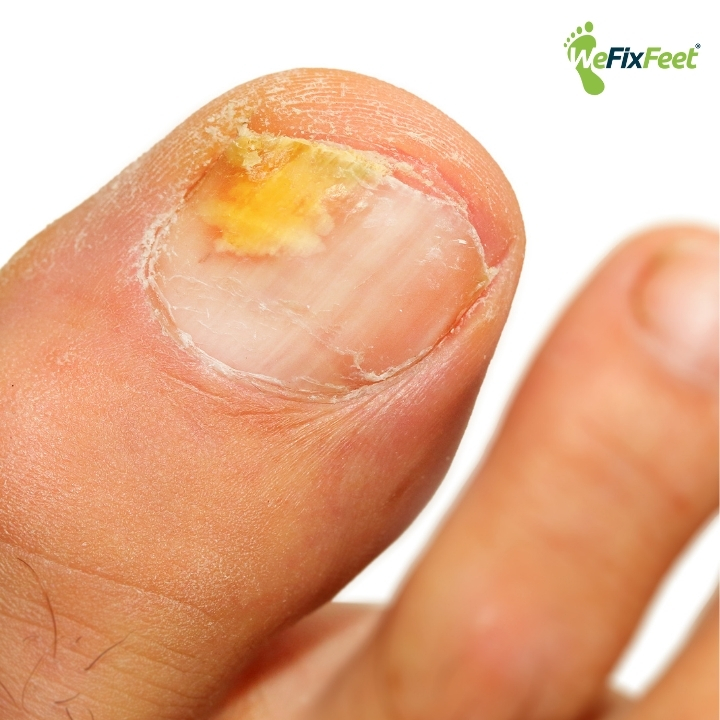
Understanding Fungal Nail Infections
Fungal nail infections, medically known as onychomycosis, occur when fungi invade the nail bed, leading to:
Discolouration: Nails may turn yellow, brown, or white.
Thickening: Affected nails often become thicker and more challenging to trim.
Brittleness: Infected nails can become brittle, crumbling at the edges.
These infections can cause discomfort and may spread if left untreated.
Benefits of K-Laser Class IV Laser Therapy

Our Class IV lK-Laser therapy provides a cutting-edge approach to treating fungal nail infections:
High Efficacy: Targets and destroys fungal cells effectively.
Non-Invasive: No need for oral medications or topical treatments.
Minimal Discomfort: Most patients experience little to no pain during the procedure.
Quick Sessions: Each treatment typically lasts about 20 minutes.
Our Approach
At We Fix Feet, we prioritise your foot health through a comprehensive treatment plan:
Initial Consultation: We assess the extent of the infection and discuss your medical history.
Personalised Treatment: Based on the assessment, we schedule laser therapy sessions tailored to your needs.
Aftercare Guidance: We provide advice on foot hygiene and preventive measures to avoid reinfection.


What to Expect During Treatment - for Beach-ready Feet!
-
Preparation: The affected nail is cleaned, and any debris is removed to ensure effective laser penetration
-
K-Laser Application: A trained professional directs the laser beam at the infected nail, targeting the fungal cells without harming surrounding tissues.
-
Post-Treatment: You can resume normal activities immediately after the session.
-
Comprehensive Package of Care: Our Laser Fungal Nail Package includes regular monitoring, thinning of the infected nails, K-Laser therapy, topical home treatment supplies, and in-clinic sanitisation of footwear and hosiery with our Klenz machines.
Is K-Laser Class IV Therapy Right for You?
If you have a fungal nail infection that hasn’t responded to traditional treatments, laser therapy may be an ideal option. Our experienced podiatrists will evaluate your condition and recommend the best course of action.

Book Your Consultation Today
Take the first step towards clear, healthy nails. Contact We Fix Feet to schedule your consultation and learn more about our effective fungal nail treatment options.
We Fix Feet – Supporting Your Recovery & Performance Every Step of the Way.
Still Feeling A Little Confused About Your Foot Condition And Don't Know What To Do?
- Fill in the form to request a Call From Our Team
- One of our team will call you for FREE and answer any questions or concerns you may have about your uncomfortable foot pain.
Frequently Asked Questions
Clear answers about fungal nail infections, testing, treatment options and what to expect during recovery.
01 What is a fungal nail infection and what causes it?
A fungal nail infection is a common condition caused by microscopic fungi that invade the nail or the skin beneath it. It often starts after damage to the nail, athlete's foot, or prolonged exposure to warm, damp environments such as changing rooms.
The infection can cause the nail to become thickened, discoloured, brittle or distorted. Early assessment provides the best opportunity for successful treatment.
02 How can I tell if I have a fungal nail infection?
Typical signs include yellow, white or brown discolouration, thickening, crumbling edges and changes in nail shape. However, not every abnormal nail is fungal, so an assessment is important to rule out trauma, psoriasis and other nail conditions.
The five-minute fungal dermatophyte test is a fast and effective way of confirming a fungal nail infection.
03 Can a fungal nail infection spread to my other nails or to other people?
Yes. Fungal infections can spread to neighbouring nails, the surrounding skin and, occasionally, to other people through shared floors, towels or footwear. Good foot hygiene and early treatment can help reduce this risk.
04 Will a fungal nail infection go away without treatment?
Most fungal nail infections do not resolve on their own. Left untreated, they often persist, gradually worsen and become more difficult to treat.
In some people, the infection may cause discomfort or increase the risk of secondary infection affecting other nails and delicate areas of the skin.
05 What treatment options are available for fungal nail infections?
Treatment options include topical preparations, oral medication for suitable patients, professional nail care and laser therapy.
The most appropriate treatment depends on the severity of the infection, the number of nails involved and your medical history.
06 How does K-Laser treatment work for fungal nails?
K-Laser delivers specific wavelengths of light through the nail to create an environment that is less favourable for fungal organisms while supporting healthy tissue.
It is a non-invasive treatment and is commonly used alongside good nail care and infection-control measures.
07 How long does fungal nail treatment usually take?
Treating the infection is only part of the process. Toenails grow slowly, so visible improvement usually takes several months as healthy nail gradually replaces the damaged nail.
Most treatment plans require patience, consistent aftercare and regular review.
08 How soon will I see healthy nail growth after treatment?
Many patients first notice a clear band of healthy nail growing from the base of the nail. As toenails often take between 9 and 18 months to regrow fully, improvements are gradual rather than immediate.
09 Is fungal nail treatment painful?
Most fungal nail treatments, including K-Laser treatment, are well tolerated. Some people notice a warming sensation during laser treatment, but significant discomfort is uncommon.
10 Can I continue my normal activities during treatment?
In most cases, yes. There is usually no downtime following treatment, although we may recommend simple measures to reduce the risk of reinfection.
11 What can I do to stop my fungal nail infection coming back?
Keeping your feet clean and dry, changing socks regularly, disinfecting footwear, treating athlete's foot promptly and avoiding walking barefoot in communal areas can all help reduce the chance of recurrence.
12 Can I still wear nail varnish during treatment?
It depends on the treatment being used. Nail varnish may reduce the effectiveness of some treatments, particularly laser sessions, so we will advise you when it should be removed.
13 Are over-the-counter fungal nail treatments effective?
They may help with mild, early infections but are often less effective once the infection has spread through much of the nail. If there has been little improvement after several months, a professional assessment is worthwhile.
14 Do I need a nail sample or laboratory test before treatment?
Not always. Where the diagnosis is uncertain or oral medication is being considered through your GP, laboratory testing may be recommended.
Many cases can be assessed clinically, but we recommend undertaking the five-minute fungal dermatophyte test to confirm fungal involvement before beginning a fungal nail treatment programme.
15 Can athletes and gym users be more prone to fungal nail infections?
Yes. Repeated nail trauma, sweaty footwear and communal changing facilities can increase the likelihood of developing a fungal nail infection.
16 Will my damaged nail return to its normal appearance?
Many patients experience significant cosmetic improvement, but the final appearance depends on how much permanent damage occurred before treatment began.
In severe cases, it is important to understand that although clinical clearance of the fungal infection may be achieved, the nail may not recover fully from an aesthetic perspective.
17 Why should I choose We Fix Feet for fungal nail treatment?
We provide a thorough assessment, explain all appropriate treatment options and tailor a plan to your individual needs.
Our focus is not simply on treating the affected nail. We also help you reduce the risk of recurrence and support better long-term nail health.
18 What happens if I leave a fungal nail infection untreated?
The infection may spread, the nail may become increasingly thick or painful, and treatment can become more challenging. Seeking advice early usually provides more treatment options.
19 Is fungal nail treatment available on the NHS, and why do many people choose private treatment?
NHS treatment availability varies according to local commissioning policies, clinical need and individual circumstances.
Many people choose private treatment because they want quicker access, a broader range of treatment options and a personalised management plan. Laser fungal nail treatment is not normally available through the NHS, and fungal nail infections may be treated as a lower clinical priority when they are considered primarily cosmetic.
20 How do I know which fungal nail treatment is right for me?
The right treatment depends on the extent of the infection, your overall health, your lifestyle and your treatment goals.
A clinical assessment and five-minute fungal dermatophyte test allow us to explain the advantages and limitations of each option so that you can make an informed decision.