

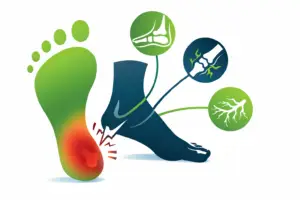
Heel Pain Isn’t Always Plantar Fasciitis
If you’ve ever searched online for heel pain, chances are one diagnosis keeps appearing:
Plantar fasciitis.
It’s often treated as the default explanation for pain under the heel, especially if it’s worse first thing in the morning or after sitting down. While plantar fasciitis is common, it’s not the only cause of heel pain. And assuming it is can sometimes slow recovery rather than speed it up.
At We Fix Feet, we regularly see people who’ve tried stretching, resting, icing, new shoes, or insoles for weeks, sometimes months, only to find the pain keeps returning.
This blog will help you understand why heel pain isn’t always plantar fasciitis, what else might be going on, and why an early diagnosis matters.
Why Plantar Fasciitis Gets All the Attention
Plantar fasciitis is one of the most well-known causes of heel pain. It affects the thick band of tissue that runs from your heel to your toes and helps support your foot’s arch.
It often causes:
- Pain under the heel
- Stiffness first thing in the morning
- Discomfort after periods of rest
- Pain that eases as you warm up, then returns later
Because these symptoms are so common, plantar fasciitis has become a catch-all label for heel pain. The problem is that many other conditions can feel very similar, especially in the early stages.
Common Causes of Heel Pain That Aren’t Plantar Fasciitis
Here are some of the other issues we frequently see mistaken for plantar fasciitis:
1. Fat Pad Irritation
Under your heel is a natural cushioning pad designed to absorb impact. Over time or with increased activity, this pad can thin or become irritated.
Pain from fat pad irritation often:
- Feels more central under the heel
- Is worse on hard floors
Doesn’t improve much with stretching
2. Achilles Tendon-Related Pain
Pain from the Achilles tendon can sometimes refer to the heel rather than the back of the ankle.
This type of pain may:
- Feel worse after activity
- Be linked to stiffness in the calf
Flare when training volume increases
3. Nerve-Related Heel Pain
Compression or irritation of small nerves around the heel can cause sharp, burning, or tingling pain.
This pain often:
- Feels unpredictable
- Can change location
Doesn’t respond well to stretching alone
4. Stress-Related Bone Pain
In some cases, repeated loading can irritate the heel bone itself.
This pain often:
- Builds gradually
- Feels deep and aching
- Worsens with activity rather than easing
5. Biomechanical Overload
Sometimes the issue isn’t one structure at all, it’s how force is moving through the foot and leg.
Subtle changes in:
- Foot posture
- Walking or running style
- Strength or mobility can overload the heel even when the tissue itself is healthy.
Why Rest and Stretching Don’t Always Fix Heel Pain
Many people do the sensible thing when heel pain starts:
- They rest
- They stretch
- They reduce activity
And often, the pain improves.
But then life returns to normal. Walking increases. Exercise resumes. Work demands pick up.
And the pain comes back.
This usually happens because:
- Rest reduces symptoms
- But it doesn’t change the underlying load pattern
If the heel is still absorbing force in the same way when activity resumes, the problem often returns regardless of how much stretching was done.
Why Rest and Stretching Don’t Always Fix Heel Pain
One of the biggest mistakes we see is people waiting too long before getting proper guidance.
Heel pain that’s treated early often:
- Settles faster
- Needs fewer interventions
- Is easier to manage
Heel pain that’s ignored or mislabelled often:
- Becomes more stubborn
- Starts affecting walking patterns
- Leads to secondary pain in the ankle, knee, hip, or back
Understanding why your heel hurts is far more important than guessing what it might be.
Why Rest and Stretching Don’t Always Fix Heel Pain
Your heel doesn’t work in isolation.
Every step you take involves:
- The foot
- The ankle
- The knee
- The hip
- The way your body manages load
This is why heel pain often appears:
- When training increases
- After a change in footwear
- Following a break in routine
- During periods of prolonged standing or walking
A biomechanical assessment examines how these factors interact, not just the painful spot itself.
What We Look At During a Heel Pain Assessment
When someone comes to us with heel pain, we don’t automatically assume plantar fasciitis.
We look at:
- How you walk and move
- How much force is being absorbed
- Strength and mobility through the lower limb
- Footwear and activity demands
- Where the pain fits into the bigger picture
This approach allows us to tailor treatment properly, whether that involves rehabilitation exercises, load management, shockwave therapy, laser treatment, orthotic support, or a combination of approaches.
When Should You Seek Professional Help?
You don’t need to wait until heel pain becomes severe.
It’s worth seeking advice if:
- Pain has lasted more than a few weeks
- It keeps coming back
- You’re changing how you walk to avoid it
- It’s stopping you from exercising or staying active
- You’re unsure what’s actually causing it
Early guidance can prevent a small issue from becoming a long-term one.
The Takeaway
Plantar fasciitis is common, but it’s not the only cause of heel pain.
Assuming all heel pain is the same can delay recovery, increase frustration, and lead to unnecessary stop-start cycles.
Understanding the true cause of your heel pain puts you back in control and lets you choose the right next step, rather than relying on trial and error.
If heel pain has been lingering, recurring, or limiting what you enjoy doing, clarity is often the most valuable treatment of all.
Frequently Asked Questions
Is heel pain always plantar fasciitis?
No. While plantar fasciitis is common, heel pain can also be caused by fat pad irritation, nerve irritation, Achilles-related pain, or biomechanical overload.
Why does heel pain improve then come back?
Rest often reduces symptoms, but if the underlying load or movement pattern doesn’t change, pain can return when activity resumes.
When should I seek professional help for heel pain?
If heel pain lasts more than a few weeks, keeps returning, or affects how you walk or exercise, a professional assessment can help identify the true cause.