

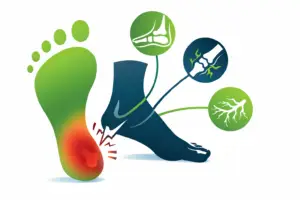
What Actually Causes Heel Pain in Active People?
If you’re active, running, going to the gym, playing sports, or simply walking, heel pain can feel confusing and frustrating.
You might think:
- “I’m doing the right things.”
- “I’m fitter than I used to be.”
- “Why is my heel suddenly hurting?”
For many active people, heel pain doesn’t come from one obvious injury. It builds quietly, often just as training or activity is increasing.
Understanding what actually causes heel pain in active people is the first step toward stopping it from becoming a recurring problem.
Why Heel Pain Is So Common in Active People
Your heel absorbs a huge amount of force.
Every step you take sends a load through:
- The heel
- The foot
- The ankle
- The calf
- The knee and hip
When activity increases, longer runs, more gym sessions, more walking, or a return after a break, the heel is often one of the first areas to feel the strain.
Heel pain isn’t always about damage.
More often, it’s about how the load is being managed.
Plantar Fasciitis Is Common — But It’s Not the Only Cause
Plantar fasciitis is often blamed for heel pain, and in many cases, it does play a role. But assuming all heel pain is plantar fasciitis can be misleading.
Active people often develop heel pain due to a combination of factors, not a single diagnosis.
Let’s look at the most common causes we see.
1. Load Increasing Faster Than the Body Can Adapt
This is one of the biggest causes of heel pain in active people.
It often happens when:
- Running distance increases
- Training intensity goes up
- You return to activity after time off
- Daily step count suddenly rises
The heel tissues don’t always complain immediately. Pain can appear days or weeks later, making it feel unpredictable.
2. Reduced Shock Absorption
Your foot and calf act as natural shock absorbers.
If shock absorption decreases due to:
- Tight calves
- Fatigue
- Reduced ankle movement
- Changes in footwear
…the heel often takes more impact than it should.
This can lead to:
- Central heel pain
- Morning stiffness
- Pain after longer sessions
- Discomfort on harder surfaces
3. Fat Pad Irritation
Under the heel is a cushioning pad designed to protect the heel bone.
In active people, this pad can become irritated or less effective, especially with:
- Repeated impact
- Hard ground
- Sudden increases in activity
Pain from fat pad irritation often:
- Feels deep and central
- Worsens on hard floors
Doesn’t respond well to stretching alone.
4. Achilles Tendon and Calf Load
The Achilles tendon and calf muscles play a huge role in heel loading.
When they’re:
- Overworked
- Stiff
- Fatigued
…force can be transferred into the heel rather than absorbed higher up the chain.
This is why heel pain often appears alongside:
- Calf tightness
- Achilles stiffness
- Pain after activity rather than during it
5. Changes in Movement or Technique
Sometimes heel pain appears after:
- Changing running style
- Altering gym technique
- Switching footwear
- Training on different surfaces
These changes don’t have to be “wrong” but they do change how load moves through the foot.
Even small changes can overload the heel if the body isn’t prepared.
Why Rest Helps — But Pain Often Comes Back
Many active people respond sensibly to heel pain:
- They rest
- They stretch
- They reduce activity
And the pain often improves.
The problem is that rest doesn’t change movement patterns or load tolerance.
When activity resumes, the same stresses return and so does the pain.
This is why heel pain in active people often becomes a cycle:
Improve → Return → Flare → Repeat
Why Heel Pain Is Rarely Just a “Foot Problem”
Heel pain is rarely isolated.
It’s influenced by:
- Calf strength and flexibility
- Ankle movement
- Hip control
- Training habits
- Recovery time
This is why simply treating the heel itself doesn’t always solve the issue.
Understanding the whole lower-limb picture is key.
When Should Active People Seek Advice?
You don’t need to wait until heel pain is severe.
It’s worth getting guidance if:
- Pain lasts more than a few weeks
- It keeps coming back
- You’re altering how you walk or run
- Training is becoming inconsistent
- You’re unsure what’s causing the pain
Early clarity often means:
- Faster improvement
- Less disruption
- Fewer flare-ups long term
The Takeaway
Heel pain in active people is common, but it’s rarely random.
It’s usually linked to:
- Load
- Movement
- Shock absorption
- Recovery
Plantar fasciitis is just one part of the picture.
Understanding why your heel hurts puts you back in control and helps you make informed decisions, rather than relying on trial and error.
If heel pain is limiting your activity, clarity is often the most valuable first step.