

What a Microgravity Treadmill Actually Does and Why It Matters
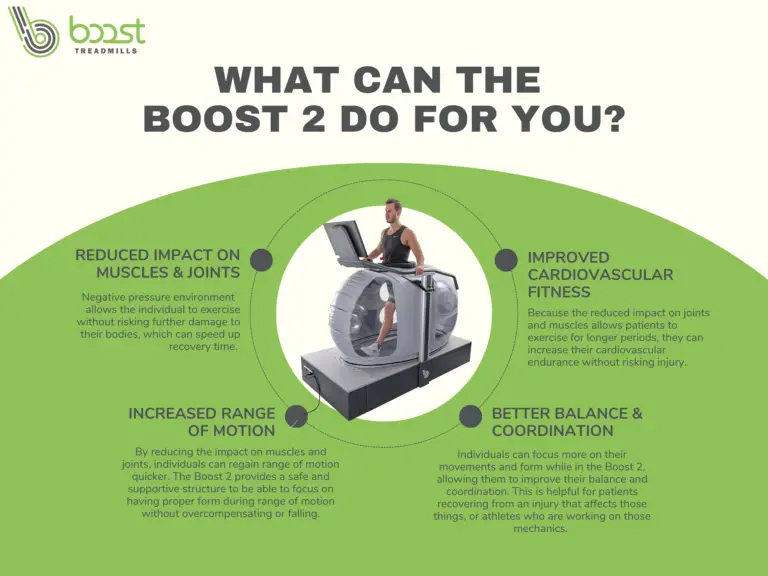
The phrase microgravity treadmill sounds impressive. It also sounds like the sort of thing people assume is either a gimmick or something only elite athletes get access to.
In reality, it is much simpler than that.
A microgravity treadmill is a tool that allows you to walk or run with less of your body weight through your legs, while still maintaining a more natural gait than you would get from simply stopping or switching to something completely different. Body-weight support treadmills of this type use differential air pressure to reduce effective body weight, in some systems from full body weight down to around 20 per cent.
That matters more than most people realise.
In rehab and performance, the real problem is often not the movement itself. It is too much load, too soon.
If you reduce load without removing movement, you give the body a much better chance to recover, rebuild confidence and keep progressing. That is the real value.
So what is it actually doing?
In plain English, a microgravity treadmill makes you lighter.
Not in a motivational-poster way. In a very practical, measurable sense.
You wear specialist shorts that zip into the treadmill chamber. The machine then uses air pressure to support part of your body weight. That means your hips, knees, ankles, and feet are experiencing less force than they normally do when walking or running on the ground. The original article describes this as a sealed lower-body chamber that uses differential air pressure, allowing for very accurate bodyweight reduction.
The result is that you can often:
- start moving earlier
- walk more comfortably
- run with less impact
- rebuild confidence more quickly
- maintain conditioning while protecting healing tissue
That is why these treadmills are used in rehab, return-to-run plans, post-op recovery and increasingly in performance settings too.
Why that matters in real life
Most people only have two rehab settings in their heads.
Either:
- I rest completely
or - I go back to normal and hope for the best
The problem is that neither is usually ideal.
Complete rest can reduce symptoms, but it also deconditions you. Going straight back to normal load too early often irritates the same tissue again.
A microgravity treadmill gives you a middle ground.
You still move.
You still practise gait.
You still challenge the cardiovascular system.
But you do it at a load the body is more ready to tolerate.
That is why it is useful.
Progressive load management is the real win
This is the part that matters most.
The original article highlights progressive load management as one of the main benefits, explaining that users can begin at a significantly reduced body weight and then gradually increase support in steps over time.
That is exactly how good rehab should work.
Not random.
Not heroic.
Progressive.
If your body currently tolerates 60 per cent of body weight comfortably, there is no prize for forcing 100 per cent just because it sounds tougher. The smarter move is to work where the body performs well, then build from there.
That logic applies whether you are:
- returning from injury
- rebuilding after surgery
- trying to keep moving with arthritis
- or using it as part of a structured return-to-running plan
It helps you keep fitness while you recover
This is one of the biggest reasons people love it once they try it.
A lot of rehab is frustrating because it feels like you are losing ground while trying to get better. You stop running, and your fitness drops. You stop walking properly, and confidence drops. You feel like recovery is costing you momentum.
A reduced-load treadmill changes that.
The article you shared notes that runners using higher bodyweight-support settings were able to maintain strong cardiovascular effort and extend endurance, while some studies also suggest improvements in surrounding muscle strength during rehab.
That matters because a better rehab process is not only about pain reduction. It is about not feeling like your whole engine has stalled while one part of you catches up.
It is useful for more than just runners
A lot of people hear this kind of technology and immediately think of athletes.
Yes, runners benefit from it. Absolutely.
But the applications are much broader.
The article highlights its use in:
- post-surgical rehab
- Achilles rehab
- spinal and stress-related injuries
- stroke rehabilitation
- diabetic neuropathy
- total knee replacement recovery
That tells you something important.
This is not a niche toy for fast people. It is a load-management tool.
And load management matters in far more situations than just sport.
Why can it be powerful after surgery
Post-op rehab is one of the clearest examples of where this makes sense.
After hip or knee surgery, people need to move. But they also need to respect healing, pain, confidence and tissue tolerance. A bodyweight-support treadmill lets you reintroduce walking with less pressure on the joints, while still restoring gait and confidence. The article you shared specifically references post-total knee replacement use, reporting comparable safety and functional improvement in a four-week programme, alongside good therapist satisfaction.
That is a very useful bridge between early recovery and normal walking.
Neurological rehab and balance confidence
Another area where this becomes particularly valuable is neuro rehab.
The article references stroke rehabilitation studies in which bodyweight-supported treadmill training improved cadence and gait symmetry more than conventional treadmill training, as well as benefits in gait, balance, and walking distance in other neurological groups.
That matters because confidence is often as important as strength.
If someone does not trust their walking, they do not move well. If they do not move well, they often move less. Then strength, gait quality and independence all suffer.
Anything that allows safer, more confident repetition of walking can be clinically very useful.
It can also help people with joint pain or arthritis
For people with arthritic joints, or anyone whose pain is driven more by load intolerance than structural damage, this kind of treadmill can be a very smart option.
Walking at full body weight may flare symptoms. Walking at a reduced load may feel far more manageable. That creates an opportunity to stay active rather than drop into the all-too-common cycle of pain, rest, stiffness, and deconditioning.
Again, the key point is not that the treadmill is magic.
It changes the dose of loading.
And dose matters.
The real value is not the machine. It is how you use it
This is worth saying clearly.
A microgravity treadmill on its own does not solve anything.
The value comes from:
- choosing the right starting load
- understanding the injury or goal
- progressing in the right increments
- integrating it into a broader rehab or performance plan
That is why this technology works best in a clinician-led environment rather than as a novelty session.
The machine changes load. The clinician decides how to use that load
Final thought
So what is a microgravity treadmill, really?
It is a way of keeping movement in the programme while reducing the force that usually makes it hard to tolerate.
That sounds simple because it is simple.
And in rehab, simply done well is often exactly what gets results.
If you are recovering from an injury, coming back after surgery, trying to stay active with joint pain, or looking for a smarter route back to running, this is one of the most useful tools available.
Next step
If you want to know whether a microgravity treadmill could help your recovery, confidence or return to activity, the best next step is to book an appointment or speak to the clinic.
A proper assessment can tell you whether reducing load or running is the right fit for where your body is right now