
If you’re an active individual who’s been let down by generic advice for your running injury and now wonders if ‘specialist’ is just another empty promise, you’re in the right place.
This isn’t about selling you a service; it’s about giving you the clarity to decide if specialist podiatry is a worthwhile investment to get you back to your peak.
Key Takeaways:
- Specialist podiatry for MSK and sports injuries involves in-depth diagnosis and targeted treatments aimed at the root cause of your pain.
- The “worth” of specialist care extends beyond the initial price to consider long-term recovery, prevention of recurrence, and a quicker return to your valued activities.
- It is an investment, particularly justified when previous, less specialised approaches have failed to deliver lasting results for conditions like plantar fasciitis or Achilles tendonitis.
- Your personal goals, the impact of your current condition, and previous treatment experiences are crucial in determining if specialist care is the right value for you.
- Understanding what to expect from a reputable specialist—their diagnostic approach, treatment technologies, and transparency about costs and outcomes—is key to making an informed decision.
Understanding Your Options: Is Specialist Podiatry the Right Path?
Are you an active professional, perhaps a keen runner or sports enthusiast, currently side-lined by persistent foot or lower limb pain like plantar fasciitis or Achilles tendonitis?
Are you wondering if investing in specialist podiatry treatment is truly the answer you’ve been searching for, especially if previous attempts to solve the problem – perhaps through your GP or general physiotherapy – have left you feeling disappointed and still in pain?
It’s a valid question. When you’re faced with an injury that’s impacting your ability to train, compete, or simply enjoy an active life, you want a solution that works, and you want to be confident you’re making a smart investment in your health.
Our aim here isn’t to persuade you, but to transparently explore what ‘specialist podiatry treatment’ truly entails, particularly within a dedicated MSK (musculoskeletal) and sports injury context.
We want to break down the factors that contribute to its value, helping you understand if it’s the right path for you to finally overcome your pain and get back to the activities you love.
We’ll look at what makes podiatry ‘specialist,’ how it compares to other options, what the evidence suggests about advanced treatments, and importantly, provide a framework to help you weigh up the costs versus the long-term benefits for your specific situation.
A Common Frustration: The Search for Lasting Relief
We understand that for many active individuals, conditions like persistent heel pain or Achilles issues aren’t just minor annoyances; they’re significant barriers to performance, well-being, and enjoying life. The search for a real, lasting solution after facing ineffective treatments is a common journey, and it’s why the ‘is it worth it?’ question for specialist care is so pertinent.
Throughout this discussion, our commitment is to provide you with clear, unbiased information. We believe that an empowered patient is one who can make the best decisions for their health.
With our collective experience of over 35 years in treating MSK and sports-related lower limb conditions, we want to shed light on what truly constitutes ‘specialist’ value.
Understanding “Specialist” Podiatry: What Benefits Are You Actually Paying For?
So, what does ‘specialist’ podiatry really mean when you’re looking for a solution to your sports injury or persistent MSK pain? It’s more than just a label.
Let’s break down the key components that differentiate this level of care and what that means for you.
Focused Expertise in Musculoskeletal (MSK) and Sports Injuries
True specialist care in this context means a deep focus on the complex interplay of muscles, bones, tendons, and ligaments of your lower limbs, particularly how they function and become injured during sport and activity.
While all UK podiatrists are HCPC registered, those specialising in MSK and sports injuries often undertake further postgraduate qualifications (like an MSc in Podiatric Sports Medicine) and gain extensive experience in this specific field.
For you, this means your practitioner has a more profound understanding of the forces and stresses involved in your particular sport or activity, leading to a more nuanced diagnosis and treatment plan.
Advanced Diagnostic Approach: Finding the Actual Cause of Your Pain
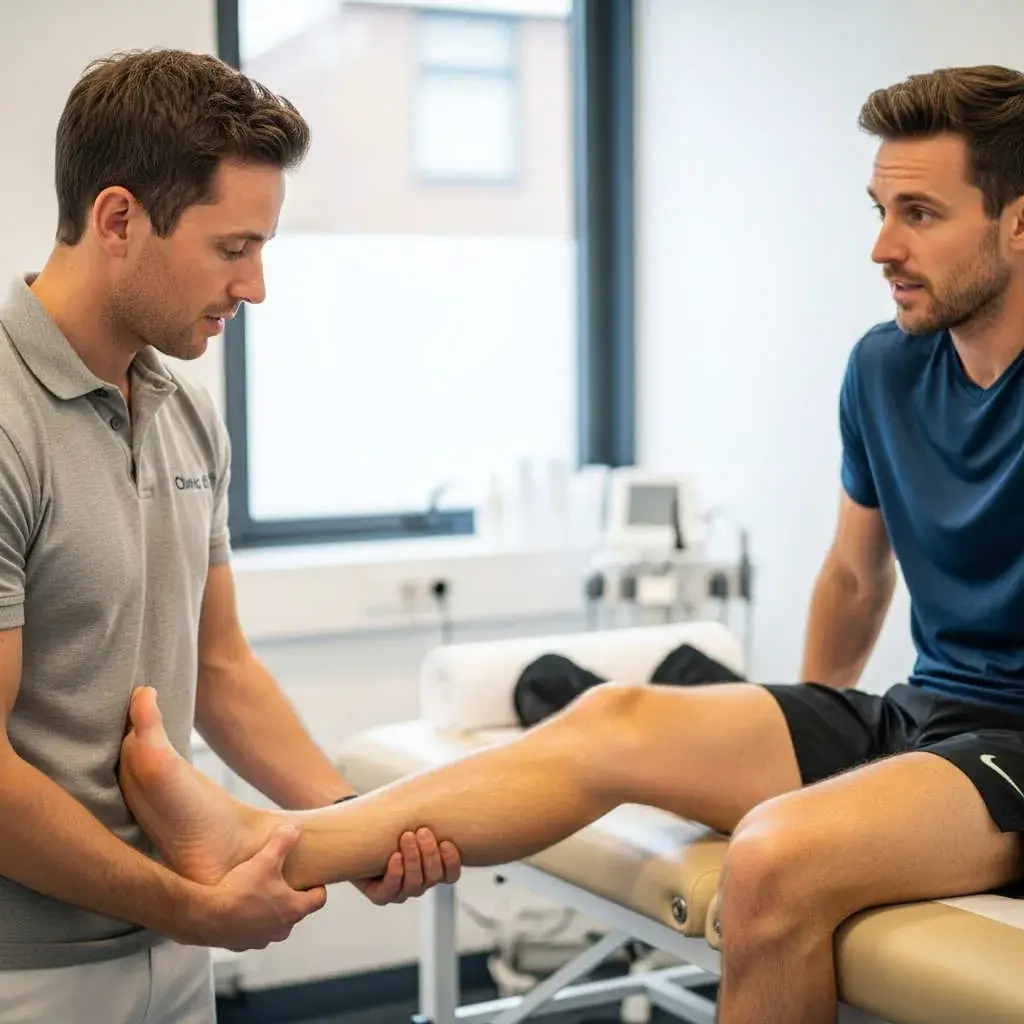
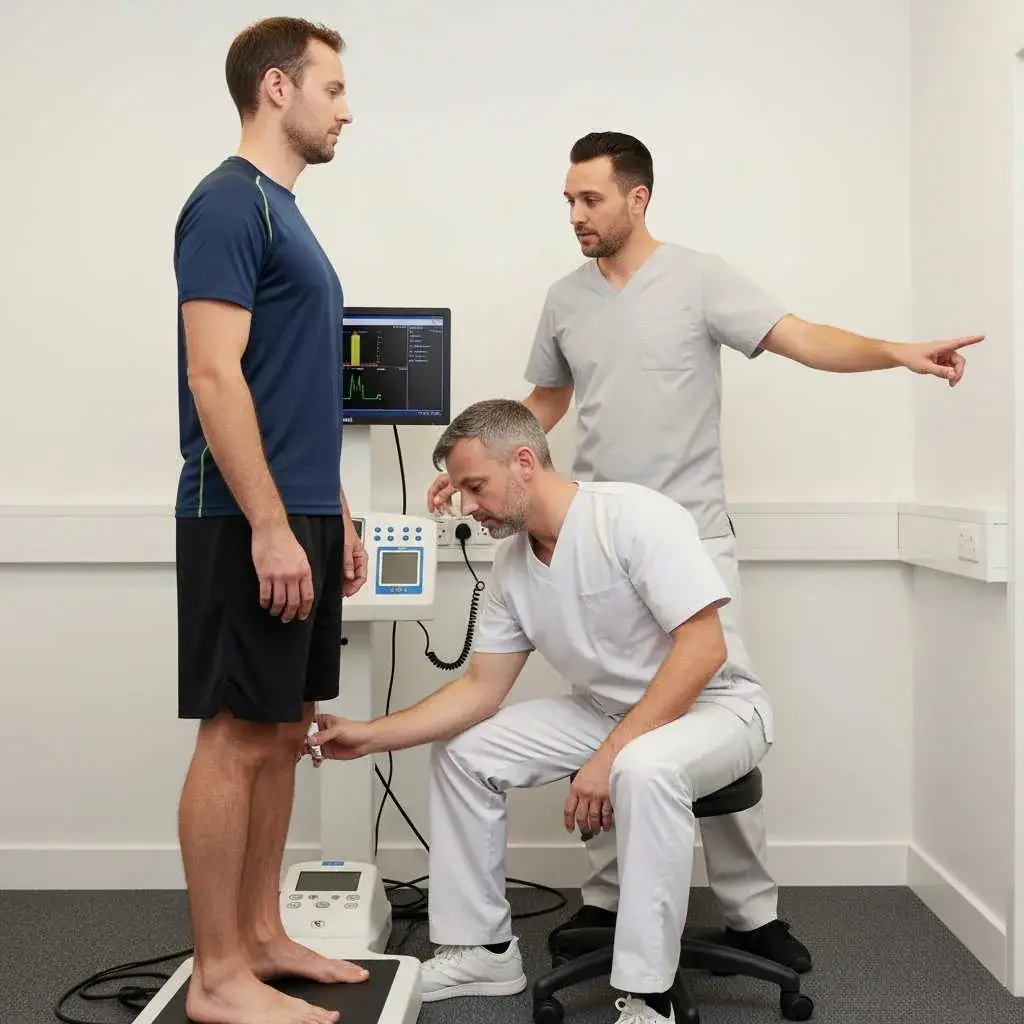
A cornerstone of specialist treatment is a highly detailed diagnostic process. For example, a comprehensive Biomechanical Assessment at We Fix Feet is a 60-minute deep dive.
We don’t just look at your foot; we analyse your full-body posture, your gait (walking patterns), your footwear, and your lifestyle factors.
This in-depth approach means for you that we’re not just looking at the symptom, but finding the actual root cause of why, for instance, your heel pain keeps stopping your runs.
Understanding the ‘why’ is the first step to a lasting solution, something you, as a research-oriented individual, will appreciate.
Cutting-Edge Technology: Modern Solutions for Stubborn Problems
Specialist clinics often invest in and utilise innovative treatments because they can offer better, faster, or less invasive solutions for you. At We Fix Feet, these can include:
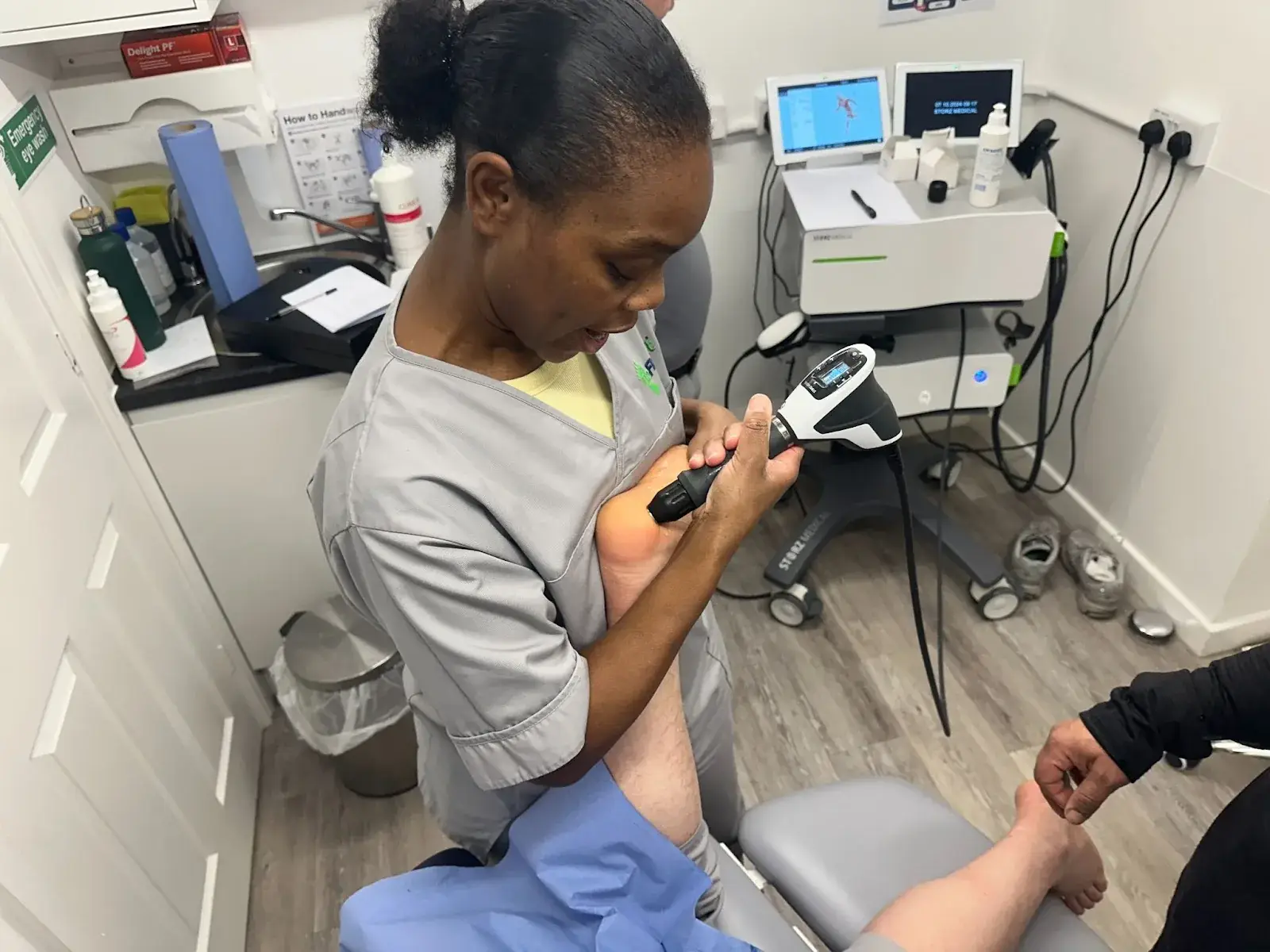
- Shockwave Therapy (ESWT): This uses acoustic waves to stimulate healing in damaged tissues. It’s particularly effective for chronic conditions like plantar fasciitis and Achilles tendinopathy that haven’t responded to other treatments. For you, this can mean relief from long-standing pain and a quicker return to activity.
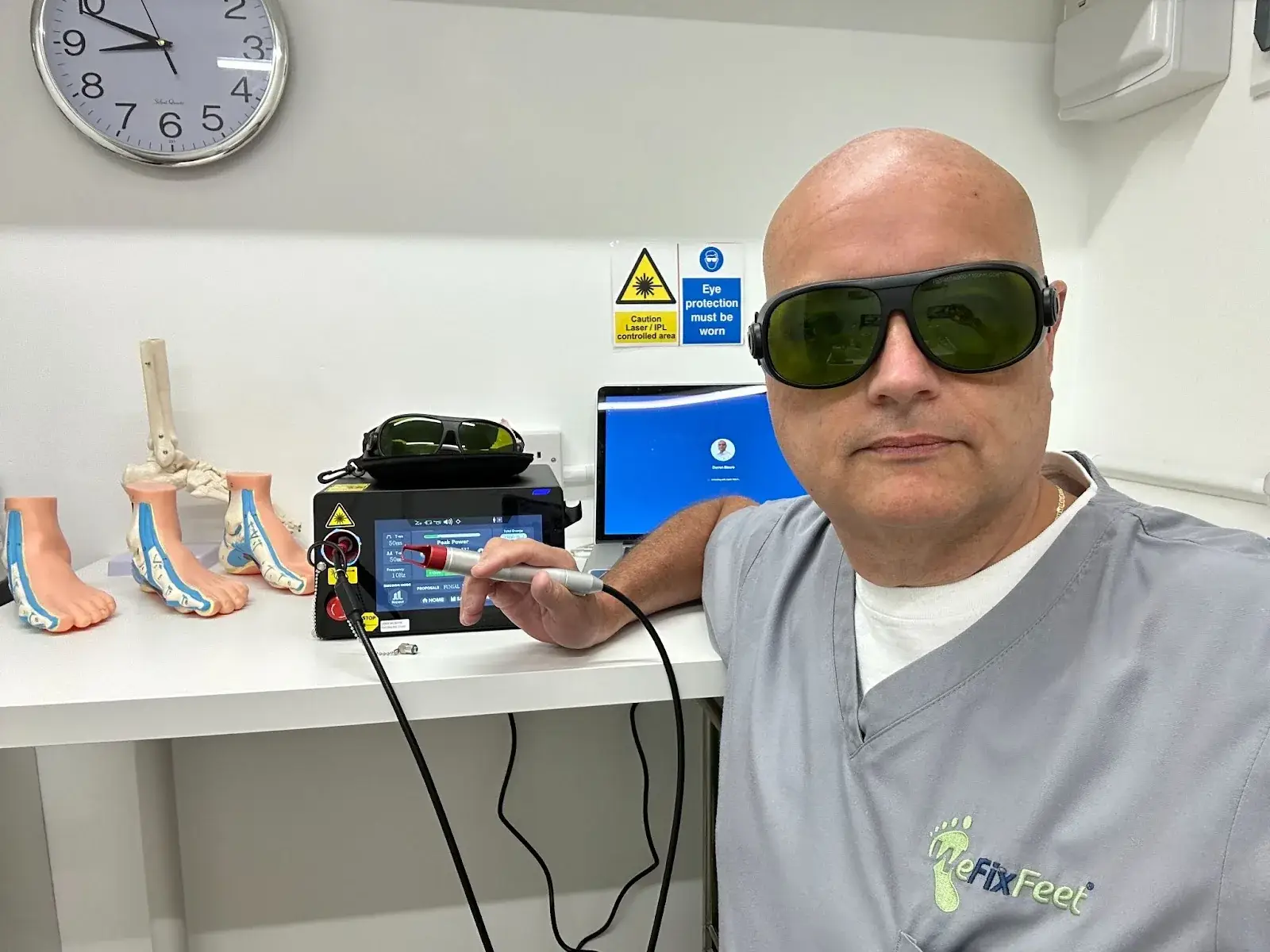
- Class IV Laser Therapy: This advanced laser is used to reduce pain and inflammation and promote tissue healing for various MSK conditions.
- 3D Printed Insoles: Created from precise 3D foot scans, these offer a very high degree of customisation for orthotic devices. For you, this means an orthotic designed specifically for your foot mechanics and your activity, aiming to correct imbalances and reduce strain far more accurately than off-the-shelf options.
- Point of Care Ultrasound: This allows us to get a clearer picture of soft tissue injuries, helping to confirm a diagnosis and guide treatment accurately.
The “Package of Care” Model: A Structured Path to Your Goals
Many specialist practices, including ours, are moving towards a “package of care” model for MSK and sports injuries. This contrasts with traditional pay-as-you-go by offering a structured, goal-oriented approach over a set period (e.g., our 1-Month MSK/Acute Sports Injury Plan or 3-Month MSK/Sports Injury Rehab Plan).
Such packages often bundle various treatments (like laser, shockwave), education, and a personalised rehabilitation programme. For you, this means a clearer roadmap to recovery, a predictable timeline, and a focus on achieving your specific goals, like running that marathon or playing football pain-free.
Clinician Expertise: The Wisdom Behind the Treatment
Underpinning all these elements is the depth of experience and qualifications of the clinical team. For example, at We Fix Feet, our practitioners bring over 35 years of collective experience, with clinicians holding degrees and some Master’s qualifications in relevant specialisms.
This practical wisdom, combined with a commitment to ongoing professional development, is invaluable, especially when dealing with complex or persistent injuries that haven’t responded to previous interventions.
What Results Can I Realistically Expect From Specialist Podiatry?
Now we understand what ‘specialist’ care involves, let’s delve into the crucial question: what makes it worth the investment for someone like you, who’s serious about getting back to an active life? The value isn’t just in the advanced equipment or qualifications; it’s in the tangible outcomes for you.
Achieving Lasting Solutions and Preventing Recurrence
The primary goal of specialist treatment is to get you back to your goals by achieving a lasting solution to your pain and preventing it from coming back. This means not just masking symptoms, but identifying and addressing the root biomechanical or musculoskeletal causes of your injury.
For you, this translates to a more confident return to your sport or activity, without the constant worry of re-injury. With our 35 years of experience helping active people in Derbyshire and Nottinghamshire, we’ve consistently found that for persistent issues like Achilles pain in runners, simply treating the symptom without addressing underlying factors like calf tightness or biomechanical imbalances often leads to recurrence. That’s why our specialist approach involves a comprehensive plan.
One of our patients, a keen Padel player similar to Luke (who battled crippling heel pain for over a year), found that after trying various general treatments without success, our specialist biomechanical assessment identified an underlying gait issue. A combination of tailored orthotics and a specific rehabilitation plan, including Shockwave therapy, meant that within weeks, they felt a significant reduction in pain and were gradually able to return to running, or play paddle again up to 3 times per week.
The Hidden Costs of Not Choosing Effective Specialist Care
Consider the alternative. The true cost of not addressing your injury effectively now can be substantial.
This isn’t just about the money you might have already spent on treatments that didn’t work. It’s about the ongoing pain that limits your activities and impacts your daily life; the frustration of being permanently sidelined from sports and hobbies that bring you joy; the potential for your injury to become a long-term chronic problem affecting your overall health; and never truly understanding the root cause, meaning you can’t prevent it from happening again.
For an active professional, this can also mean lost productivity or inability to perform at your best.
Specialist Treatment: A Long-Term Investment in Your Health and Activity
Viewing specialist podiatry as an investment rather than simply an expense can shift the perspective. The focus is on securing your long-term health, mobility, and your ability to continue enjoying your valued sports and activities for years to come.
Our “Treat, Move, Improve” philosophy is built around this concept of sustained well-being and empowering you to achieve your personal best.
The Power of Personalised, Tailored Solutions
“Tailored solutions are the only solutions” – this is a core belief at We Fix Feet. Because no two individuals are the same, a generic, one-size-fits-all approach rarely delivers the best results for complex MSK or sports injuries.
An in-depth assessment allows for a treatment plan that is precisely matched to your unique biomechanics, your specific injury, your activity levels, and your personal recovery goals. This personalised care is far more likely to be effective than a more generalised approach.
Efficiency and Speed: Getting You Back on Track Sooner
For busy professionals and active individuals, minimising downtime is critical. An accurate diagnosis from the outset, combined with a targeted and often intensive treatment plan (like those within our “packages of care”), can lead to a more efficient recovery pathway.
This means you get back to your sport, your work, and your life, faster and with more confidence.
The Other Side of the Coin: When Might Specialist Podiatry Not Be the First or Best Choice?
To give you the complete picture and help you make a truly informed decision, it’s important we’re upfront about situations where specialist podiatry might not be the immediate go-to, or where other avenues might be more appropriate as a first step. We believe in being transparent, even if it means suggesting you explore other options first.
Even specialist care isn’t a magic wand; it requires your commitment to the rehabilitation plan, and some advanced treatments, like Shockwave therapy, can involve temporary discomfort. Some patients also report that Swift microwave therapy for verrucas can be painful, though effective. Furthermore, if a “package of care” doesn’t achieve the desired outcome within the initial timeframe, we would discuss further options with you, which might involve adjusting the treatment plan or considering alternative approaches; we’re committed to finding a path forward, but it’s important to understand that outcomes can vary.
Scenarios Where Specialist Care Might Be an Over-Investment or Not the Initial Step:
- Mild, Recent Aches or Strains: If you’ve just picked up a very minor niggle, like a slight muscle pull from a run that isn’t stopping you completely and has only been around for a few days, sensible self-care (like temporarily reducing mileage, using ice, and ensuring your trainers are supportive) might be all you need. Many minor, acute strains do resolve on their own with a bit of patience and common sense.
- Simple Foot Care Needs: If your main concern is routine nail cutting, or managing straightforward corns and calluses that aren’t causing biomechanical pain or significantly impacting your activity, a general podiatry service is usually perfectly adequate and more cost-effective.
- If Cost is an Absolute Barrier and NHS Waiting Times are Acceptable for Your Condition’s Severity: While NHS waiting times for MSK issues like yours can be long, and the scope of treatment for sports-specific rehabilitation might be more limited, it remains a vital service. If private care is simply not an option financially right now, then pursuing the NHS route, understanding its potential limitations for your specific goals, is the necessary path.
Understanding Alternative Pathways:
- Self-Care: For very mild, acute issues (like that recent ankle tweak after football that feels better the next day), approaches like the POLICE protocol (Protect, Optimally Load, Ice, Compress, and Elevate), appropriate footwear, and sensible over-the-counter pain relief (used as directed) can be effective first steps.
- GP Consultation: Your GP can provide an initial assessment, help rule out other underlying medical conditions, offer basic advice, or provide a referral to NHS services (be mindful of waiting lists) if needed. However, for complex biomechanical issues or specific sports injuries that require in-depth lower limb expertise, their specialist knowledge is generally limited.
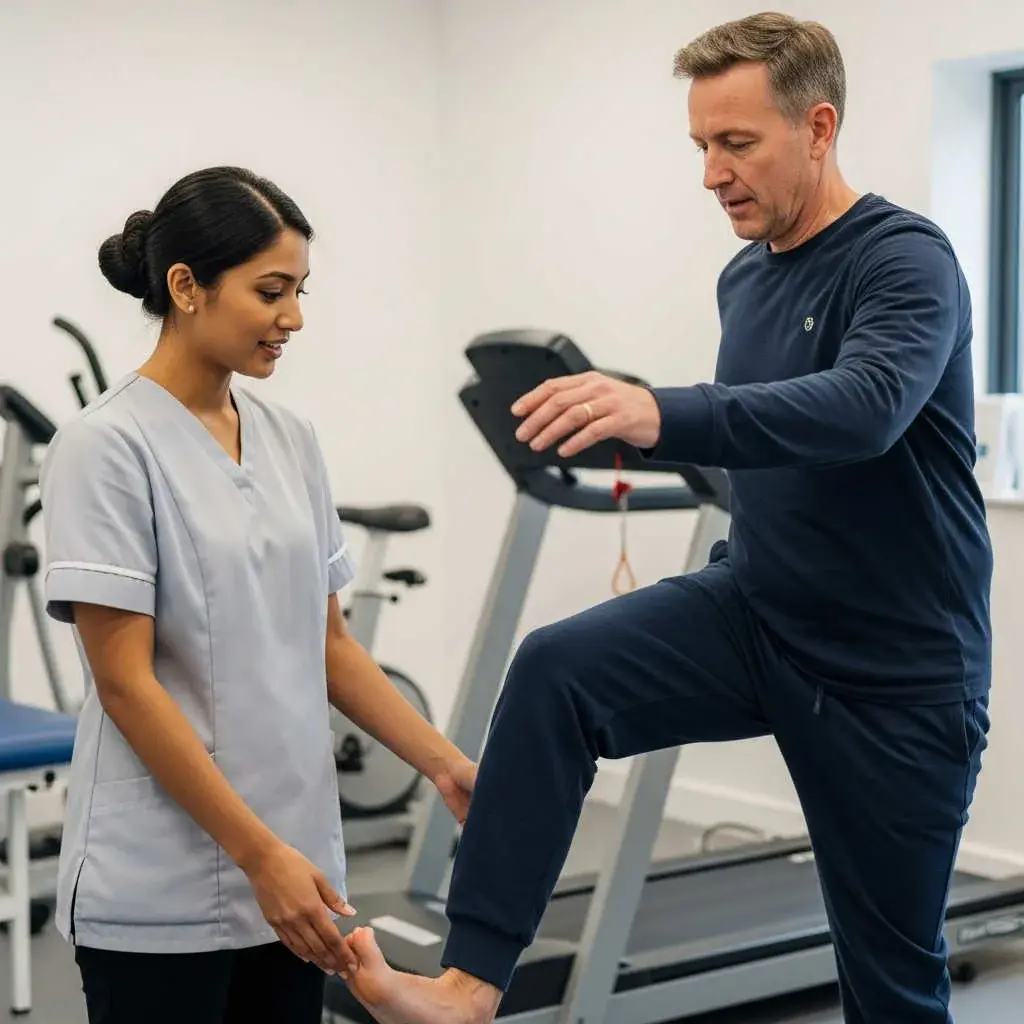
- Physiotherapy: Physiotherapists are highly skilled in treating a wide range of musculoskeletal conditions and are an excellent choice for many sports injuries or issues involving the wider kinetic chain (e.g., knee pain that might be affecting your running form). They use manual therapy, exercise prescription, and education to help you recover. For many common running injuries or muscular strains, physiotherapy can be very effective.
- General Podiatry (NHS or Private): For less complex foot pain, certain skin and nail conditions, or general foot health advice, a general podiatrist can provide excellent care. NHS podiatry services are a valuable resource, particularly for high-risk patient groups (e.g., diabetic foot ulcer care); however, as mentioned, access and the scope of MSK or sports injury treatment for otherwise healthy active individuals can vary regionally and may involve waiting lists or a more limited range of interventions compared to specialist private care.
So, When is Specialist Podiatry Most Justified for Your Needs?
Considering your profile as an active individual, specialist podiatry (particularly with an MSK/sports injury focus) becomes a compelling option when:
- You’re dealing with chronic or recurring conditions – pain like your plantar fasciitis or Achilles tendonitis that has persisted for several months, or keeps coming back, despite trying self-care or other therapies.
- There are complex biomechanical issues at play – if there’s a strong suspicion your problem is linked to your foot structure, your walking or running pattern (gait), or intricate movement mechanics that haven’t been fully addressed.
- You have specific sports-related injuries, especially if you’re an athlete aiming to return to a high level of performance and need specialised rehabilitation and injury prevention strategies tailored to the demands of your sport.
- You’ve experienced previous treatment failures – if other forms of treatment (GP advice, general physiotherapy, off-the-shelf solutions) haven’t provided lasting relief from your foot or lower limb pain.
- You’re seeking advanced treatment modalities – if you’re looking for specific, evidence-based advanced treatments like Shockwave Therapy (for indicated conditions such as chronic plantar fasciitis or Achilles tendinopathy) or precisely engineered 3D printed orthotics, which are more commonly available and expertly delivered in specialist settings like ours.
- You have high performance or demanding activity goals and need your feet and lower limbs to function optimally and reliably to achieve your personal best.
Making Your Informed Decision: Key Questions to Ask Yourself
Ultimately, deciding if specialist podiatry treatment is ‘worth it’ is a personal one, based on your unique circumstances and priorities. To help you evaluate this for yourself, here are some key questions to consider, reflecting what we know active professionals like you value:
- What is the real, day-to-day impact of my current condition on my life, my training, my ability to participate in sports or activities I love, and my overall well-being and future goals?
- Have my previous attempts with less specialist treatments or advice failed to provide a lasting solution, leaving me still searching for answers and feeling frustrated?
- How much do I genuinely value a quick and effective return to my activities, an expert diagnosis that gets to the root cause of the problem, and a long-term fix that helps prevent this issue from coming back?
- When I consider the potential ongoing cost – not just financially, but in terms of lost time, continued frustration, and being unable to live life to the full – what’s the true price of not addressing this problem effectively and decisively now?
- What does a “real solution” and getting “back on track quickly” truly mean to me? Is it just about temporary pain relief, or is it about confidently returning to my peak performance and maintaining an active, vibrant lifestyle for the long haul?
What to Expect from a Reputable Specialist (And How to Identify One)
If you’re leaning towards exploring specialist care, it’s vital to know what to look for to ensure you’re investing wisely. Here’s what you should expect from a reputable specialist committed to your recovery:
Demonstrable Experience & Expertise
Look for HCPC registered Podiatrists and MSK specialists with relevant postgraduate qualifications (e.g., an MSc in MSK or Sports Podiatry) and, crucially, specific, demonstrable experience in treating conditions similar to yours. For instance, at We Fix Feet, we often help active individuals struggling with persistent heel pain that’s stopping them from running.
Our collective 35+ years of experience means we’ve successfully managed many such cases, understanding the specific needs of athletes versus less active individuals. Don’t hesitate to ask about a practitioner’s experience with your particular injury or sport.
One of our patients, an avid footballer in his early thirties, had been plagued by recurrent ankle pain following an old sprain. General advice hadn’t helped him regain the stability needed for quick turns on the pitch.
A specialist biomechanical assessment here revealed subtle instability and altered movement patterns. His tailored “package of care” included targeted strengthening exercises, proprioceptive training, and a short course of Class IV Laser therapy to manage residual inflammation. He’s now back playing full matches, reporting more confidence in his ankle than he’s had in years. This kind of specific, activity-focused recovery is what specialist care aims for.
An Authoritative and Educational Approach
A true specialist should clearly explain the ‘why’ behind their diagnostic process and any proposed treatments, using language you can understand. They should be able to discuss any advanced technologies they use, explaining how they work and why they might be beneficial for your specific situation, and clearly differentiate their specialist approach from more general options. They are there to educate you, not just treat you.
Trustworthiness Through Transparency and Empathy
Transparency is paramount. Expect an honest and empathetic approach, where the focus is on empowering you to make informed decisions, not on a hard sell. This includes clear communication about all potential costs, precisely what’s included in any “package of care”, and realistic expectations for outcomes, including recovery times and any potential risks or limitations.
Be alert for red flags such as vague answers about qualifications or experience, guarantees of a “cure” (especially for chronic conditions), or high-pressure sales tactics for expensive treatment packages without a clear diagnostic basis or a thorough explanation of alternatives. A trustworthy specialist will openly discuss all aspects of your care.
Key Considerations When Deciding if Specialist Podiatry is Worth It
So, to recap the key considerations when deciding if specialist podiatry is worth it for your active lifestyle:
- Specialist care offers in-depth diagnosis and targeted treatments specifically for complex MSK and sports-related lower limb issues.
- The ‘worth’ isn’t just about the price tag; it’s about the value of long-term recovery, preventing future problems, and getting you back to achieving your activity goals.
- It’s often a wise investment, particularly when other, less specialised approaches haven’t provided lasting relief from your pain or limitations.
- Your personal goals, how much your condition is impacting your life, and your previous experiences are crucial factors in determining its value to you.
Practical Steps to Help You Decide
If you’re seriously considering specialist treatment, here are some actionable steps you can take:
- Do your research: Look for clinics that clearly demonstrate expertise in MSK and sports injuries. Check for HCPC registration and practitioners with relevant postgraduate qualifications or a significant, verifiable track record in successfully treating your specific type of problem.
- Prepare your questions: Before any consultation, jot down a list of questions. Ask about their specific approach to your condition, their experience with similar cases, the full range of treatment options they recommend (and the evidence for them), what you can realistically expect in terms of outcomes and recovery, and how they plan to help you prevent the issue from returning.
- Understand the full investment: Clarify all costs upfront. If a “package of care” is proposed, ask exactly what it includes (number of sessions, types of therapy, any orthotics or other devices, follow-up appointments) and how achieving your specific recovery goals is factored into that package.
If you believe a specialist approach might be what you need to finally understand and overcome your foot or lower limb issue, and you’re ready to discuss how we can help you get to the root cause, we invite you to Book Your Consultation. This comprehensive assessment is the first step to understanding your problem in detail and exploring if a specialist treatment package is the right path for you.
Want to learn more about specific conditions before deciding? You can explore other articles in our Knowledge Centre to further empower your decision-making.
Moving Forward with Confidence Towards Your Recovery
We hope this comprehensive look at specialist podiatry treatment has provided you with the clarity and confidence to make an informed decision that’s truly in your best interest. We understand it’s a significant step when you’re in pain and weighing up your options, especially if you’ve been let down before. Understanding all sides of the ‘worth it’ equation is key to investing wisely in your health and your return to an active, pain-free life.
Our philosophy is simple: to empower you with honest information and expert care. Whether specialist treatment is your next step or you choose another path for now, our primary goal is that you feel equipped and confident to move forward towards your recovery goals. Remember, the ‘right’ decision is the one that aligns with your needs, gets you the results you’re looking for, and helps you comprehensively to ‘Treat, Move, Improve’.
What are your thoughts or experiences with considering or undergoing specialist podiatry treatment? We’d love to hear from you – share your comments or questions below.
Ready to Take the Next Step Towards Pain-Free Movement?
At We Fix Feet, our expert podiatrists are dedicated to understanding your unique situation and providing personalised care to help you treat your pain, improve your movement, and get back to living life to the full. We’ve helped thousands of people just like you overcome frustrating foot and lower limb conditions.
Your Journey to Recovery Starts Here:
The best way to understand how we can help is to have a conversation. Let’s explore your symptoms and discuss the most effective treatment options for you.
Prefer to talk first? Call us directly on 0115 9328832 to speak with a member of our friendly team.
Want to learn more about our approach first? Discover Our Commitment to You on our About Us page or explore Our Advanced Treatment Options.