
It’s a common source of frustration: you’ve diligently rested your painful foot, expecting relief, but the ache or sharpness stubbornly persists. If you’re an active person, eager to get back to your runs or gym sessions without this holding you back, this lack of progress can be particularly disheartening.
Key Takeaways:
- If your foot pain continues despite rest, it often means there’s a more complex issue than a simple strain that needs a specialist’s eye.
- Certain conditions, like plantar fasciitis or Achilles tendinopathy, often don’t improve with just passive rest and may actually need carefully guided activity to heal.
- How your foot and leg move (your biomechanics) can be a root cause of ongoing pain, and rest alone won’t correct these patterns.
- The “rest” you’re taking might not be the right type or duration for your specific injury.
- Returning to activity too soon, before your body is truly ready, is a common reason for pain to come back.
- Getting an accurate diagnosis from a foot health specialist is the most important first step when rest isn’t providing answers.
Why ‘Just Resting’ Often Fails for Active People with Foot Pain
If you’re an active person finding that rest hasn’t fixed your foot pain, you’re certainly not on your own.
It’s a situation our podiatry team at We Fix Feet encounters frequently. Consider plantar fasciitis, a very common source of such pain; it affects about one in ten people, and a significant 83% of those are active working adults. This highlights just how often “resting it” isn’t the full story for active individuals.
With our We Fix Feet team’s collective 35+ years of experience in diagnosing and treating often complex lower limb injuries, we’ve learned a great deal about why the “just rest it” advice can fall short. Our aim here is to share that understanding, empowering you with the knowledge to make informed decisions about your foot health.
6 Key Reasons Your Foot Pain Isn’t Improving With Rest
Let’s look into some of the specific reasons why your foot pain might be sticking around, even when you’ve been trying to take it easy.
1. Is It What You Think? The Problem of Misdiagnosis or an Unidentified Underlying Condition
Sometimes, the foot pain you’re feeling might be due to something more specific than a simple muscle strain – an issue that rest by itself won’t sort out.
Conditions like tendinopathy (where a tendon is struggling, common in the Achilles tendon or those on the outside of your ankle), a subtle stress fracture (which can be hard to spot on initial X-rays), a trapped nerve (like Morton’s Neuroma), or even significant underlying issues with how your foot moves (biomechanics) often need a more targeted approach.
If the real reason for your pain isn’t correctly identified, any period of “rest” is essentially just papering over the cracks. The pain is likely to return once you resume your activities because the fundamental issue hasn’t been resolved.
We recall a keen amateur footballer who came to us after months of trying to rest an intermittent pain he thought was a recurring sprain. A detailed assessment, however, showed an undiagnosed stress fracture – something his attempts at simple rest were never going to heal.
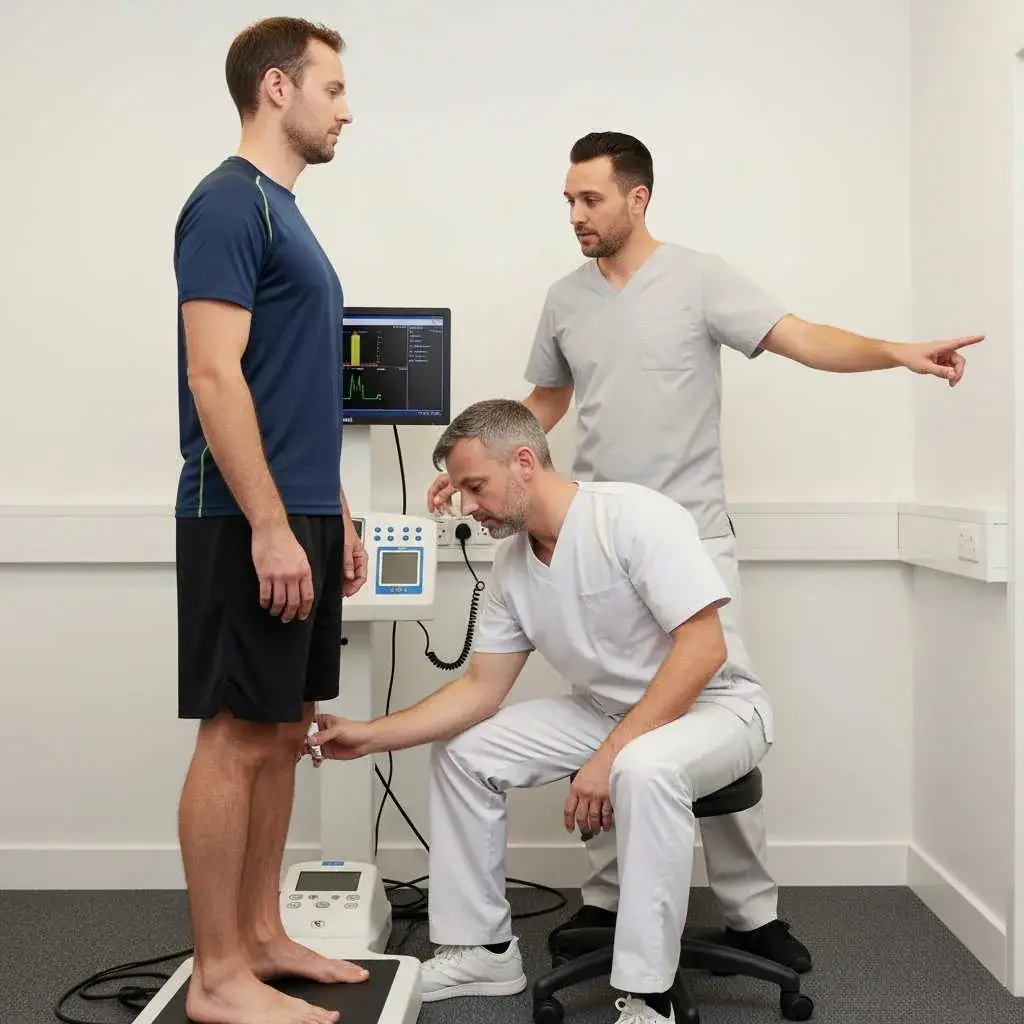
This highlights why a thorough, expert assessment is so important. A specialist podiatrist conducting a Biomechanical / MSK Assessment, for instance, can investigate much more deeply than a standard check-up.
This detailed assessment, which is an investment in understanding your specific situation, might involve using specific imaging like diagnostic ultrasound (which we use in our clinics) to pinpoint the problem. An accurate diagnosis is the crucial first step towards an effective, personalised treatment plan.
It’s also true that initial advice from a non-specialist, while well-intentioned, might not catch these more complex underlying problems. GPs have a huge range of conditions to cover and may not always have the specialist sports injury focus to identify subtle tendon issues or early-stage stress fractures without very obvious signs.
This isn’t about fault; it’s about recognising when specialist insight becomes important if pain isn’t settling.
2. The Nature of Your Injury: When Rest Can Actually Be Detrimental
For active people, common causes of persistent foot pain often include plantar fasciitis (that sharp pain under your heel) and Achilles tendinopathy.
Many of these ongoing foot problems aren’t just about simple inflammation that rest will magically cure. They frequently involve a degenerative process in the tissue itself – think of it as the tissue becoming less resilient or having tiny areas of damage (sometimes called ‘tendinosis’ or ‘fasciosis’).
In these situations, too much passive rest can actually lead to the tendon and surrounding muscles becoming deconditioned. This makes them less able to cope with load when you try to get active again.
It might seem counterintuitive, but for these types of conditions, the path to recovery often involves active rehabilitation. This means carefully controlled, progressive loading through specific exercises.
This targeted activity stimulates the tissue to repair and remodel, increasing its strength and resilience. It’s about smart, guided movement, not just stopping everything.
Our ‘Treat, Move, Improve’ philosophy at We Fix Feet is built on this very principle. We guide people like you through rehabilitation programmes tailored to your needs.
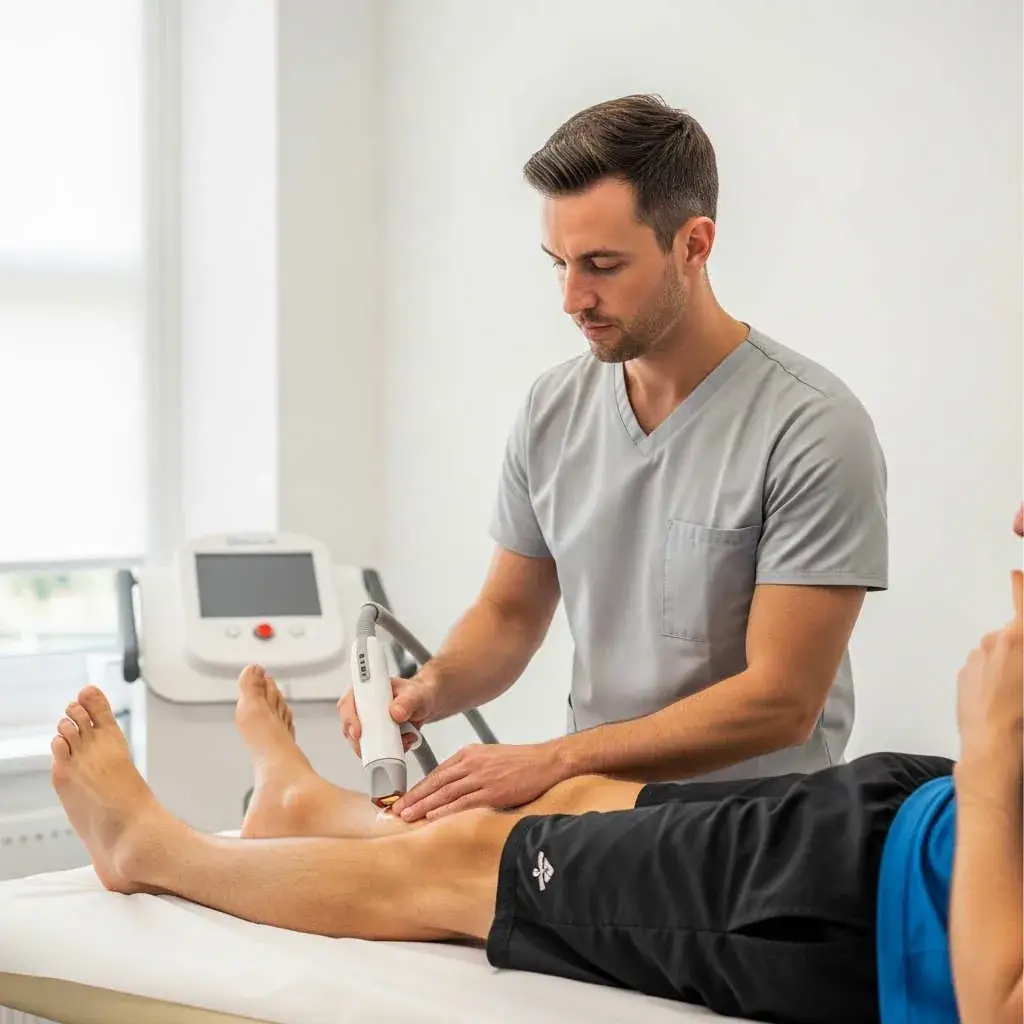
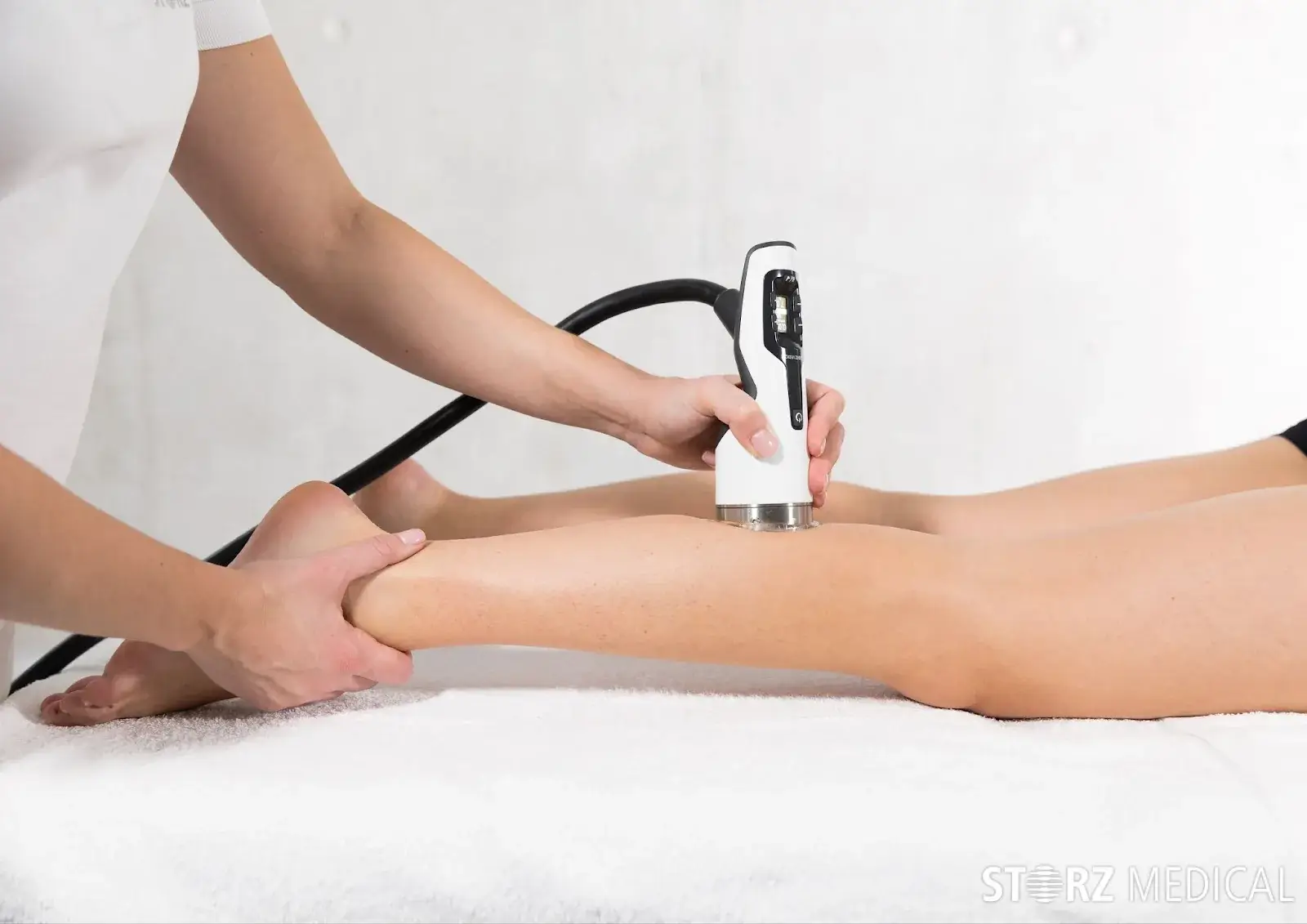
Sometimes, this involves incorporating advanced treatments like Shockwave Therapy. NICE (the National Institute for Health and Care Excellence) actually recommends Shockwave for conditions like plantar fasciitis and Achilles tendinopathy when other conservative measures haven’t worked.
We might also use Class IV Laser therapy. These treatments, while an investment in your recovery and typically involving a course of sessions, are designed to actively promote healing and help you get back to your goals.
Take ‘Mark,’ a runner we helped who’d struggled with Achilles pain for months. Rest gave him temporary relief, but the pain flared up every time he tried to increase his mileage. It wasn’t until he followed a programme combining specific eccentric loading exercises with Shockwave Therapy that he finally saw lasting improvement and could return to his training.
[CAPTION: Advanced therapies like Shockwave can stimulate healing in chronic tendon conditions where rest alone has failed.]
3. Decoding “Rest”: The Pitfalls of Incomplete or Inappropriate Rest
When you’re told to “rest,” what does that truly mean for an active person like yourself? It’s easy to think that just stopping your main sport – running, for example – is enough.
But are you still on your feet all day for work, or engaging in other activities that might be subtly aggravating the injury? Or perhaps the “rest” period simply hasn’t been long enough, or profound enough, for your specific issue.
For some injuries, the type and duration of rest needed are very specific. What one person considers “rest” might not be adequate for the demands your body usually faces, or for the particular tissue that’s injured.
For instance, resting from running but still cycling long distances, or wearing unsupportive shoes for your daily activities, might mean the injured tissue isn’t getting the true break it needs to begin the healing process. It’s helpful to honestly evaluate what your “rest” period has really involved.
4. The Stubborn Cycle of Chronic Inflammation and Tissue Change
When foot pain has been a persistent companion, your body can sometimes get caught in a chronic inflammatory state.
Or, the tissues themselves might have undergone subtle changes, like thickening or disorganisation of their fibres (as seen in tendinosis), that simple rest alone cannot undo.
In such cases, while rest might temporarily reduce the load and some of the acute symptoms, it doesn’t actively reverse these chronic tissue adaptations or the persistent low-grade inflammation. Your body often needs a more targeted stimulus to break that cycle and promote proper, organised healing.
This is where specialised treatments can make a significant difference. For instance, Class IV Laser Therapy, which we offer for MSK conditions, is designed to help reduce chronic inflammation, improve circulation at a cellular level, and stimulate tissue repair processes.
When used alongside a structured rehabilitation plan, it can help your body move beyond that “stuck” state. It’s worth noting that such therapies usually involve a course of treatments, and their suitability for your specific condition would be carefully assessed.
5. The Unseen Saboteur: Underlying Biomechanical Deficiencies
One of the most common reasons persistent foot pain doesn’t improve with rest is because the root cause isn’t the activity itself, but how your body performs that activity.
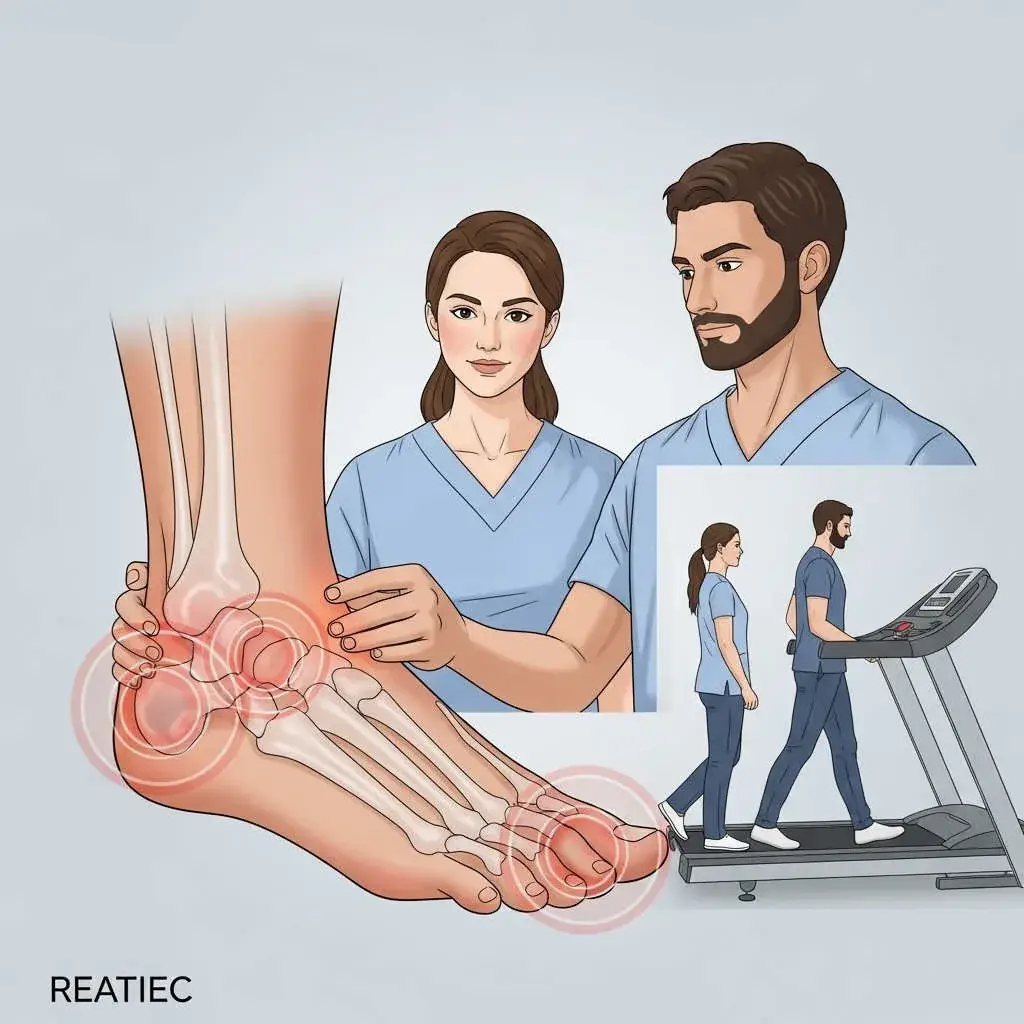
Underlying biomechanical issues – such as poor foot mechanics (like excessive pronation, often called flat feet, or very high arches), gait abnormalities (the way you walk or run), muscle imbalances further up your leg, or even differences in leg length – can place undue stress on specific parts of your foot.
Think of it like a car with misaligned wheels. You can stop driving it (rest), and the tyres won’t wear down for a bit. But as soon as you start driving again, the uneven wear (your pain) will return because the underlying alignment problem hasn’t been fixed. Rest simply doesn’t correct these fundamental mechanical faults.

This is where a comprehensive Biomechanical / MSK Assessment becomes so valuable, and it’s a cornerstone of our approach at We Fix Feet for active individuals.
This in-depth evaluation, which does involve dedicating time to thoroughly analyse your movement, allows us to look at your entire lower limb mechanics, your foot posture, and how you walk and run. This helps us identify those hidden mechanical stressors that rest simply cannot address.
Once these issues are identified, they can often be managed through a combination of specific corrective exercises to strengthen weak areas or improve flexibility, advice on appropriate footwear, or, in some cases, custom-made orthotics (insoles) designed to support your foot’s function and promote more efficient movement.
6. The Eagerness Trap: Re-injury from a Premature Return to Activity
As an active person, we completely understand that you’re itching to get back to your sport or training regimen. It’s perfectly natural to want to test the waters as soon as the pain eases even slightly.
However, returning to your usual intensity or volume too soon, before the injured tissue has fully healed, adapted, and regained its capacity to cope, is a very common reason why foot pain makes an unwelcome return – sometimes feeling worse than before.
Simply put, just because the most acute pain has subsided doesn’t mean the underlying tissue is ready for the full demands of your sport. Tissues heal and adapt at their own pace, and they need to be gradually re-introduced to load to build resilience.
Going from zero to one hundred often leads to re-injury. This is why a structured, progressive return-to-activity plan, ideally guided by a professional who understands sports injuries and your specific needs, is so important.
Let’s Be Honest: When Rest Is Usually the Right First Call (And Red Flags if it Still Fails)
Now, it’s important to be clear: rest can be a perfectly valid and effective first step for certain foot issues.
If you’ve had a very minor, acute tweak – perhaps you slightly overdid it on a single run, or stubbed your toe – a short period of genuine rest (a few days to a week or two) can allow that initial, uncomplicated inflammation or bruising to settle down. This means truly reducing load on the foot, avoiding aggravating activities, and perhaps using some simple measures like ice if there’s swelling.
However, this is where listening to your body is key. If your foot pain doesn’t improve even after a sensible period of rest for what you thought was a minor issue, or if you experience any of the following, it’s vital to seek expert assessment promptly:
- Sudden, severe pain, especially after a specific incident or trauma.
- Inability to put any weight on your foot.
- Pain that wakes you from sleep or is significantly worse at night and not relieved by rest.
- Signs of infection like redness, warmth, swelling, and pus, especially if accompanied by a fever.
- New or rapidly worsening numbness, tingling, or weakness in your foot or toes.
- Obvious changes in the shape of your foot or sudden discolouration.
- Pain that persists or worsens despite 2-4 weeks of sensible self-management and rest for what seemed like an acute issue.
Being aware of these distinctions helps you make better decisions. Our goal at We Fix Feet isn’t to see everyone for every niggle, but to ensure those who do need our specialist help understand when it’s time to seek it.
We find that active individuals, particularly those frustrated by persistent problems where other approaches haven’t worked, often benefit from our focused expertise. However, if your primary need is for very basic, routine chiropody and you are exclusively seeking NHS-funded services with no flexibility for private options, or if you are completely housebound and specifically require home visits for simple nail care (we are a clinic-based practice focused on more comprehensive solutions), then another type of provider might be a more suitable initial contact for those specific circumstances.
IV. Moving Forward: What To Do When Rest Isn’t Giving You Answers
So, if you’ve been faithfully resting your foot but the pain stubbornly remains, it’s clear that simply “more rest” is unlikely to be the solution.
As we’ve explored, the reasons can range from an incorrect understanding of the actual injury to underlying mechanical factors or the specific way certain tissues heal. The most important takeaway? Persistent foot pain, especially for an active individual like you, warrants a deeper investigation by a specialist.
Your most effective first step now is to get an accurate diagnosis from a healthcare professional who truly specialises in foot and lower limb conditions, such as an experienced podiatrist. While online research can give you some ideas, your situation is unique and needs expert eyes.
Seriously consider a comprehensive Biomechanical / MSK Assessment. This in-depth evaluation, while an investment of your time and resources, can uncover those subtle (or not-so-subtle) underlying mechanical issues – the way you move, your foot posture, muscle imbalances – that rest alone simply cannot fix. This assessment forms the bedrock of a truly personalised and effective treatment plan designed to get you ‘moving freely’ again.
Be prepared to explore active recovery strategies, rather than just passive rest. This often involves a tailored programme of specific exercises to strengthen, stretch, or improve control, alongside careful load management.
For some conditions, advanced interventions like Shockwave Therapy or Class IV Laser Therapy can significantly aid this process by stimulating healing and reducing pain, helping your body adapt and recover more effectively. These options generally involve a course of treatment and their suitability and potential outcomes would be discussed thoroughly with you as part of a comprehensive plan.
If the challenges we’ve discussed resonate with your experience, and you’re ready to finally understand why your foot pain isn’t improving and explore effective, evidence-based solutions, we invite you to book a Biomechanical Assessment with our expert We Fix Feet team. You can Book Your Consultation online.
Want to explore specific conditions we’ve touched upon further? You might find our detailed articles on Plantar Fasciitis or Achilles Tendon Pain particularly useful. Understanding your specific challenge is a powerful first step towards effective recovery.
V. Taking Control of Your Foot Health Journey
Understanding why rest hasn’t resolved your foot pain is the first, most crucial step towards taking control of your recovery and finding a path to lasting relief. You don’t have to just “put up with” persistent pain that’s holding you back from the activities you love.
At We Fix Feet, our ‘Treat, Move, Improve’ philosophy is at the heart of everything we do. We’re dedicated not just to alleviating your immediate symptoms, but to thoroughly understanding the ‘why’ behind your foot pain.
We then empower you with the right strategies and treatments – from expert biomechanical analysis to advanced therapies and personalised rehab – to help you ‘move freely, live vibrantly, and achieve your personal best.’ We believe in providing honest answers and creating effective, tailored solutions because your health and goals matter to us.
Ready to Take the Next Step Towards Pain-Free Movement?
At We Fix Feet, our expert Podiatrists and Clinician are dedicated to understanding your unique situation and providing personalised care to help you treat your pain, improve your movement, and get back to living life to the full. We’ve helped thousands of people just like you overcome frustrating foot and lower limb conditions.
Your Journey to Recovery Starts Here:
The best way to understand how we can help is to have a conversation. Let’s explore your symptoms and discuss the most effective treatment options for you.
Prefer to talk first? Call us directly on 0115 9328832 to speak with a member of our friendly team.
Want to learn more about our approach first? Discover Our Commitment to You on our About Us page or explore Our Advanced Treatment Options.