
That throbbing or sharp pain in your Achilles can be more than just a nuisance; for active individuals, it’s a serious concern that threatens to derail training schedules and sideline cherished activities.
The big question playing on your mind is likely, “Do I really have to stop?”
- Achilles pain is a common issue for active people, but the answer to whether you can train isn’t a simple yes or no.
- Understanding the difference between normal soreness and injury pain, and recognising “red flag” symptoms, is crucial.
- Training through significant Achilles pain risks worsening the injury, leading to chronic problems and longer recovery.
- A specialist assessment can diagnose the specific cause and severity, guiding safe activity modification and effective treatment to get you back to your goals.
Understanding Your Achilles Pain: What’s Really Going On?
Achilles pain typically relates to Achilles tendinopathy, a condition affecting the strong tendon connecting your calf muscles to your heel bone.
For active people, it’s often an overuse injury. This means the tendon has been repeatedly stressed beyond its capacity to repair itself, leading to pain, swelling, and stiffness.
We often see this in active professionals who come to us. Common culprits include a sudden increase in training load, inappropriate footwear, or underlying biomechanical issues like how your foot strikes the ground.
Distinguishing Injury from Soreness
It’s vital to distinguish this from normal training soreness (DOMS). DOMS is muscular, appears 12-72 hours after a hard session, and resolves quickly.
Achilles tendinopathy pain is usually felt directly in the tendon. You might notice it’s particularly stiff and sore first thing in the morning or after rest. It might ease slightly with initial movement but then worsen with continued activity or the next day.
Pain that doesn’t go away or gets worse with each session is a key sign it’s more than workout soreness. Ignoring these signals can lead to chronic problems.
The Big Question: Can I Train Through Achilles Pain? A Nuanced Look
So, can you keep training? It’s rarely a straightforward ‘yes’ or ‘no’. The answer depends significantly on your specific pain and ideally requires professional guidance.
Using Pain as a Guide: The Traffic Light System
Many people try to use “pain as a guide,” often thinking of it as a traffic light system:
- Green (0-3/10 pain): Maybe okay with careful modification.
- Amber (4-6/10 pain): Significantly reduce activity.
- Red (7+/10 pain): This means stop.
However, relying solely on this system without an expert assessment is risky. The type of pain also matters. A sharp, stabbing pain, or pain that changes how you move, is a more serious warning than a mild, dull ache that disappears quickly.
Pain that gets progressively worse as you train, or is more severe the day after, also signals that you’re likely doing more harm than good.
This is where understanding the why behind your pain becomes essential. A proper diagnosis is key.

Warning Signs: When You Absolutely MUST Stop Training and Seek Advice
Certain symptoms are non-negotiable signals to stop training immediately and seek professional advice. If you experience any of these, stopping training isn’t a choice; it’s a necessity:
- A sudden, sharp pain in your Achilles or calf, perhaps with an audible “pop” or “snap.”
- Inability to bear weight.
- Significant and rapid swelling or bruising.
- A visible gap or indentation in the tendon.
- Loss of ability to point your foot downwards or stand on tiptoes.
These signs suggest a potentially significant injury needing urgent evaluation.
The Risks of “Pushing Through”: What Others Might Not Tell You
We get it. The thought of stopping training is frustrating. However, “pushing through” significant Achilles pain is a gamble you’re unlikely to win.
You risk worsening the injury, developing chronic tendinopathy, facing much longer recovery times, and even causing new problems elsewhere as you compensate.
Many active professionals we see, like ‘Mark,’ a dedicated marathon runner, initially try to push through, only to find it prolongs recovery. Some generic advice might downplay these risks, but understanding these potential consequences is key.
Smart Training with Achilles Pain: If, When, and How (If Deemed Safe)
If a healthcare professional has given you the green light for modified training, it’s about being clever. This usually means reducing overall load – shorter or slower runs, or fewer sessions.
Low-impact cross-training like swimming or cycling can maintain fitness without stressing the Achilles. Avoid movements that cause sharp or increasing pain.
Listen very carefully to your body and respect those pain guidelines. Recovery is a gradual process; progressive loading is best guided by a professional to avoid setbacks. If pain worsens, stop and seek further advice.
Common Mistakes Active People (Like You!) Make with Achilles Pain
Being eager to return to sport can lead to common mistakes:
- The “No Pain, No Gain” Fallacy: Pushing through significant pain often makes things worse.
- Too Much, Too Soon: Returning to old training levels too quickly.
- Ignoring the Root Cause: Not addressing underlying issues like poor biomechanics.
- Incorrect Rehab Exercises: Performing exercises with poor form.
- Aggressive Stretching When It’s Inflamed: This can sometimes make it more painful.
How a Specialist Approach (Like Ours at We Fix Feet) Makes the Difference
A ‘one-size-fits-all’ answer for Achilles pain rarely works. Specialist assessment provides the clarity you need. Our entire approach is geared towards empowering you to overcome pain.
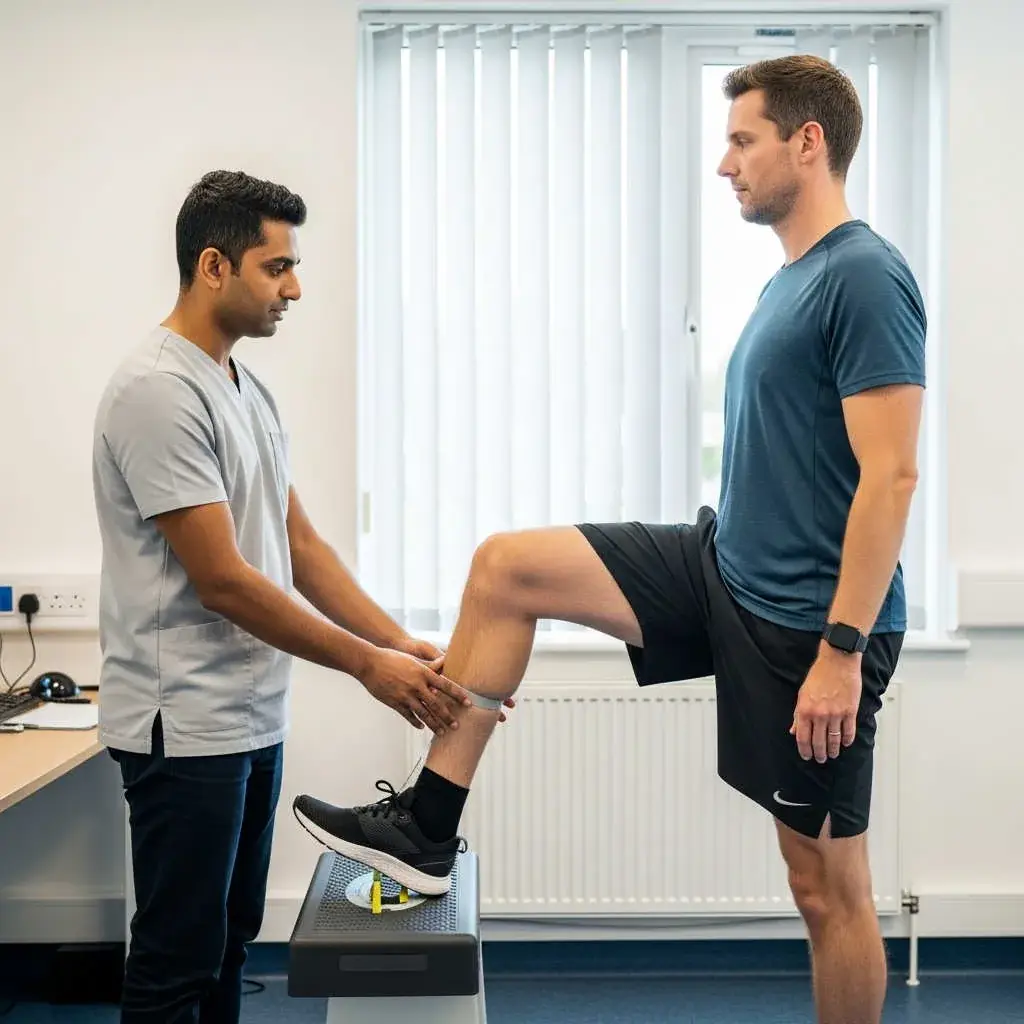
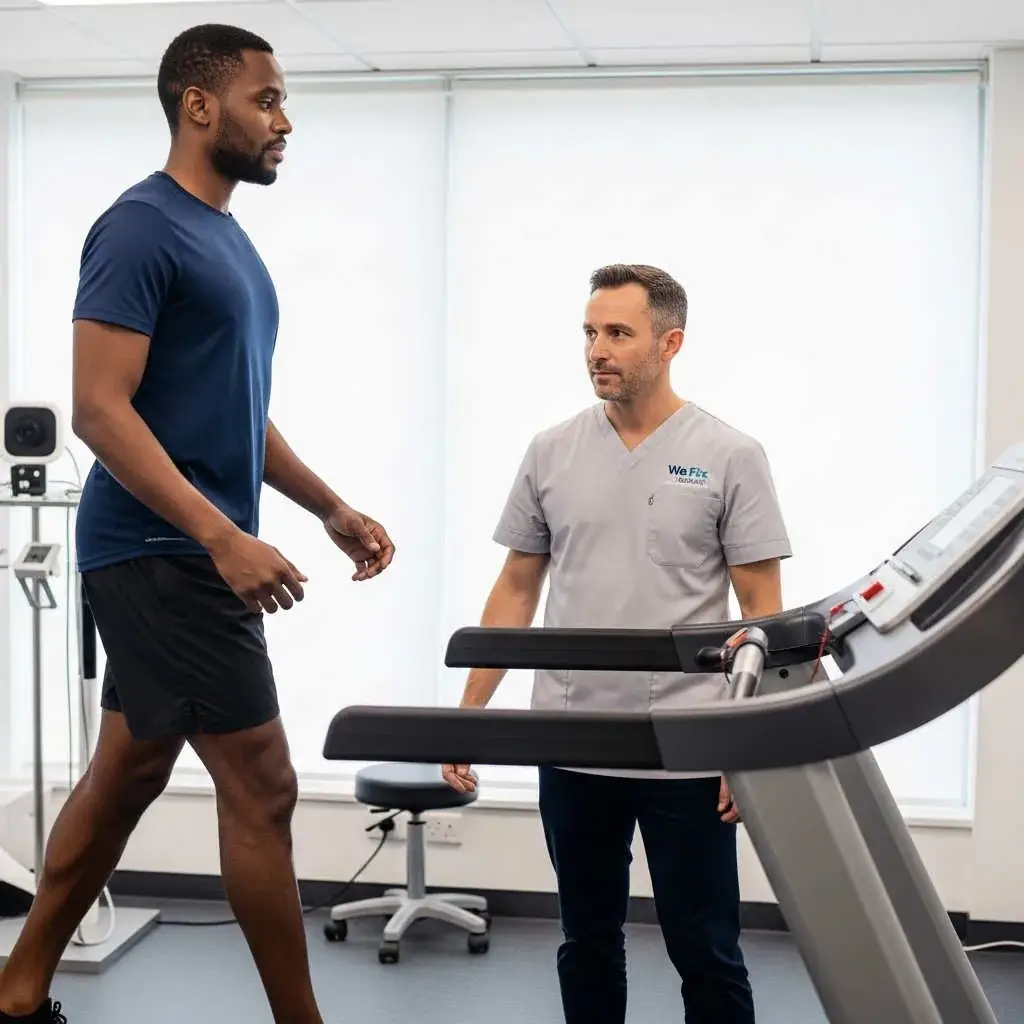
At We Fix Feet, we start with a thorough Biomechanical Assessment. We look in detail at how you move to understand the specific stresses contributing to your Achilles pain. It’s about finding your ‘why’ to create your plan.
Our “Treat, Move, Improve” philosophy guides your recovery. This might involve expert advice, a structured rehabilitation programme, and, where appropriate, Advanced Treatment Options like:
- Shockwave Therapy: Using energy waves to stimulate healing.
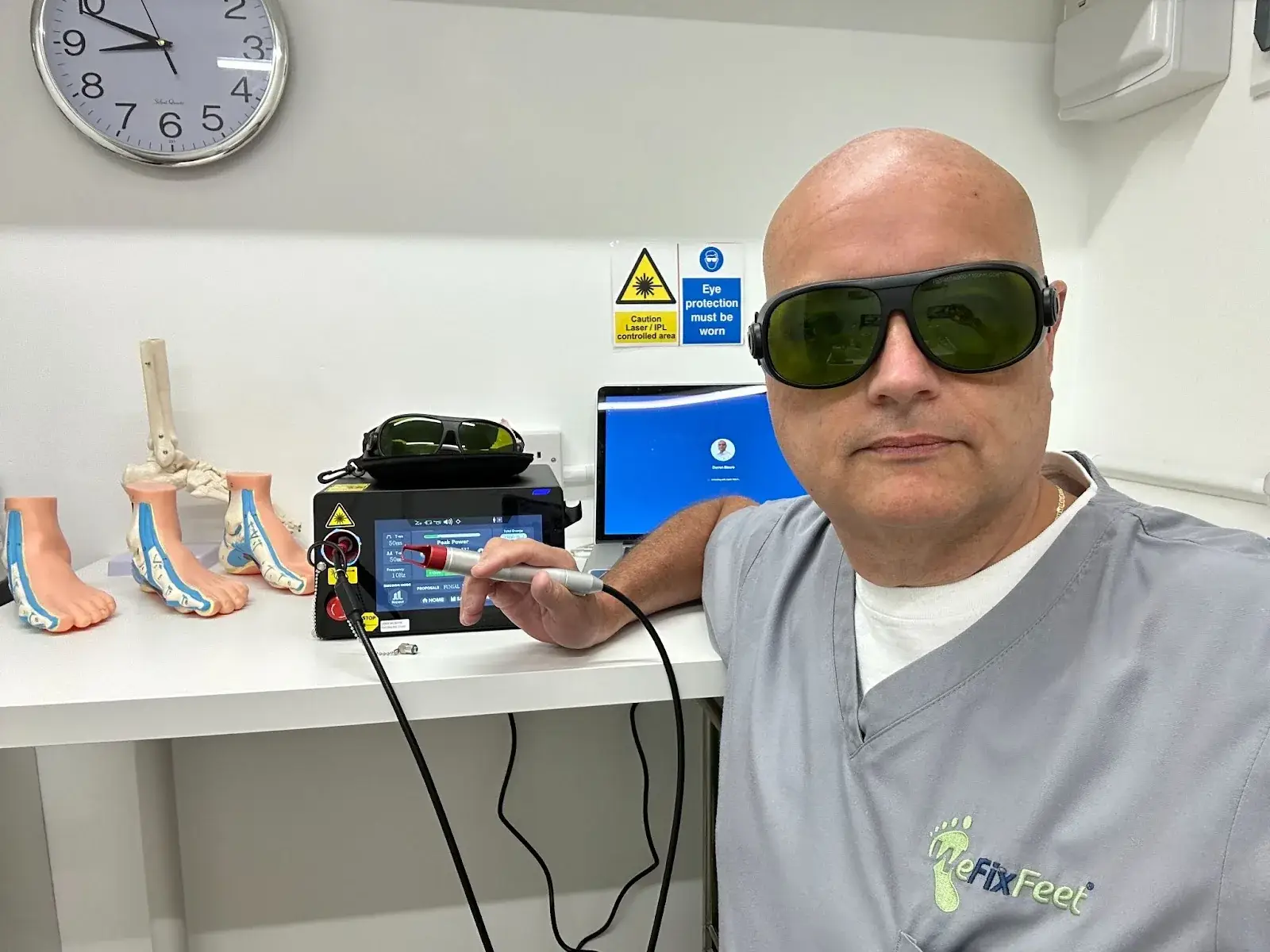
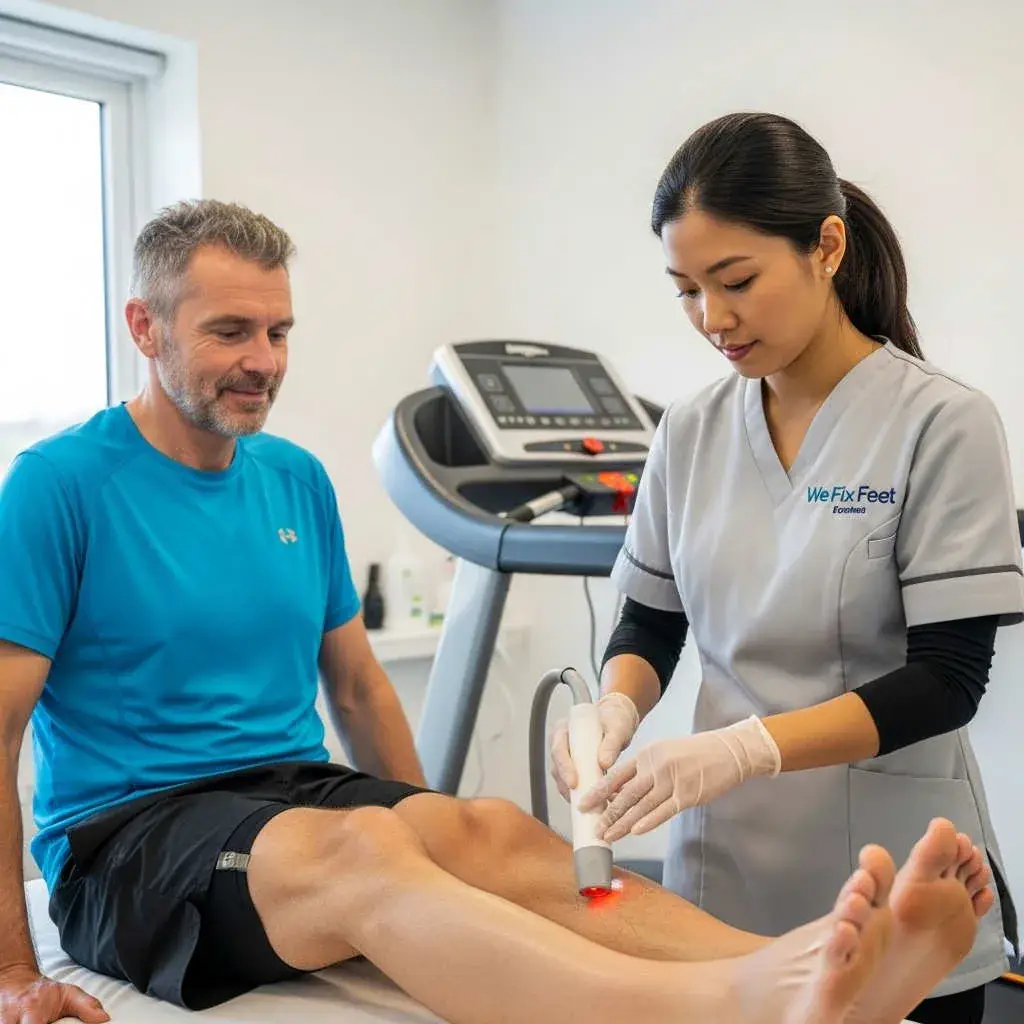
- Class IV Laser Therapy: Using light to reduce pain and promote repair.
These tools, as part of a comprehensive “package of care,” can significantly aid recovery.
Important: This Advice is General – It’s Not a Substitute for Professional, Personalised Assessment
This article offers guidance, but it cannot replace a one-on-one assessment with a qualified professional. If you suspect a serious injury, seek immediate medical attention.
We often hear, “I’ve tried X for my Achilles, but nothing sticks. I just need someone to tell me what’s wrong and get me back on my feet quickly.” This is why a detailed biomechanical assessment is fundamental to our approach.
Your Path to Pain-Free Training
Key takeaways for managing Achilles pain and training:
- Achilles pain signals something needs attention; don’t ignore it.
- Training decisions depend on pain severity and expert guidance.
- Pushing through serious pain has significant risks.
- Specialised solutions exist to get you back to your activities safely.
Taking control starts with understanding your specific situation.
Ready to Take the Next Step Towards Pain-Free Movement?
At We Fix Feet, our expert Podiatrists and Clinicians are dedicated to understanding your unique situation and providing personalised care to help you treat your pain, improve your movement, and get back to living life to the full. We’ve helped thousands of people just like you overcome frustrating foot and lower limb conditions.
Your Journey to Recovery Starts Here:
The best way to understand how we can help is to have a conversation. If your Achilles pain is holding you back and you’re unsure whether to stop training, a specialist assessment is the most direct route to clarity. If your pain feels sharp, is worsening, or you’ve experienced any “red flag” symptoms, your best first step is to get it professionally checked.
Let’s explore your symptoms and discuss the most effective treatment options for you.
Prefer to talk first? Call us directly on 0115 9328832 to speak with a member of our friendly team.
Want to learn more about our approach first? Discover Our Commitment to You on our About Us page or explore Our Advanced Treatment Options.