Are you trying to cut through the noise and figure out exactly what type of shockwave treatment is genuinely best for your sports injury? Perhaps you’re tired of that nagging pain holding you back from your runs or your sport, and the sheer amount of conflicting information online is just adding to the confusion?
In this straightforward guide, we’re going to lay out a clear, unbiased comparison of the shockwave treatments available. We’ll explain what makes a treatment effective for specific sports injuries, helping you understand what ‘best’ truly means for your situation, so you can make an informed choice with confidence.
We’ll explore the key differences between the main types of shockwave therapy, discuss what makes each suitable (and importantly, not suitable) for common sports injuries like plantar fasciitis or Achilles tendonitis, look at what the science says, and guide you on how to assess which approach aligns with your goal of getting back on track quickly and effectively.
Key Takeaways
- Shockwave therapy for sports injuries mainly involves Radial (rSWT) for superficial issues and Focused (fSWT) for deeper, precise treatment.
- The “best” type depends on your specific injury’s depth, type, and your recovery goals – not a generic label.
- A thorough assessment by an experienced practitioner is crucial to determine the most effective personalised plan.
- Understanding the pros and cons of each type, including potential discomfort and realistic outcomes, empowers your decision.
Why Understanding Your Shockwave Options Matters to You
We understand that when a sports injury strikes, your main focus is getting back to your active lifestyle as swiftly and safely as possible. The world of advanced treatments like shockwave therapy can seem complex, and knowing which option truly offers the best path to recovery for your specific injury (be it Achilles tendonitis or plantar fasciitis) is essential.
We often find that active individuals like yourself come to us after trying various remedies without success, and clear information is what you need most.
Our aim here isn’t to sell you a specific treatment, but to arm you with the knowledge you need. With over 35+ years of collective clinical experience helping people like you overcome sports injuries, we believe in being completely open about all options.
This guide is about empowering you to understand the landscape so you can have a more informed conversation about your care, wherever you seek it.
What Exactly Is Shockwave Therapy and How Can It Help Your Sports Injury?
Shockwave therapy, known formally as Extracorporeal Shockwave Therapy (ESWT), is a non-invasive treatment that uses acoustic waves to stimulate healing in injured tissues.
In straightforward terms, these waves create a targeted response within your body, prompting it to accelerate its natural repair processes.
For common sports injuries, like the persistent heel pain of plantar fasciitis or the stubborn ache of Achilles tendonitis, this can mean reduced pain, improved blood flow to the area, the breakdown of problematic scar tissue or calcifications, and ultimately, helping you get back to your activities sooner.
The Main Contenders for Your Injury: Radial vs. Focused Shockwave
At We Fix Feet, we utilise both of the primary types of shockwave therapy relevant to sports injuries: Radial Shockwave Therapy (rSWT) and Focused Shockwave Therapy (fSWT). Understanding the difference is key to understanding what might be best for you.
Radial Shockwave Therapy (rSWT) – An Honest Look
How it Works: Radial shockwave units generate pressure waves, often using compressed air to move a projectile that strikes a transmitter. These waves then spread out from the applicator into your tissue, a bit like ripples spreading outwards on a pond. The energy is strongest at the skin surface and spreads out as it goes deeper.
The Positives (Who it’s often good for):
- Effective for many common superficial tendinopathies: This includes conditions like plantar fasciitis and Achilles tendonitis, which frequently affect active people.
- It’s non-invasive, meaning no needles or surgery.
- It stimulates natural healing processes in the body.
- rSWT is quite widely available in many clinics.
The Considerations & Limitations (Who it might not be best for, or potential downsides):
- Limited depth: rSWT typically only penetrates effectively to about 3-4 cm. So, if your injury is very deep-seated, it might not be the most effective choice.
- Discomfort: The treatment can be uncomfortable, sometimes painful, during application because the energy is highest at the skin and stimulates a wider area.
- Energy dispersal: The pressure waves lose some energy the deeper they go.
- Some experts differentiate these pressure waves from the “true” shockwaves delivered by focused machines, which could mean a different level or type of stimulus for healing in certain conditions.
- Contraindications: As with any treatment, there are situations where rSWT isn’t suitable, such as during pregnancy, over lung tissue, if you have a pacemaker, have had recent steroid injections in the area (within 3 months), have a malignancy near the treatment site, open wounds or infections, blood clotting disorders or use anticoagulants, or if treatment is over major nerves/blood vessels or growth plates in younger individuals. It’s also often advised to avoid anti-inflammatory medications (NSAIDs) during the treatment period, as they might interfere with the intended healing response.
Common Patient Experience: You might feel an intense pulsing or tapping sensation during the session. Afterwards, it’s common for the treated area to feel sore for a day or two, similar to post-exercise soreness. Temporary redness or bruising at the site can also occur.
When is rSWT a Strong Candidate? It’s often a strong option for clearly diagnosed superficial tendinopathies, like many cases of plantar fasciitis or Achilles tendonitis, especially when other conservative treatments haven’t provided the relief you’re seeking.
Focused Shockwave Therapy (fSWT) – An Honest Look
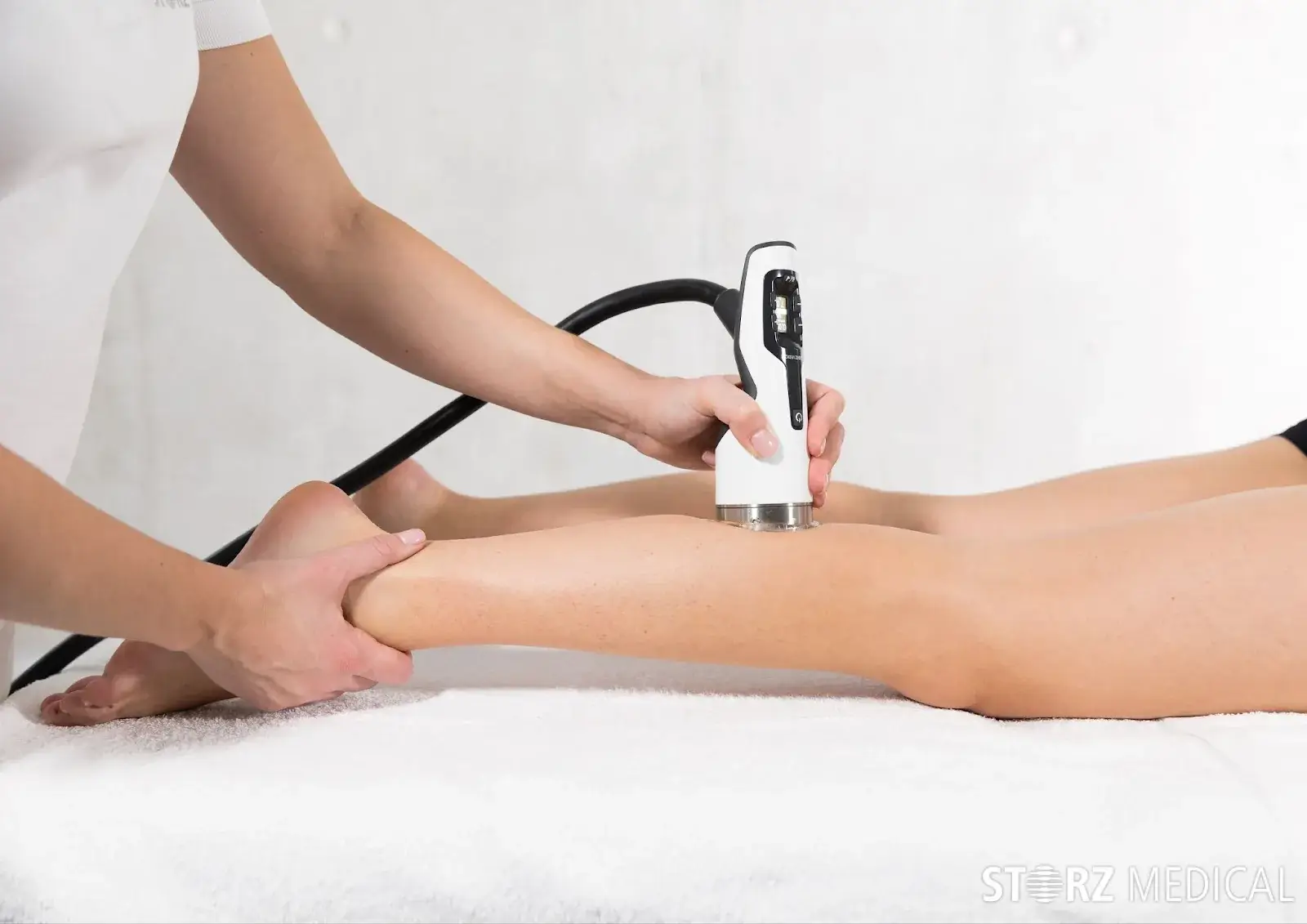
How it Works: Focused shockwave machines generate “true” shockwaves (a specific physical type of wave) using technologies such as electrohydraulic or electromagnetic methods. These waves are then precisely concentrated to a specific point at a chosen depth within your body, allowing deeper tissues to be targeted effectively without losing significant energy at the skin surface.
The Positives (Who it’s often good for):
- Treats deeper injuries effectively: fSWT can reach significantly deeper than rSWT (some systems target depths of up to 12cm or even more). This makes it suitable for a broader range of sports injuries, including those affecting deeper tendons or muscles.
- Precise targeting: The energy is concentrated at a specific focal point, which allows for very accurate treatment of the injured tissue.
- Potentially more potent: Because it delivers “true” shockwaves with higher energy to a precise point, it may offer a stronger stimulus for healing in certain chronic or complex conditions.
- Often less painful application: Generally, fSWT is reported to be less uncomfortable during the treatment itself compared to rSWT. This is because the main energy delivery bypasses the skin surface where many nerve endings are located.
- There’s growing evidence it can be beneficial for certain acute injuries as well, potentially speeding up healing times.
The Considerations & Limitations (Who it might not be best for, or potential downsides):
- Device cost and availability: fSWT machines are generally more expensive. This might mean the treatment is less widely available, or in some settings, it could have a higher per-session cost (though at We Fix Feet, we focus on the overall value and outcome within our treatment packages).
- Accurate targeting is vital: Because the energy is so focused, it’s crucial that the practitioner accurately identifies the target tissue. In competent specialist clinics, this is standard practice and may involve using diagnostic imaging like ultrasound to guide the treatment.
- Historically less common: While its use is definitely increasing, fSWT has traditionally been less common in UK clinics compared to rSWT.
- Variability in outcomes: While promising for many, individual results can still vary, as with any medical treatment.
- Contraindications: Similar to rSWT, fSWT is not suitable in certain situations such as pregnancy, over or near pacemakers, active infections, diagnosed malignancy in the area, recent steroid injections, or if you have blood clotting disorders.
Common Patient Experience: While typically less uncomfortable during application than rSWT, you might still feel some sensation at the treatment site. Similar to rSWT, some temporary soreness in the area afterwards is possible.
When is fSWT a Strong Candidate? It’s a strong consideration for deeper or more complex sports injuries, situations where very precise targeting of damaged tissue is needed, or if rSWT hasn’t resolved a more superficial issue. It’s also increasingly being considered for certain acute injuries where its deeper penetration and potent stimulus are seen as beneficial.
Understanding Key Shockwave Differences Clearly
To help clarify, here’s a simple comparison of the main technological aspects that influence how each type of shockwave interacts with your tissues and why one might be chosen over the other:
What Determines the “Best” Shockwave Treatment for Your Sports Injury?
It’s so important to remember that the “best” shockwave treatment isn’t a one-size-fits-all label. It’s deeply personal and hinges on your specific injury, your recovery goals, and your individual circumstances.
Here’s what we, as experienced clinicians, consider when determining the optimal approach for active individuals like you:
1. Efficacy for Your Specific Injury (e.g., Heel Pain or Achilles Tendonitis)
For common sports injuries like plantar fasciitis and Achilles tendonitis, both rSWT and fSWT have demonstrated effectiveness, particularly in cases that haven’t responded to other treatments (often termed ‘refractory’ cases).
The National Institute for Health and Care Excellence (NICE) has issued guidance for both conditions (IPG311 for plantar fasciitis and IPG571 for Achilles tendinopathy). This guidance acknowledges that while there are no major safety concerns, the evidence for efficacy from older studies was considered inconsistent, so it recommends use with special arrangements for clinical governance, consent, and audit or research.
Many newer clinical trials do support its use, with some studies reporting high success rates, particularly when combined with good advice and appropriate exercise. An accurate diagnosis of your specific condition is always the crucial first step.
2. Speed of Recovery & Typical Treatment Protocol
If you’re looking for a quick and effective solution, the typical shockwave protocol can be appealing. A course usually involves 3 to 6 sessions, often spaced about a week apart. The actual treatment time per session is generally quite short, perhaps 5-10 minutes for the shockwave application itself.
Many people start to feel an improvement after just a few sessions, or even almost immediately. For others, the full benefits might become more apparent over several weeks, sometimes taking up to 12 weeks after the final treatment to see the complete outcome. Managing expectations here is key while aiming for that swift progress.
3. Suitability – Considering Injury Type (Acute vs. Chronic) & Tissue Depth
This is where choosing between rSWT and fSWT really comes into play.
- Tissue Depth: As we’ve discussed, rSWT is generally best for superficial issues, penetrating about 3-4cm. fSWT can reach much deeper, up to 12cm or even more. So, if your pain is located deep within the heel structure or a larger, deeper tendon, fSWT might offer a distinct advantage.
- Acute vs. Chronic: Shockwave therapy is very well established for chronic tendinopathies – those injuries that have been troubling you for more than six months and haven’t improved with other standard treatments. However, there is growing research, especially for fSWT, suggesting it can also be beneficial for certain acute muscular injuries, potentially helping to accelerate healing.
4. Your Experience – Discomfort & Potential Side Effects
Your comfort during treatment is important. Generally, fSWT is reported to be less painful during the actual application than rSWT. This is thought to be because the main energy in fSWT is delivered at depth, bypassing the skin surface where many nerve endings are concentrated. With rSWT, the impact and energy are greatest at the skin, which can cause more notable discomfort for some.
Both types are considered safe with minimal side effects. These are usually temporary and can include some soreness, tenderness, redness, or bruising in the treated area for a day or two. Serious side effects are rare. There are, of course, some contraindications (like pregnancy, pacemakers, active infections in the area) which your practitioner will always thoroughly screen for before any treatment.
5. The Vital Role of Practitioner Expertise & a Thorough Assessment
Even the most advanced technology in the world won’t help if it’s not used correctly or if the diagnosis isn’t accurate in the first place. The skill and experience of the practitioner are paramount.
This is precisely why, at We Fix Feet, any consideration of shockwave therapy (we are Shockwave Masters) begins with a comprehensive Biomechanical Assessment. This in-depth evaluation allows us to get to the absolute root cause of your sports injury, not just chase the symptoms.
Only with this complete picture can we determine if shockwave therapy is the right path for you, and critically, which type – radial or focused – will be most effective for your specific condition and help you achieve that “real solution” you’re seeking. Our team brings over 35 years of collective experience to diagnosing and treating these kinds of musculoskeletal and sports injuries.
6. Cost Considerations – Focusing on Long-Term Value for You
You’ve rightly said that cost isn’t your primary concern if it means a genuine, lasting solution. That’s a sensible perspective when an injury is significantly impacting your active life.
When we discuss the cost of shockwave therapy, we always frame it in terms of overall value. This includes the potential for lasting relief, avoiding more invasive procedures like surgery, and enabling you to return to your sport and daily activities quickly and confidently.
The actual investment can depend on factors like the type of shockwave machine used, the number of sessions your specific condition requires, and whether it’s part of a wider, comprehensive package of care designed to address all contributing factors to your injury. The aim is to prevent that cycle of wasted money on treatments that don’t deliver the results you need.
How WeFixFeet Approaches Shockwave Therapy – Our Transparent View
At We Fix Feet, we are equipped with both Radial and Focused shockwave technologies. This isn’t just about having more machines; it’s about having the right tools to provide you with truly personalised and effective care, tailored to your specific injury.
Our Diagnostic Process – The Foundation for the “Best” Treatment
Before we would even consider recommending shockwave therapy, we insist on a thorough Biomechanical Assessment. This isn’t just a quick look; it’s an in-depth analysis to understand the root cause of your pain and how your body is moving and functioning.
It’s this comprehensive understanding that allows us to determine if shockwave is appropriate, and if so, whether radial or focused technology (or sometimes a carefully planned combination) will yield the best results for your individual sports injury. This highly personalised diagnostic approach is fundamental to our ethos of providing care that aims for a “real solution,” especially when you might have found previous, less thorough approaches ineffective.
Our “Package of Care” Model & Shockwave – A Comprehensive Solution
For many sports injuries, shockwave therapy is often a key and effective component within a broader “package of care”.
- The Positives: This integrated model means we’re not just applying shockwave in isolation and hoping for the best. We’re creating a structured, comprehensive treatment plan designed to get you to your specific recovery goals. This often includes essential, targeted rehabilitation exercises, crucial advice on activity modification, and potentially other complementary therapies that support the shockwave treatment and promote not just healing, but long-term recovery and resilience against re-injury. It’s all driven by our “Treat, Move, Improve” philosophy.
- Considerations (Who it might not be for/What to be aware of): We believe in being upfront. A “package of care” does represent an upfront commitment to a structured recovery plan. While we offer payment plans to make this manageable, it’s designed for individuals who are serious about their recovery and are looking for a guided, comprehensive solution to often persistent problems. If an injury is extremely minor and likely to resolve with very simple self-management (which our detailed initial assessment would help determine), a full package might not be the first necessary step. We always discuss what’s most appropriate and transparently explain the value in addressing all contributing factors. This commitment to a thorough approach is key to preventing that frustrating cycle of “wasted money on ineffective treatments” that many active people rightly fear, aiming instead for lasting value and a genuine resolution.
Why We Offer Both Radial and Focused Shockwave Technologies
Our investment in both types of shockwave technology stems from our commitment to patient-centric care. Having both Radial and Focused capabilities means we are not limited to a “one-size-fits-all” approach.
It allows our experienced clinicians to select the optimal modality based on the precise nature of your injury – considering its depth, the type of tissue involved, whether it’s acute or chronic – and your individual factors. This flexibility is crucial for tailoring the treatment specifically to you, which we firmly believe is fundamental to achieving the best possible, lasting outcome.
So, Which Shockwave Treatment Is Best for Your Sports Injury?
Ultimately, the “best” shockwave treatment for your sports injury is not a generic answer found online, but one that is highly individual. It depends entirely on an accurate diagnosis of your specific injury, its unique characteristics (like how deep the damaged tissue is, or how long you’ve had the problem), and your personal recovery goals – what you want to get back to doing.
We often see active individuals who’ve been through the mill with other treatments, and what they value most is a clear diagnosis and a plan that makes sense for them.
To help you navigate discussions with any healthcare provider, here are some guiding questions you might ask yourself and them:
- Is my injury likely superficial, or does it feel deeper-seated?
- What is my main goal for this treatment – is it primarily immediate pain relief, or am I focused on long-term tissue regeneration and to prevent this from coming back, or ideally both?
- For my particular type of sports injury (for instance, is it mid-portion Achilles pain or insertional Achilles pain, as these can respond differently), what is the specific evidence for this type of shockwave?
- What is your experience as a practitioner in treating my specific condition with this particular shockwave technology?
- What other treatments or rehabilitation exercises will be included alongside the shockwave therapy to ensure I get the best possible long-term outcome?
These questions can help you have a more informed conversation and ensure the recommended treatment aligns with your needs.
The Crucial Role of a Personalised Assessment
We cannot emphasise this enough: a comprehensive, one-on-one consultation and a thorough assessment with an experienced clinician – ideally one who has access to and is skilled in using different types of shockwave technology – is the definitive way to determine the most effective and therefore “best” approach for you.
Your Next Steps to Pain-Free Movement
We hope this guide has given you a much clearer understanding of shockwave therapy and the important factors to consider when you’re looking for the best solution for your sports injury. Feeling properly informed is always the first confident step towards making the right decisions for your health and getting back to your peak performance.
Here are a few key thoughts to take away:
- Shockwave therapy isn’t just one thing; it comes in different forms, mainly Radial (often for more superficial issues) and Focused (designed for deeper, precise treatment), each with specific strengths for sports injuries.
- The “best” choice is never generic – it’s all about matching the technology and treatment plan to your specific injury’s depth, type, and your personal recovery goals.
- Always look for transparency from any healthcare provider; you should understand both the pros and the potential cons or limitations of any recommended treatment.
- A thorough assessment by an experienced practitioner is absolutely key to creating a personalised and effective plan that offers you the best chance of a real, lasting solution.
If your sports injury isn’t improving, please don’t delay seeking expert advice. When you go for any consultation, it’s helpful to be prepared: make a note of your symptoms, how the injury is impacting your activities, and any treatments you’ve tried before.
And remember, always ask questions – a good practitioner will welcome them and take the time to explain things clearly.
Consider your injury’s nature (is it deep or superficial?), your main goals (are you aiming for quick relief or long-term repair, or both?), and discuss these openly with a specialist. This will help ensure you choose the path best suited to getting you back in action.
Ready to Take the Next Step Towards Pain-Free Movement?
At We Fix Feet, our expert podiatrists are dedicated to understanding your unique situation and providing personalised care to help you treat your pain, improve your movement, and get back to living life to the full. We’ve helped thousands of people just like you overcome frustrating foot and lower limb conditions.
Your Journey to Recovery Starts Here:
The best way to understand how we can help is to have a conversation. Let’s explore your symptoms and discuss the most effective treatment options for you.
Prefer to talk first? Call us directly on 0115 9328832 to speak with a member of our friendly team.
Want to learn more about our approach first? Discover our Commitment to You on our About Us page or explore our Advanced Treatment Options including Shockwave Therapy.
Remember, at We Fix Feet, our commitment is to provide honest, expert advice focused on your unique needs and goals. Getting you to “Treat, Move, Improve” is what we’re all about. We believe in transparent conversations about your care because your trust is paramount to us.