
If you’re an active individual, perhaps a keen runner or gym-goer, repeatedly battling Achilles tendon pain can be incredibly frustrating, especially when you’re desperate to get back to your peak. This isn’t just about discomfort; it’s about regaining your freedom to move without that constant worry.
Key Takeaways:
- Recurring Achilles pain often stems from an incomplete initial diagnosis that misses underlying biomechanical issues or the specific type of tendinopathy.
- Inadequate or prematurely ended rehabilitation, particularly without proper progressive loading, is a primary reason for pain returning.
- Unaddressed biomechanical factors and training errors can continually overload the Achilles, leading to a cycle of pain.
- A specialist-led, comprehensive approach is key to breaking this cycle and achieving a lasting solution.
Understanding Why Your Achilles Pain Persists
If your Achilles pain keeps coming back, you’re certainly not alone. It’s a common story we hear from active individuals in Derbyshire, Nottinghamshire, and beyond. Many active people, potentially after trying various routes including the NHS or general physiotherapy, find themselves still searching for that lasting solution that gets them back to their sport or activity without that constant worry of the pain returning.
The journey to overcome it often feels like a frustrating maze, especially when you’ve already put time and effort into treatments that haven’t delivered a lasting solution.
Our aim here isn’t to sell you a quick fix, but to share insights gleaned from our 35+ years of collective experience as a specialist podiatry and sports injury clinic. We believe that truly understanding why your pain persists is the crucial first step towards finding a solution that lets you Treat, Move, Improve for good.
The Real Reasons Your Achilles Pain Keeps Coming Back
Let’s be direct: recurring Achilles pain isn’t usually down to bad luck. More often, it’s a sign that one or more pieces of the recovery puzzle have been missed.
Problem: Your Initial Diagnosis Was Incomplete or Misguided
A primary culprit for recurring Achilles pain is a superficial or incorrect initial diagnosis. Perhaps you were told it was ‘just a bit of tendinitis’ and given some generic advice that offered temporary relief, only for the pain to storm back once you ramped up your activity? This is a common scenario we encounter.
A diagnosis that only labels the pain, without digging into underlying biomechanical faults, your specific training habits, or the actual type of tendinopathy (e.g., reactive inflammation vs. chronic degeneration, or whether it’s in the main tendon body or at the heel bone insertion), is often a recipe for recurrence. For instance, treating a chronically degenerated tendon (tendinosis) with approaches designed for acute inflammation (tendinitis) will likely fail in the long run.
Candidly, a standard GP visit or even some general physiotherapy assessments might not always have the time or specialist focus to conduct the deep-dive biomechanical analysis needed for complex, recurring sports injuries in active individuals. While these services are invaluable, their constraints can sometimes mean underlying issues are missed.
A quicker, less thorough assessment might seem like a saving initially, but if it misses the root cause, the cycle of pain, more appointments, and more frustration continues – often costing more in the long run both financially and in terms of your active lifestyle.
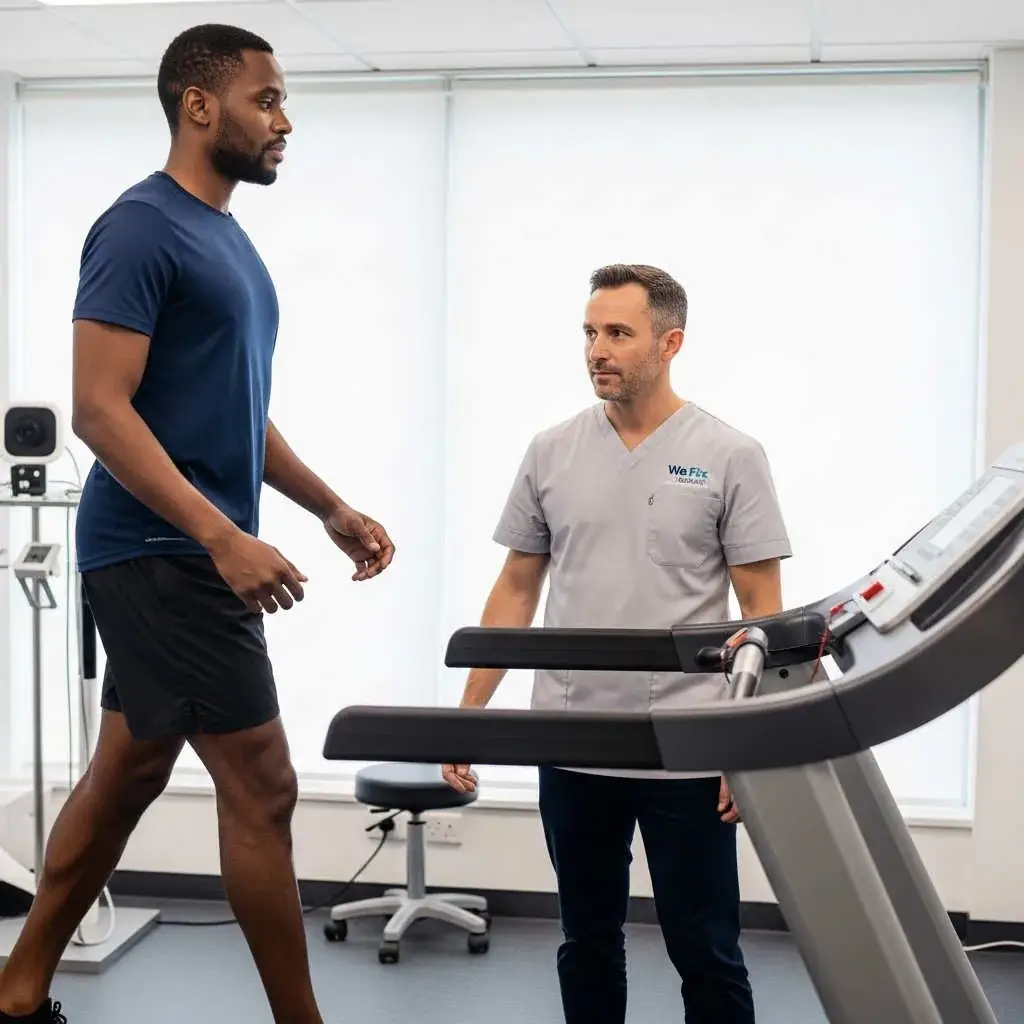
In our experience treating active individuals, a thorough Biomechanical Assessment is about much more than just looking at your foot in isolation. It’s about understanding how your entire body moves – your kinetic chain – to identify those subtle imbalances or inefficient movement patterns that could be secretly overloading your Achilles tendon. We often use tools like video gait analysis to observe what the naked eye might miss during walking or running.
We often see active professionals who’ve had multiple opinions, but it’s not until we look at, say, their hip control during running or their ankle joint range of motion that the real driver for their recurring Achilles pain emerges.
Problem: Your Rehabilitation Was Inadequate or Ended Prematurely
Another very common reason for that stubborn Achilles pain making an unwelcome return is that your previous rehabilitation was incomplete or improperly progressed. We get it; when you’re passionate about your sport or activity, the moment you feel a bit better, the temptation to jump back in at full throttle is huge. But is your tendon truly ready for those demands?
Effective Achilles rehab requires specific components often missed or rushed. These include insufficient eccentric strengthening (where the muscle lengthens under load – crucial for tendon health), neglecting isometric exercises (static holds, brilliant for pain relief and early strength) or Heavy Slow Resistance (HSR) training (which builds significant tendon capacity).
Furthermore, if there wasn’t a clear plan for progressive overload (gradually increasing the demands on the tendon), or if weaknesses in the wider kinetic chain (like your hips or core) were ignored, your Achilles may have been left vulnerable. If your previous rehab felt more like a list of ‘don’ts’ and some gentle stretches, rather than a structured plan to systematically make your tendon stronger and more resilient, that could be a key reason the pain returned.
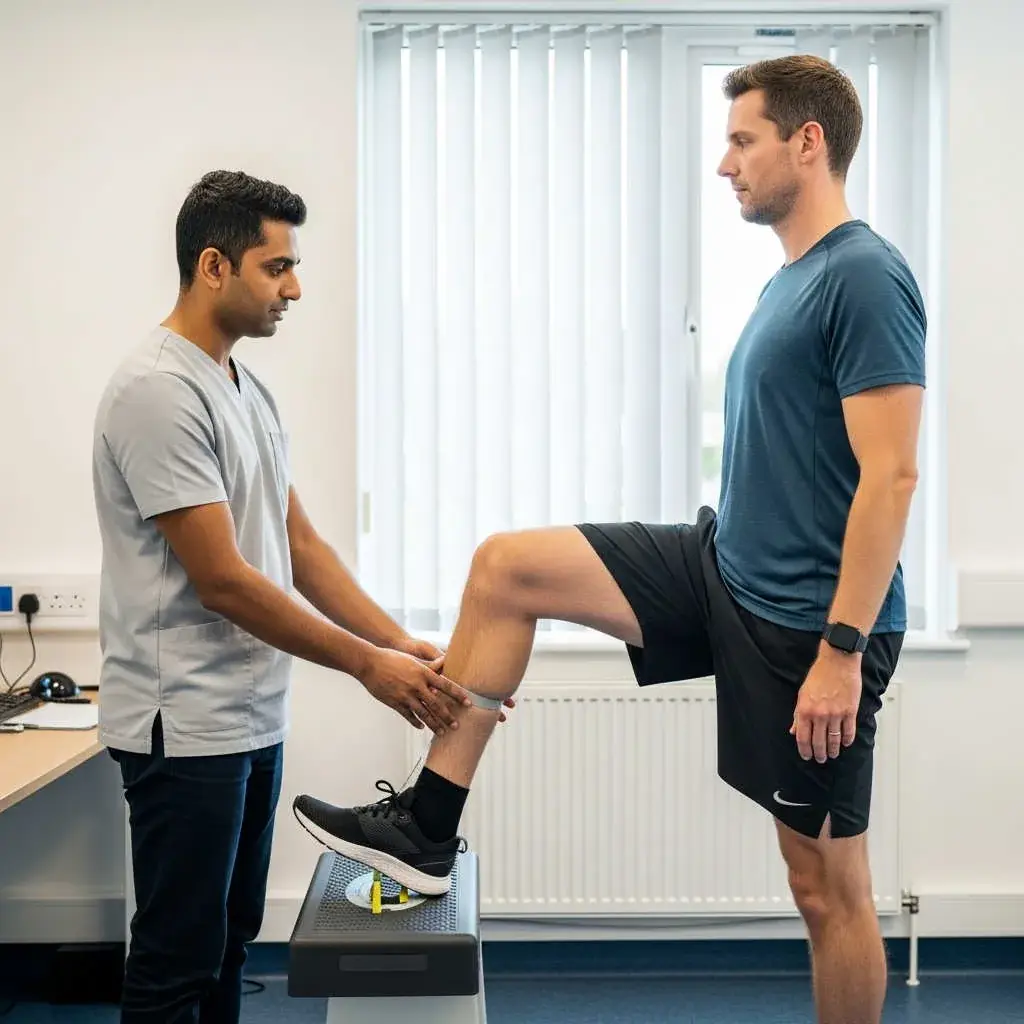
Our approach at We Fix Feet, often delivered within a ‘package of care’, focuses on a staged, progressive loading programme. This isn’t just about short-term pain relief; it’s about systematically rebuilding your tendon’s strength and capacity, step-by-step, ensuring it can cope with everything from your daily jog to that demanding gym session.
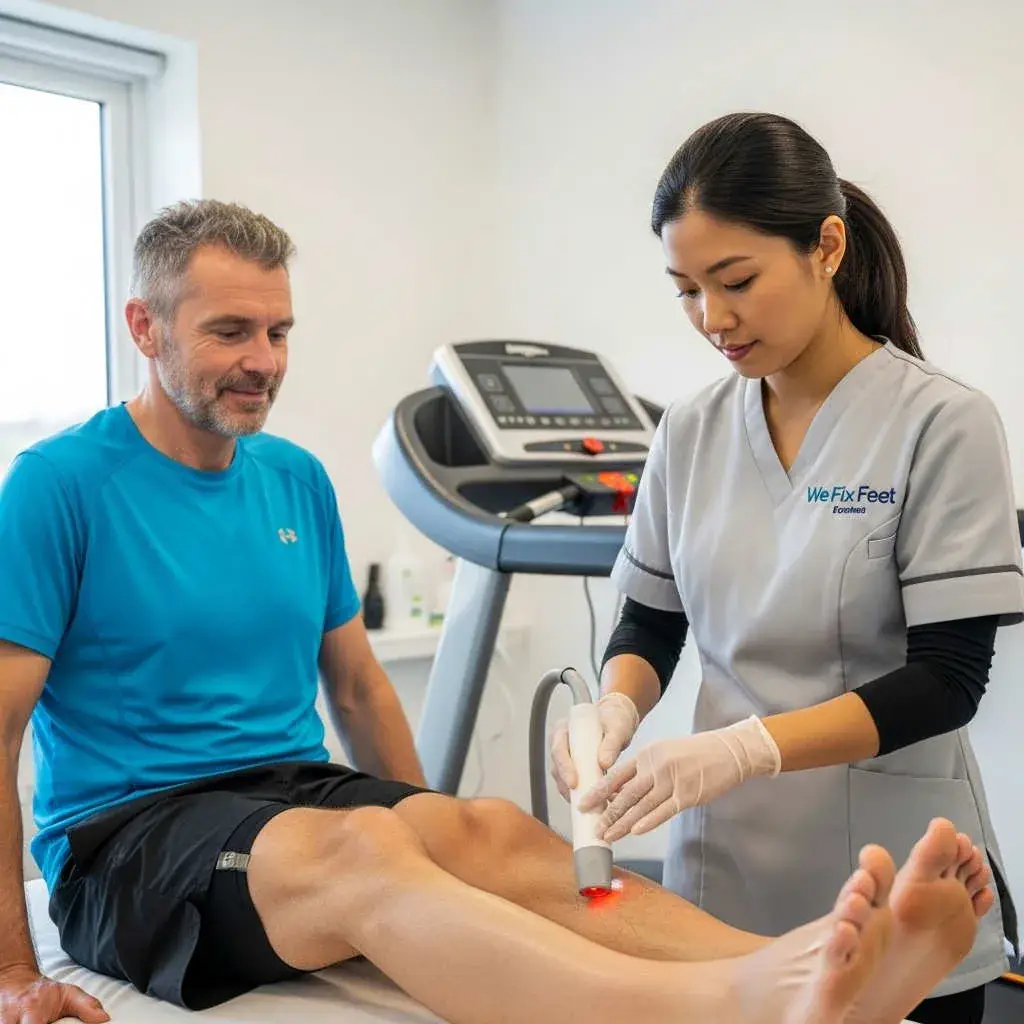
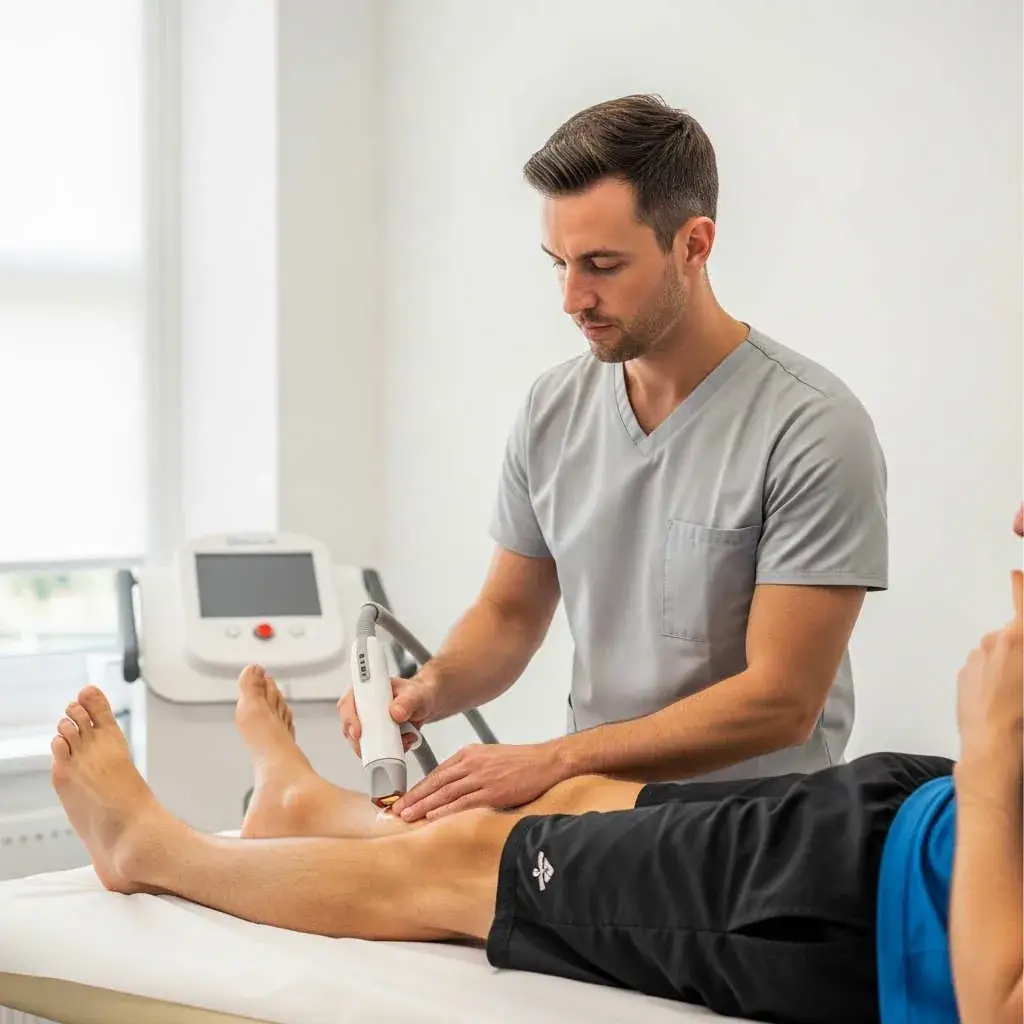
We’ll guide you on what ‘good pain’ versus ‘bad pain’ feels like during this process. When appropriate, advanced treatments like Shockwave Therapy or Class IV Laser Treatment can be incredibly helpful to calm down stubborn pain and kick-start healing, allowing you to engage more effectively with the essential strengthening work. They are powerful tools within a bigger plan, not standalone fixes.
For instance, we helped an avid cyclist whose Achilles pain kept stopping his marathon training. His previous rehab involved only basic exercises. A structured plan incorporating eccentric loading, alongside Shockwave therapy to manage his pain, built the tendon strength he needed to complete his race.
Problem: Overlooked Biomechanical Factors or Training Errors on Return to Activity
Even the best rehabilitation can be undermined if you return to the same movement patterns or training habits that contributed to the injury in the first place, without specific guidance on modification. Your drive to get back to your personal best is fantastic, but sometimes that enthusiasm can lead to unintentional overload if the return isn’t managed carefully.
Common biomechanical deficits, such as excessive foot pronation (where the foot rolls inward too much), restricted ankle joint movement (dorsiflexion), or inefficient gait patterns (like overstriding when running), can place continuous, excessive stress on the Achilles tendon.
Similarly, common training errors – doing too much too soon, making sudden dramatic changes to your training volume or intensity, running on different surfaces without adaptation, or allowing insufficient recovery time – are notorious for provoking Achilles pain recurrence.
This is where understanding load management becomes your superpower. In our experience treating active individuals, we help create a smart, gradual return-to-activity plan. This might involve gait retraining cues to improve running form or specific drills to ensure your Achilles isn’t taking undue punishment. It’s about training smarter, not just harder.
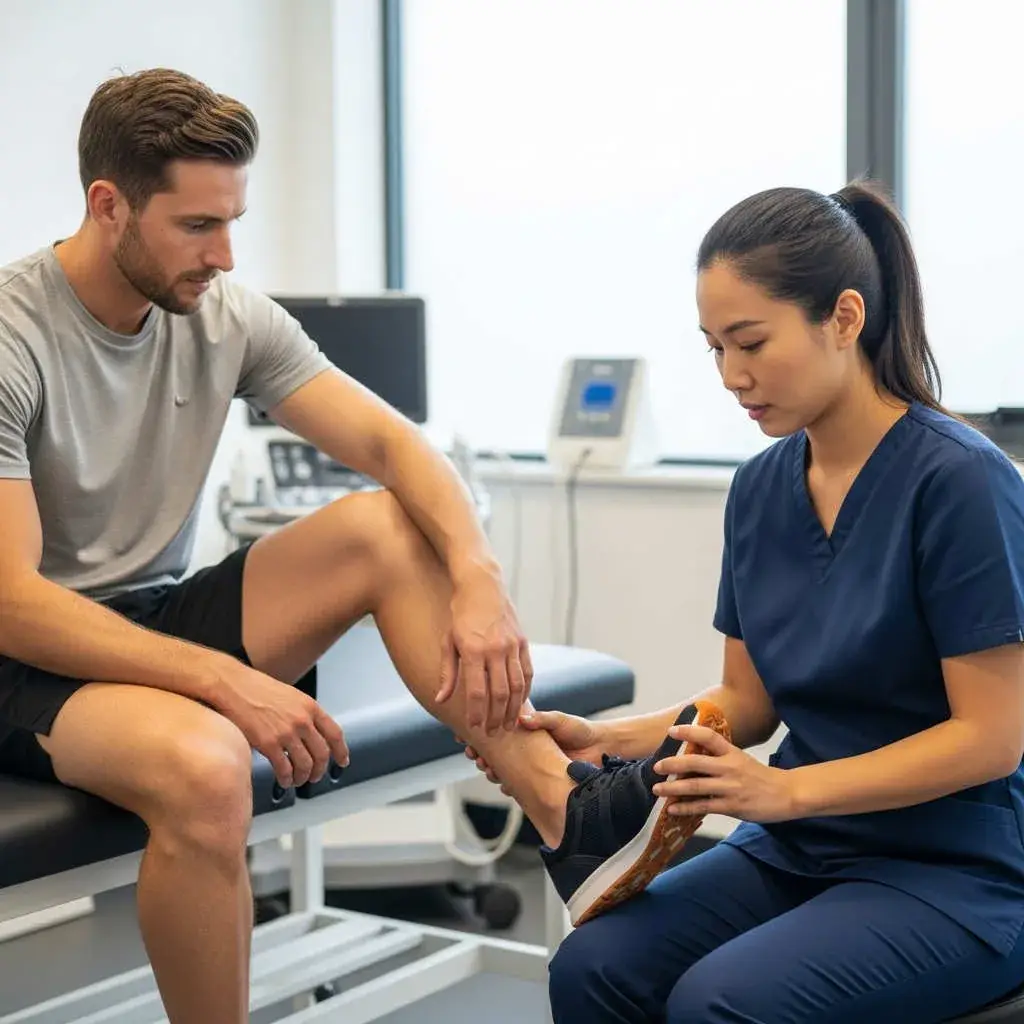
Sometimes, after a detailed Biomechanical Assessment, custom orthotics (specialist insoles) can play a role in fine-tuning your foot mechanics to offload a stressed Achilles, but they’re part of a bigger picture, not a standalone fix. We worked with a keen cyclist who found his Achilles flared up every time he increased his hill training. His rehab had focused on the tendon, but our biomechanical assessment identified issues with his cleat position and saddle height, which were subtly altering his ankle mechanics under load. Adjusting these, alongside his strength work, made the difference.
Problem: Not Addressing the ‘Why’ Behind Previous Treatment Failures
It’s incredibly disheartening to invest time, effort, and hope into treatments only to find yourself back at square one. You might even start to think your Achilles is ‘unfixable’ – but often, it’s the approach that needs to change, not your Achilles.
General approaches, perhaps those you’ve experienced via the NHS or some general physiotherapy services, might not always get to the root of persistent, recurring sports injuries in active people. This can be due to a lack of specialist focus on lower limb sports injuries, time constraints preventing deep-dive assessments, or a primary focus on acute symptom relief rather than building long-term load capacity and resilience for high-demand activities.
This is why seeking out clinicians who live and breathe musculoskeletal and sports injuries of the lower limb can be a turning point. Our entire focus at We Fix Feet is on understanding these complex recurring issues. We aim to provide a pathway that addresses every contributing factor, from your specific biomechanics to your personal training goals, often within a ‘package of care’ designed for comprehensive and lasting resolution.
Part of our commitment to you is being upfront about what it really takes to overcome recurrent Achilles pain. It’s not always a quick or easy path, and it requires your active participation. Here are some of those uncomfortable truths:
- Time Commitment: Effective rehabilitation for recurrent Achilles tendinopathy genuinely takes time – often several months of consistent effort.
- Active Participation is Crucial: Consistent adherence to your tailored plan is vital.
- Passive Treatments Aren’t Enough: While helpful for symptoms, they don’t fix reduced load tolerance without a progressive loading exercise programme.
- Flare-ups Can Happen: Especially when returning to activity. Having a plan to manage them, usually involving a temporary load adjustment, is key.
- Maintenance is Often Key: For active individuals, some ongoing specific strengthening and load management is often necessary to prevent future issues.
Understanding these truths upfront empowers you to engage realistically with your recovery.
Being Honest: Is Our Comprehensive Approach Always the Right Fit?
Our goal at We Fix Feet is to see you get better and return to the activities you love, free from pain. We believe our comprehensive, specialist-led approach, often involving an in-depth Biomechanical Assessment and a structured ‘package of care’, offers the best chance for lasting success with stubborn, recurring Achilles pain.
However, we also believe in being radically honest. This intensive approach may not be the ideal first step for everyone.
For example, our approach might not be the best fit if:
- You are primarily looking for a very quick, low-cost, passive treatment just for temporary pain relief, rather than being able or willing to invest the time and effort required for a comprehensive rehabilitation programme aimed at addressing all underlying causes.
- You expect an instant “magic bullet” cure for a chronic Achilles issue without being prepared to actively participate in your recovery, including performing prescribed exercises and making necessary load management adjustments. Lasting change takes consistent effort.
- Your “recurring” pain is actually a new, unrelated injury that needs a completely fresh diagnostic approach, or if your pain is predominantly driven by a systemic inflammatory condition (like active rheumatoid arthritis) which requires primary management by a rheumatologist or your GP.
- The investment in a specialist ‘package of care’ is genuinely not feasible for you right now. We understand that cost is a real consideration, and while we believe our comprehensive plans offer excellent long-term value by aiming for lasting solutions and preventing further costly setbacks, the upfront commitment may not suit every individual’s current circumstances.
The most important thing is finding the approach that gives you the best chance of success and allows you to move forward with confidence.
Taking Control of Your Achilles Health
Recurring Achilles pain often isn’t bad luck; it’s usually down to factors like an incomplete initial picture, rehab that didn’t quite hit the mark, or returning to activity without your tendon being fully prepared. Understanding these potential pitfalls is your first big win.
What steps can you take?
- Consider a specialist assessment: If this article resonates with your experience, think about seeking a truly thorough assessment from a specialist in lower limb sports injuries. If you’re wondering whether your own movement patterns are contributing, understanding how a Biomechanical Assessment can pinpoint these factors is key.
- Be an active partner in your recovery: If you embark on a new treatment plan, ask questions, make sure you understand the “why” behind your rehab, and commit to the process.
- Respect gradual load management: When you do return to activity, learn about and apply the principles of gradually increasing the load on your Achilles.
Moving Forward, Pain-Free
Understanding why your Achilles pain keeps coming back is the most powerful tool you have to finally break the cycle. A pain-free return to the activities you love isn’t just a pipe dream; it’s achievable with the right knowledge and a tailored approach.
If you recognise your own journey in these common pitfalls, it’s a clear sign that a different approach may be needed. Ask yourself: has my diagnosis truly looked at the whole picture? Was my rehab comprehensively progressed to meet the demands of my sport?
At We Fix Feet, we’re passionate about empowering active individuals like you with clear, honest information and expert care. We believe in tackling complex, recurring problems head-on, because your freedom to move and achieve your personal best is what drives us. Remember our philosophy: Treat, Move, Improve.
Ready to Take the Next Step Towards Pain-Free Movement?
At We Fix Feet, our expert podiatrists are dedicated to understanding your unique situation and providing personalised care to help you treat your pain, improve your movement, and get back to living life to the full. We’ve helped thousands of people just like you overcome frustrating foot and lower limb conditions.
Your Journey to Recovery Starts Here:
The best way to understand how we can help is to have a conversation. Let’s explore your symptoms and discuss the most effective treatment options for you.
Prefer to talk first? Call us directly on 0115 9328832 to speak with a member of our friendly team.