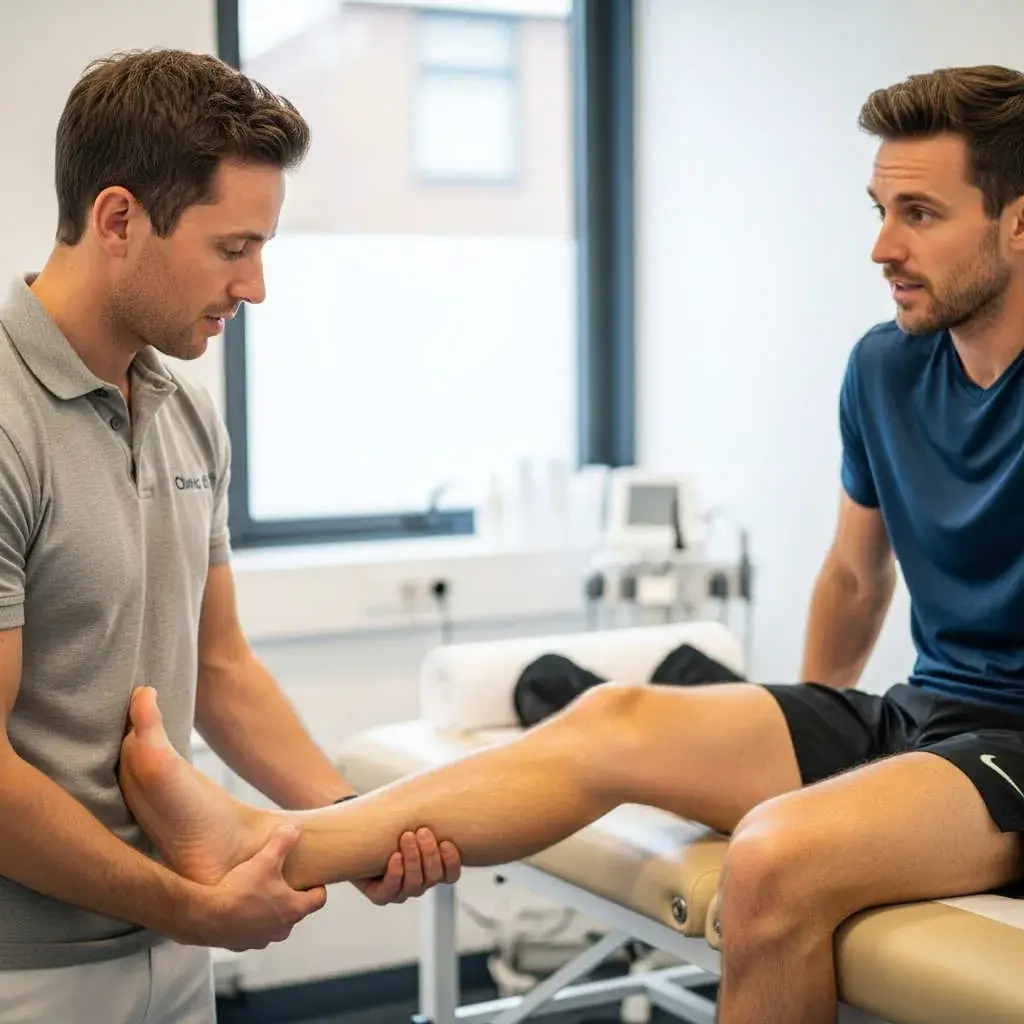
If you’re an active professional, persistent foot pain can be more than just an irritation; it can stop you in your tracks, keeping you from the sports and activities you love. You’ve likely searched for answers, maybe even tried a few things, and now you’re wondering what truly makes a difference.
Key Takeaways:
- The “best” foot pain treatment is highly individual and depends on an accurate diagnosis, your specific activity goals, and the nature of your condition.
- Effective treatments for active individuals often involve a comprehensive approach that addresses the root cause, not just symptoms, combining advanced technology with tailored rehabilitation.
- Understanding the pros and cons of each option – from shockwave and laser therapy to orthotics and exercise programmes – is crucial for making an informed decision.
- A clear plan, focused on long-term resolution and preventing recurrence, offers the best value for getting you back to pain-free activity.
Understanding “Best” for Your Active Lifestyle
You’re not just looking for any solution; you’re looking for the right solution. For an active person, “best” isn’t just about temporary relief; it’s about a swift and lasting return to your sport, your training, your life.
You’re probably tired of “Dr. Google” and looking for real answers, especially if previous treatments have let you down. So, what should you be looking for?
Key Criteria for Effective Foot Pain Treatment
- Efficacy & Evidence Base: Frankly, you need to know a treatment has a strong track record. Is it backed by good research, or solid clinical evidence, particularly for conditions common in active people like plantar fasciitis or Achilles tendinopathy? We’ll look at what the studies and clinical consensus say.
- Speed of Recovery & Return to Activity: We get it – when pain stops you from running or playing your sport, you want to know how quickly you can realistically and safely get back to it. Different treatments have different timelines.
- Long-Term Resolution & Prevention of Recurrence: A “real solution,” as you might be thinking, tackles the root cause. Our “Treat, Move, Improve” philosophy is all about lasting results and arming you with the knowledge to help prevent the problem from returning.
- Suitability for Active Individuals: The demands on your feet and lower limbs are different from someone less active. The right treatment needs to support your level of activity and your specific performance goals.
- Potential Downsides/Risks & Invasiveness: We believe in being upfront. What are the potential drawbacks, side effects, or recovery demands of each approach? You deserve the full picture to make an informed choice.
- Overall Value in Achieving Your Goals: This isn’t just about the financial cost. It’s the total investment – your time, effort, money – weighed against the likelihood of achieving that permanent solution you’re after. As you might feel, “I’m not bothered about the cost if it means a real solution.”
Unpacking Your Foot Pain Treatment Options: A Balanced View
Let’s explore some of the common and more advanced treatment options you might encounter for foot pain. We’ll look at them honestly – the potential benefits and the things you genuinely need to consider.
We’ve seen that a comprehensive plan often works best; isolated treatments may not address the full picture, especially for persistent MSK foot pain. This is why, in our 35+ years of collective experience, we advocate for a holistic approach rather than just chasing symptoms.
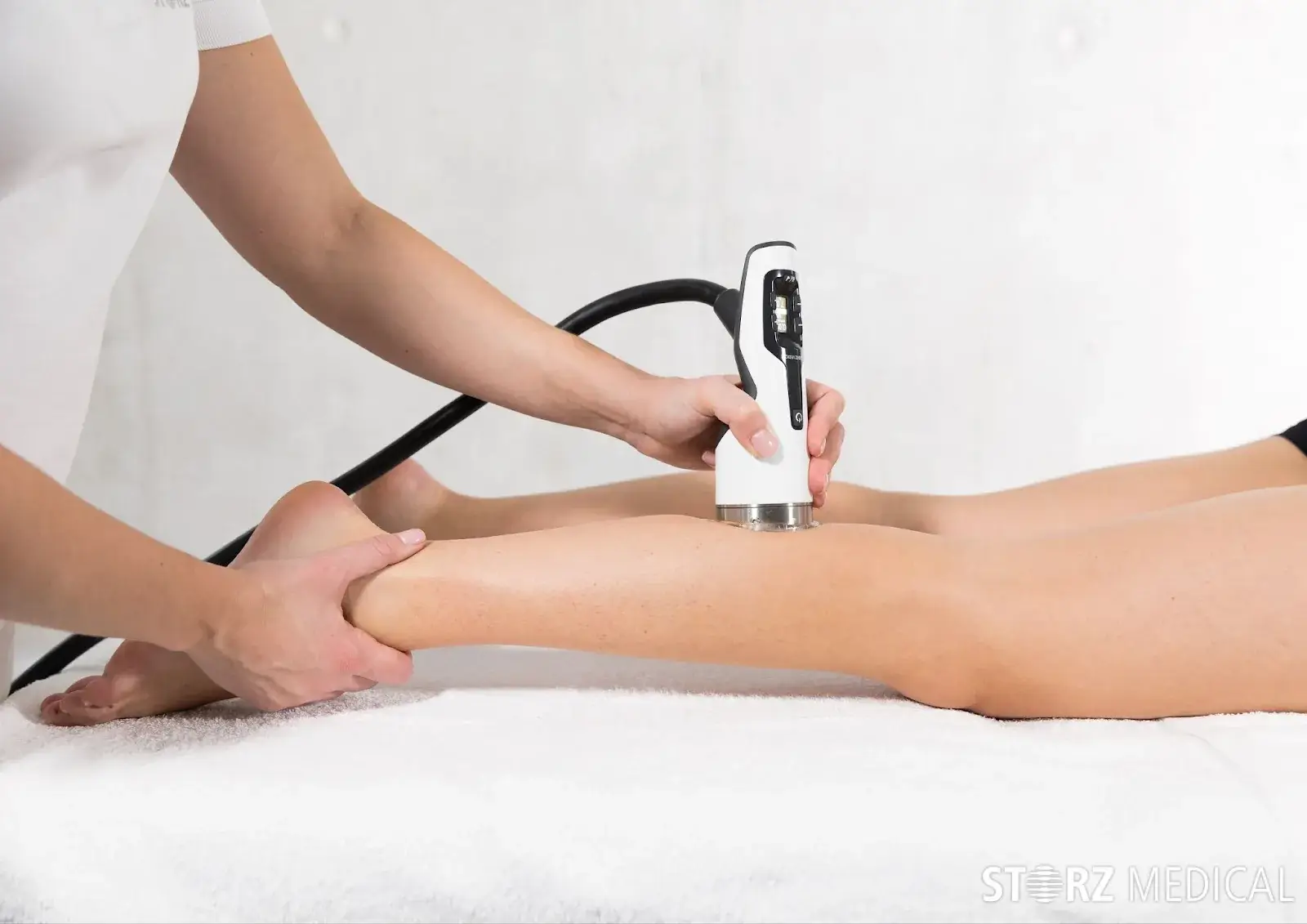
Shockwave Therapy (ESWT): A Powerful Option for Stubborn Heel Pain?
Extracorporeal Shockwave Therapy (ESWT) is a non-invasive treatment. It uses acoustic energy waves aimed at injured tissues to stimulate your body’s natural healing processes. It’s often used for chronic conditions like plantar fasciitis and Achilles tendon pain.
- The Upside (What Makes Shockwave Appealing): It’s non-invasive. It actively encourages your body to heal itself by increasing blood flow and stimulating tissue repair. Many patients, often around 80% for plantar fasciitis, experience significant and lasting pain relief. Sessions are usually quick.
- Who is it generally a good fit for? Those with stubborn tendon problems unresponsive to initial treatments.
- The Honest Truth (Potential Downsides & Considerations for Shockwave): It can be uncomfortable during the procedure. You might experience temporary redness, bruising, or even a slight initial worsening of pain. A course of multiple sessions (typically 3 to 5) is usually needed. It doesn’t work for everyone.
- The elephant in the room: While shockwave can be excellent for pain and healing, for a truly permanent solution, underlying causes like biomechanics often need addressing too. A comprehensive rehabilitation programme is essential.
- Who is it not typically recommended for? Generally avoided during pregnancy, with active cancer near the site, or certain blood clotting disorders.
Class IV Laser Therapy: Advanced Light for Pain and Healing – The Real Story?
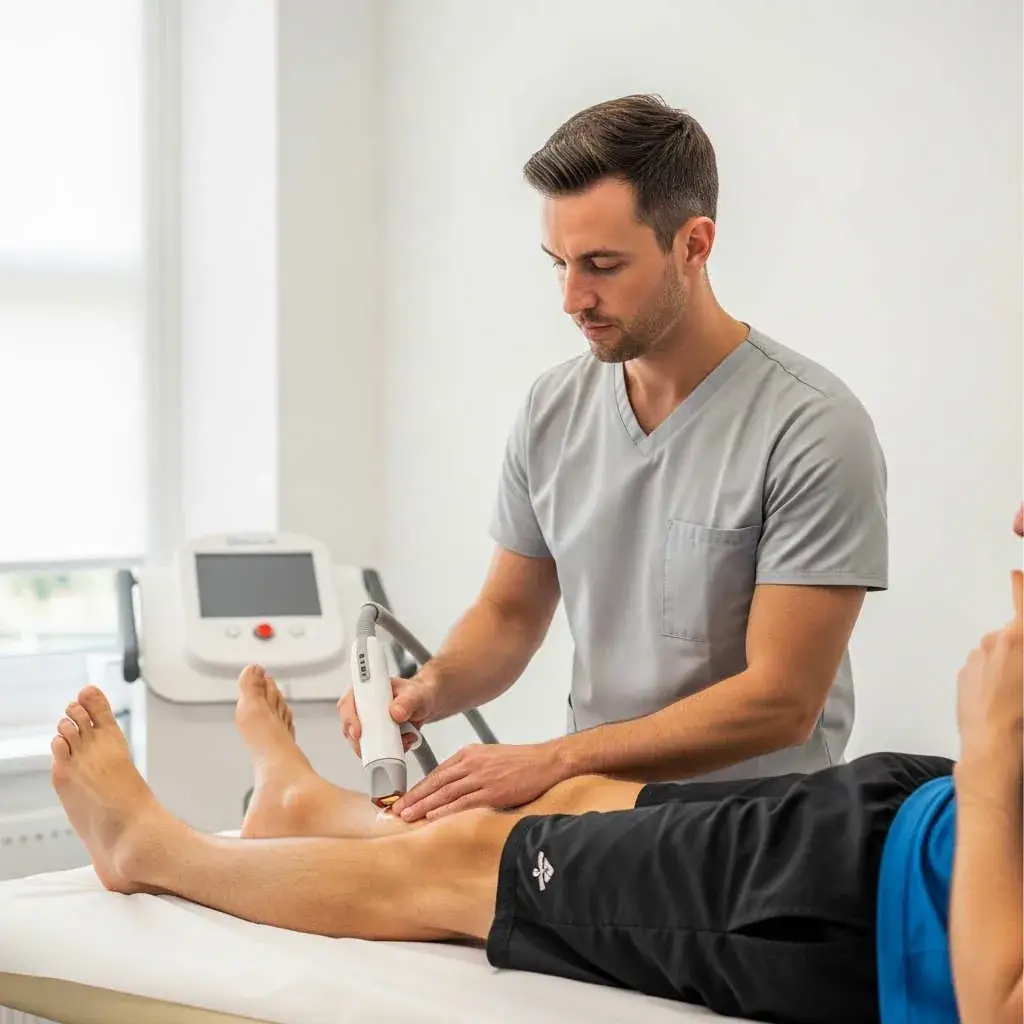
Class IV Laser Therapy uses specific light wavelengths to penetrate deep into tissues, stimulating cellular regeneration, reducing inflammation, and accelerating natural healing.
- The Upside (Why Laser Therapy is Gaining Traction): It’s non-invasive and generally pain-free, effectively reducing pain and inflammation while supporting faster recovery and improved mobility. It also helps improve circulation. Side effects are minimal.
- Who benefits most? Individuals with persistent pain in soft tissues, arthritis, plantar fasciitis, or Achilles tendonitis.
- The Honest Truth (Limitations & What to Expect from Laser Therapy): It usually requires multiple sessions. Efficacy can vary.
- The elephant in the room: “Laser therapy” is broad. Class IV lasers, which we use, are higher powered for deeper penetration. However, for complex foot pain, laser therapy is usually best as part of a wider treatment plan.
Custom Orthotics (Shoe Inserts): Are They Always the Answer for Your Feet?
Custom orthotics are specially made devices worn in shoes to support the arch, cushion, and help correct biomechanical issues.
- The Upside (How Orthotics Can Help): They can offer support and cushioning, reducing strain. For some, they may help address underlying biomechanical factors. Good quality off-the-shelf options are available for initial trial.
- Who might find them useful? People whose foot pain is clearly linked to specific foot structures or alignment issues identified in an assessment.
- The Honest Truth (The Great Orthotics Debate – What You Should Consider):
- The elephant in the room: Research evidence suggesting custom-made orthotics are significantly better than good quality, well-chosen off-the-shelf ones for common issues like plantar fasciitis isn’t always clear-cut. Custom ones are considerably more expensive.
- They can take time to get used to and don’t directly address muscle weakness. They often work best with an exercise programme. Be cautious of very expensive “personalised” insoles that aren’t true custom-made medical devices.
- For whom might orthotics not be the primary solution? If pain isn’t primarily driven by foot alignment, or if muscle weakness is the main issue, orthotics alone are unlikely to be the full answer.
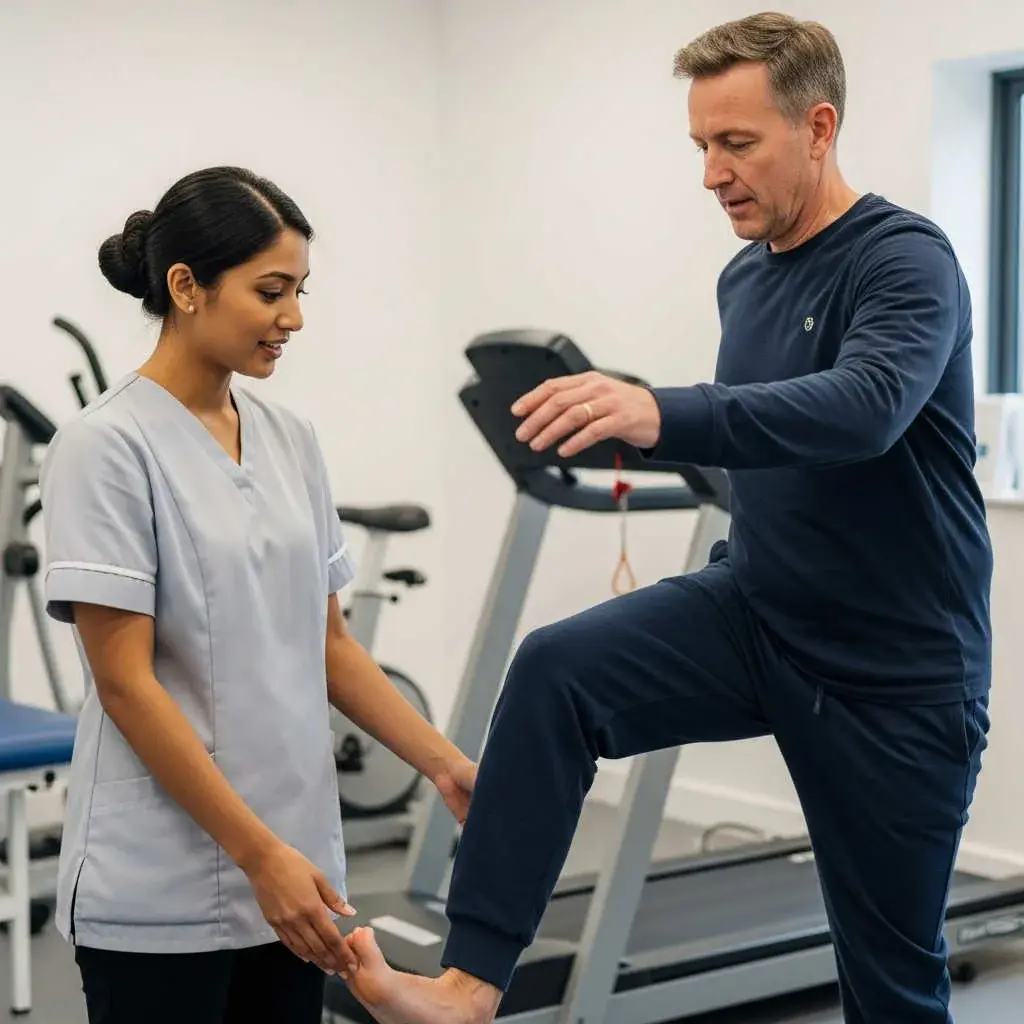
Comprehensive Rehabilitation Programmes (Exercise-Based Therapy): The True Power of Movement
This involves a tailored exercise programme to stretch and strengthen muscles and tendons in your feet and lower legs, sometimes with manual therapy.
- The Upside (The Indisputable Benefits of Rehab): It directly addresses many underlying causes of foot pain, like muscle imbalances. It empowers you with self-management tools and focuses on restoring function and preventing recurrence, aligning with our “Treat, Move, Improve” philosophy.
- Who needs this? Honestly, almost everyone with persistent MSK foot pain benefits from a tailored rehabilitation component.
- The Honest Truth (What Rehab Requires From You): This isn’t passive. It demands your active commitment. Recovery is often gradual. Incorrect exercise technique could be unhelpful.
- When might exercises alone not be enough? For very acute pain or chronic conditions, treatments like shockwave or laser can be invaluable for settling things down, making rehab more effective.
Packaged Care vs. Pay-As-You-Go: Which Approach Gets You Back to Your Sport Faster?
Understanding different treatment structures is also helpful. We often find that active individuals who’ve been through fragmented treatments elsewhere appreciate a more defined approach.
- Traditional Pay-As-You-Go (PAYG) Approach: You pay for each session individually.
- Positives: Lower immediate cost per session, flexible if only one or two appointments are needed.
- Negatives/Limitations (The Potential Pitfalls): Costs can mount without a clear end if multiple sessions are needed without solving the root cause. You might find yourself “wasting time and money on ineffective treatments.”
- Comprehensive “Package of Care” Model (e.g., Our We Fix Feet 1-Month or 3-Month MSK Plans): This offers a bundled, intensive programme over a set period, aiming for a definitive resolution by combining appropriate treatments – perhaps advanced technology alongside structured rehabilitation and education.
- Positives (The Potential for a “Real Solution”): It’s a comprehensive approach, addressing multiple facets. It provides a clear pathway and timeline. The focus is on achieving your specific goals. This can offer better long-term value.
- Negatives/Limitations (Being Honest About the Model): The upfront investment is higher than a single session. It requires commitment to the full programme. A thorough initial assessment ensures such a package is genuinely the right route.
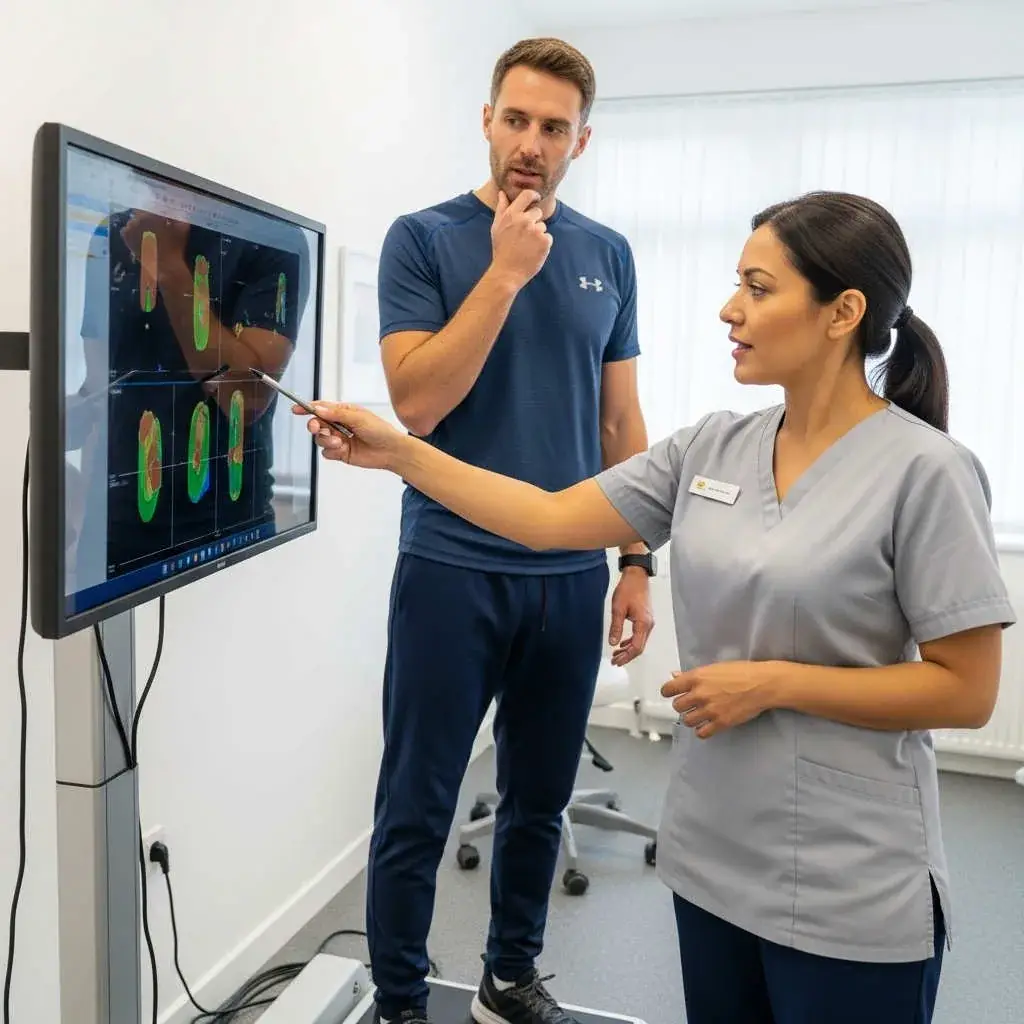
What About General Physio or the NHS? Understanding Your Options
Many people first approach their GP or general physiotherapy.
- Positives (When These Routes Can Be Helpful): NHS treatment is free. Physiotherapy is a valuable conservative treatment.
- Negatives/Limitations (Potential Challenges for Your Specific Needs – What You Should Be Aware Of):
- The elephant in the room for active professionals: NHS waiting times for MSK issues can often be very long. If you’re keen to get back to your sport quickly, these delays are a real problem.
- Treatment might be more generalised. Access to advanced technologies like shockwave or laser via the NHS for common foot pain is typically very limited.
- General physiotherapists may not always have the same deep specialisation in lower limb biomechanics as a podiatrist focusing on MSK and sports injuries.
(A Note on) Corticosteroid Injections: A Quick Fix or A Temporary Mask?
You might encounter corticosteroid injections for severe foot pain.
- The Upside: Can offer significant short-term pain relief.
- The Honest Truth: The relief is often temporary. Steroids don’t fix the underlying cause. There are potential risks, including (though rare) plantar fascia rupture or thinning of the heel’s fat pad. Some specialists advise avoiding them for plantar fasciitis. For an active person aiming for a permanent solution, relying on injections is usually not the best long-term strategy.
Making Sense of It All: How to Choose the Foot Pain Treatment That’s Right for You
So, how do you pick the treatment that will actually work best? The “best” approach is deeply personal. It hinges on an accurate diagnosis, your specific goals, and the criteria we discussed.
To help you navigate this, here are some key questions to ask yourself, and any potential clinician. We believe being armed with the right questions is powerful:
- What’s the precise diagnosis for my foot pain, and what are the underlying causes?
- What’s the evidence that this treatment works effectively for my specific issue and my activity level?
- How will this treatment help me get back to [insert your specific sport/activity here]?
- Realistically, what’s the recovery timeframe with this approach?
- What are the potential risks or downsides for me?
- What’s the plan to stop this pain from coming back?
- What’s the total expected cost, and what exactly does that include?
Consider these scenarios:
- If you’re dealing with a recent, acute running injury… a thorough assessment to find triggers, combined with treatments for rapid pain reduction (like Class IV Laser) and a phased return-to-running plan, might be most effective.
- If you’ve been battling persistent Achilles tendinopathy for months… then advanced options like Shockwave Therapy, as part of a structured rehabilitation programme, could be what you need.
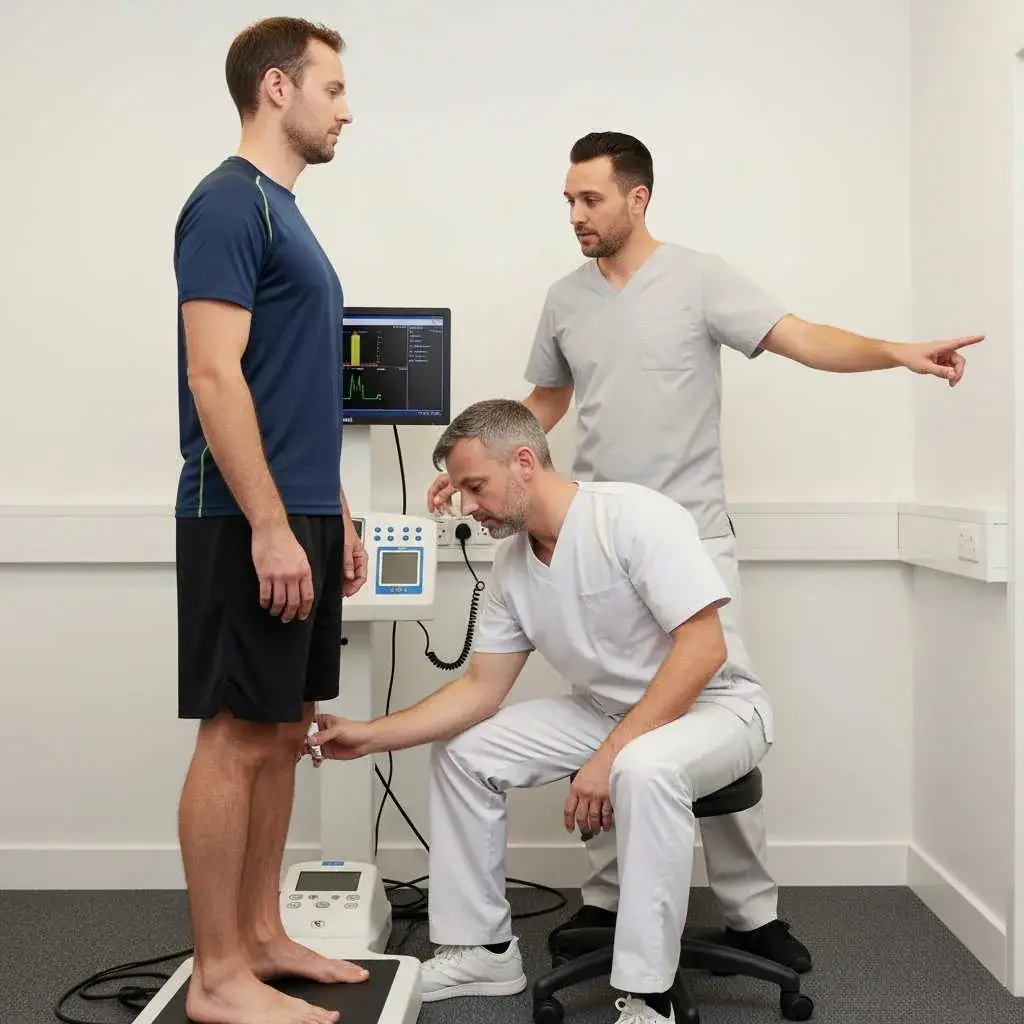
- If you suspect underlying biomechanical issues are causing recurring foot pain… then a comprehensive Biomechanical Assessment is essential.
Armed with this understanding, you’re now in a much stronger position.
Your Next Steps Towards a Pain-Free, Active Life
We know it’s a lot to take in. The main things to remember are:
- Understanding what “best” means for you is the vital first step.
- Every treatment has pros and cons – honest awareness is crucial.
- A thorough diagnosis from a specialist is non-negotiable for lasting relief.
- Your active goals should drive your treatment choice.
Here’s some practical advice:
- Don’t just live with foot pain. Get a clear diagnosis from a specialist experienced in lower limb biomechanics and sports-related injuries.
- When looking at any treatment, ask about the evidence, the expected timeline for your goals, and how it tackles the root cause.
- Lasting recovery often comes from a comprehensive approach – like our “Treat, Move, Improve” philosophy – including targeted rehabilitation.
Ready to Take the Next Step Towards Pain-Free Movement?
At We Fix Feet, our expert podiatrists are dedicated to understanding your unique situation and providing personalised care to help you treat your pain, improve your movement, and get back to living life to the full. We’ve helped thousands of people just like you overcome frustrating foot and lower limb conditions.
Your Journey to Recovery Starts Here:
The best way to understand how we can help is to have a conversation. Let’s explore your symptoms and discuss the most effective treatment options for you.
Prefer to talk first? Call us directly on 0115 9328832 to speak with a member of our friendly team.
Want to learn more about our approach first? Discover our Commitment to You on our About Us page or explore what we treat.