
That nagging foot pain can be incredibly frustrating, especially when it stops you from hitting your stride and chasing those running goals. You’re not alone in wondering if you’ll ever get back to your best without it.
Key Takeaways:
- Successfully returning to running after foot pain requires an accurate diagnosis of the root cause, not just treating symptoms.
- A phased approach – Treat, Move, Improve – involving targeted rehabilitation and gradual load increase is crucial for lasting recovery.
- Avoiding common pitfalls like returning too quickly or neglecting underlying biomechanical issues is crucial for preventing re-injury.
- Persistent pain, or certain “Red Flag” symptoms, signal that self-management is risky; specialist assessment is then essential.
Feeling that familiar frustration as foot pain puts your running goals on hold again, and wondering if you’ll ever get back to your personal best without it?
Are you tired of generic advice from ‘Dr. Google’ or treatments that just don’t seem to stick, and now you’re searching for a clear, honest, and effective way to truly understand what’s going on and get back to running for good?
We understand. In this guide, we’re not going to just skim the surface.
We promise to provide you with an honest, expert-led roadmap – built on over 35 years of collective experience in helping runners like you – to navigate the path back to pain-free running. We’ll ‘say what others aren’t willing to say’ about common pitfalls and what truly works.
We’ll walk you through understanding the common types of foot pain that stop runners in their tracks, why they happen, the critical steps for a successful recovery (the ‘Treat, Move, Improve’ way), the mistakes many make, and, importantly, when trying to go it alone isn’t the best path and how specialist help can make all the difference.
Your Running Journey: Context and Our Commitment
Foot pain is incredibly common among runners (you’re not alone!), yet successfully returning to running can feel like navigating a minefield. The foot is a complex structure, and what works for one person might not work for another, highlighting why generic advice often falls short.
This article is born from our extensive experience helping runners like you get back on track. Our aim isn’t to sell, but to empower you with the knowledge we’ve gained from seeing hundreds of musculoskeletal (MSK) patients.
Our ‘Treat, Move, Improve’ philosophy is all about understanding your goals (like that next 10k or personal best) and providing a clear path to achieve them.
Understanding Your Enemy: Common Foot Pain Culprits in Runners (and Why They Crash the Party)
For active individuals, certain types of foot pain frequently interrupt training. Plantar Fasciitis is a prime suspect, causing that sharp pain under the heel, often most intense with the first steps in the morning or after a period of rest. This involves the inflammation or degeneration of the plantar fascia, the supportive band of tissue under your foot. Running, especially with sudden increases in mileage or on hard surfaces, along with tight calf muscles or certain foot types (very flat or very high arches), can trigger it.
Then there’s Achilles Tendinopathy, which you’ll likely feel as pain, stiffness, or swelling in the large tendon at the back of your ankle. This is often an overuse injury, linked to ramping up training too quickly, excessive hill work, or having tight calf muscles that put extra strain on the tendon.
Pain in the ball of your foot, perhaps a burning ache or a sensation of a pebble in your shoe, could be Morton’s Neuoma. Finally, Stress Fractures, tiny bone cracks, often occur in the metatarsals or shin bone due to repetitive impact, especially if you’ve rapidly increased your training volume.
Why These Problems Target Runners
These issues are common in runners because of the repetitive impact involved, often multiple times your body weight with each stride. Your individual biomechanics – how your body moves – along with training errors like doing too much too soon, or wearing unsuitable footwear, can overload specific foot structures, leading to pain.
Now, for the part others might not say so directly: what happens if you just try to run through this pain or get the diagnosis wrong? Ignoring persistent foot pain can lead to more serious problems.
You risk the injury worsening, potentially turning an acute issue into a chronic one that’s far more challenging to treat. You might also develop compensatory injuries elsewhere – your knee, hip, or back – as your body tries to protect the painful foot.
This is precisely why an accurate diagnosis of the root cause is absolutely paramount. Relying on ‘Dr. Google’ or generic advice often means you’re only addressing symptoms, not the underlying ‘why’, and that rarely leads to a lasting solution.
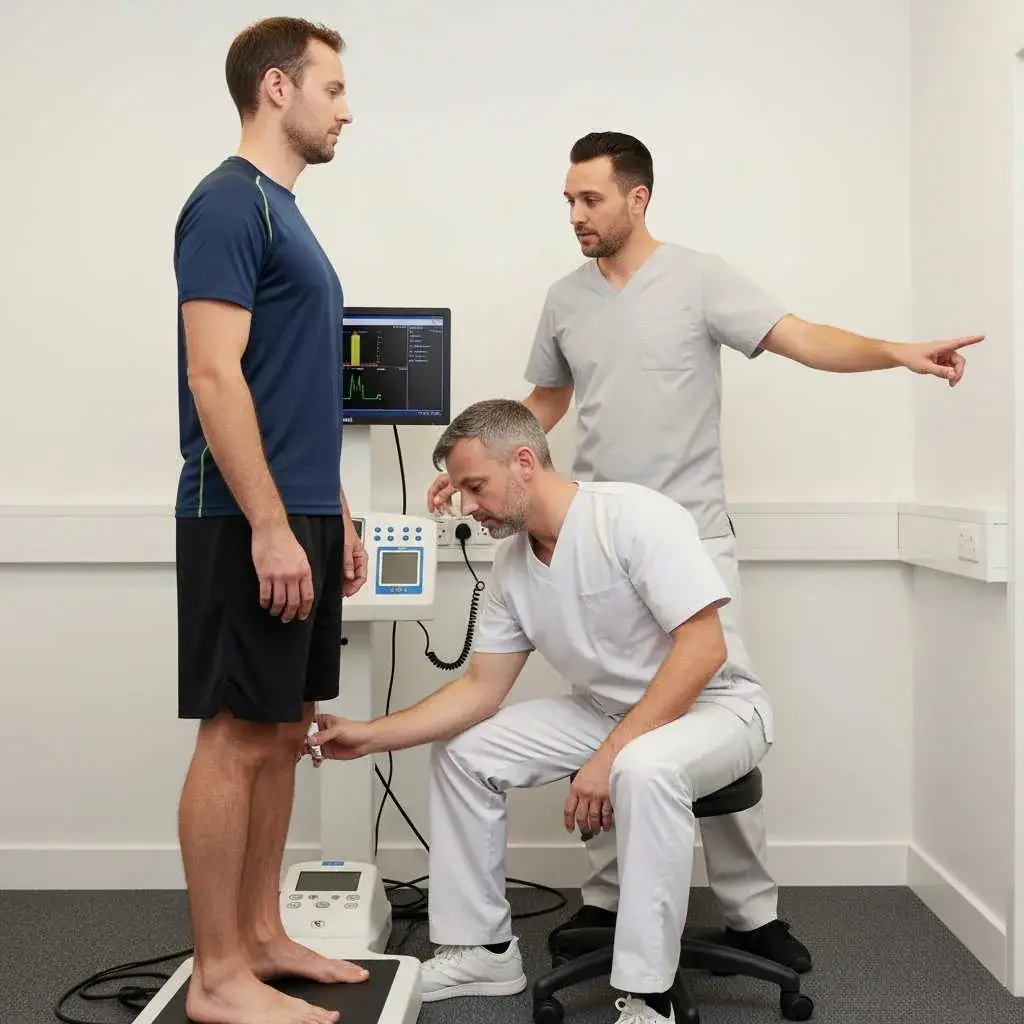
A specialist assessment, such as a Biomechanical Assessment, looks much deeper to uncover those critical underlying factors.
The Recovery Roadmap: A Phased Approach (The ‘Treat, Move, Improve’ Way)
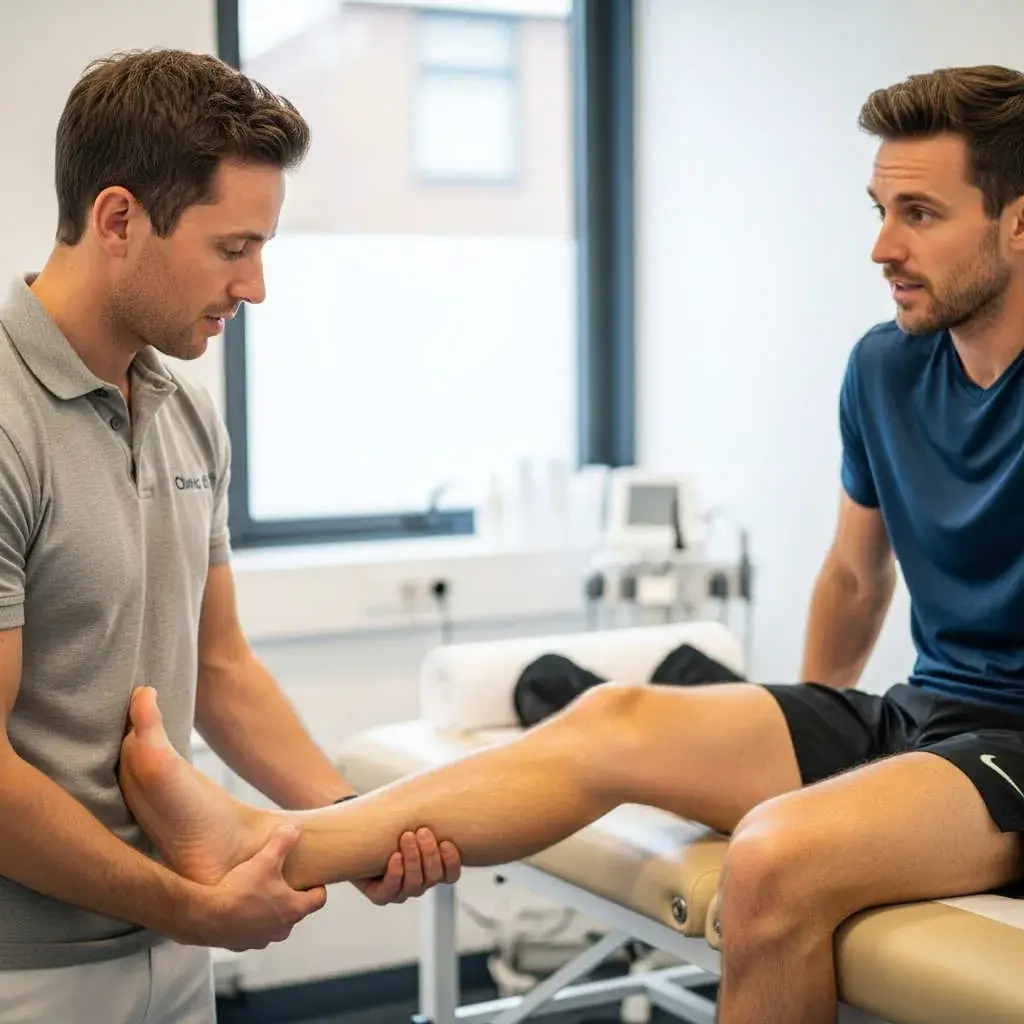
Getting back to running after foot pain is a journey, not a sprint. Our ‘Treat, Move, Improve’ philosophy guides a structured, phased return, ensuring you build back safely and effectively.
Phase 1: Treat (Calming Symptoms & Getting Answers)
Initially, the priority is to settle your symptoms. POLICE (Protect, Optimally Load, Ice, Compress, and Elevate) can be helpful for immediate, acute inflammation in the first day or two.
However, for many running injuries, particularly if pain persists, it’s often not enough on its own and doesn’t address the underlying cause. The most critical step here is achieving an accurate diagnosis.
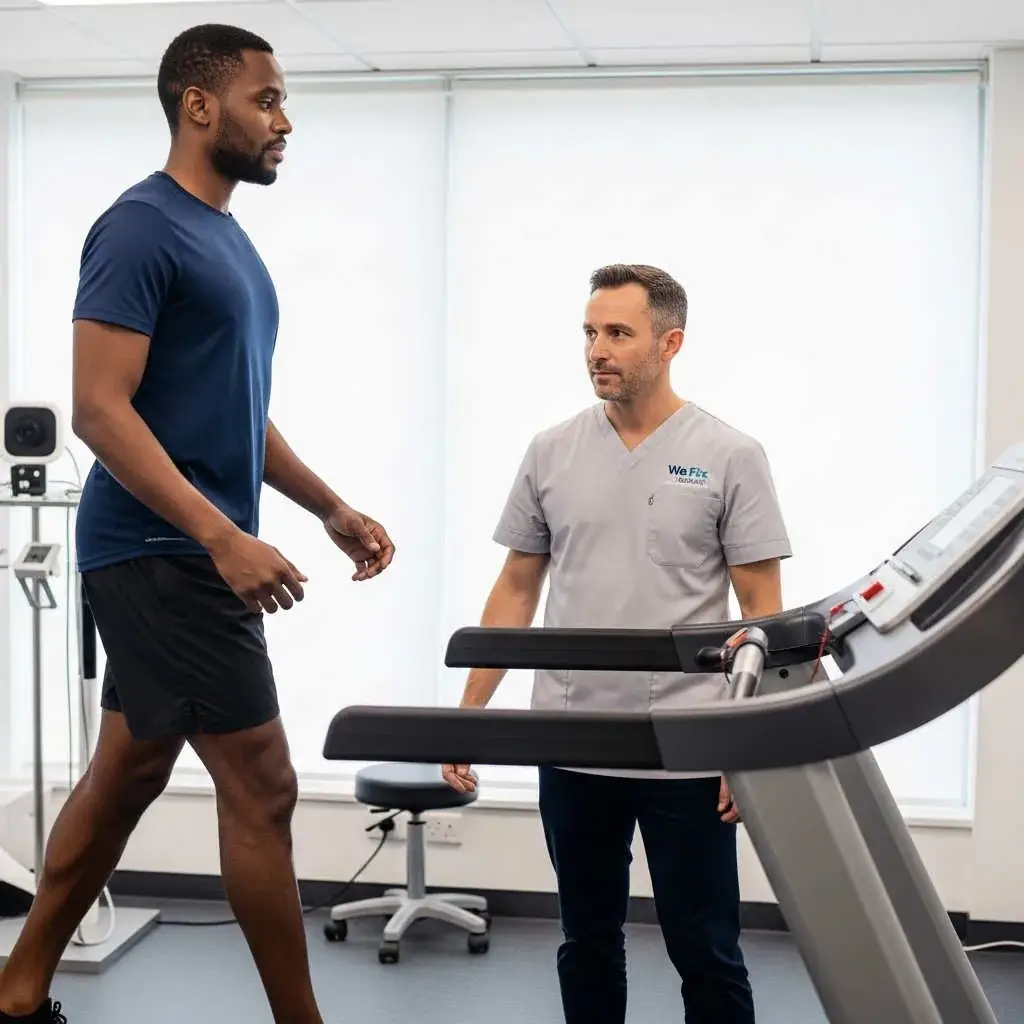
You can’t effectively treat what you don’t fully understand. This is where a comprehensive assessment by a specialist, like a Biomechanical Assessment, provides vital clarity. It helps pinpoint the root cause of your pain, setting the stage for an effective treatment plan tailored to you.
Phase 2: Move (Restoring Function & Mechanics)
Once the initial pain and inflammation are better controlled, the real work to rebuild begins. This phase is crucial for restoring your foot and lower limb’s normal function and resilience.
Targeted rehabilitation is key: this means specific exercises designed to strengthen the muscles that support your foot and ankle, improve flexibility in areas that may be tight (like your calves or hamstrings), and enhance your overall mobility and balance. These exercises are absolutely non-negotiable for achieving a lasting recovery.
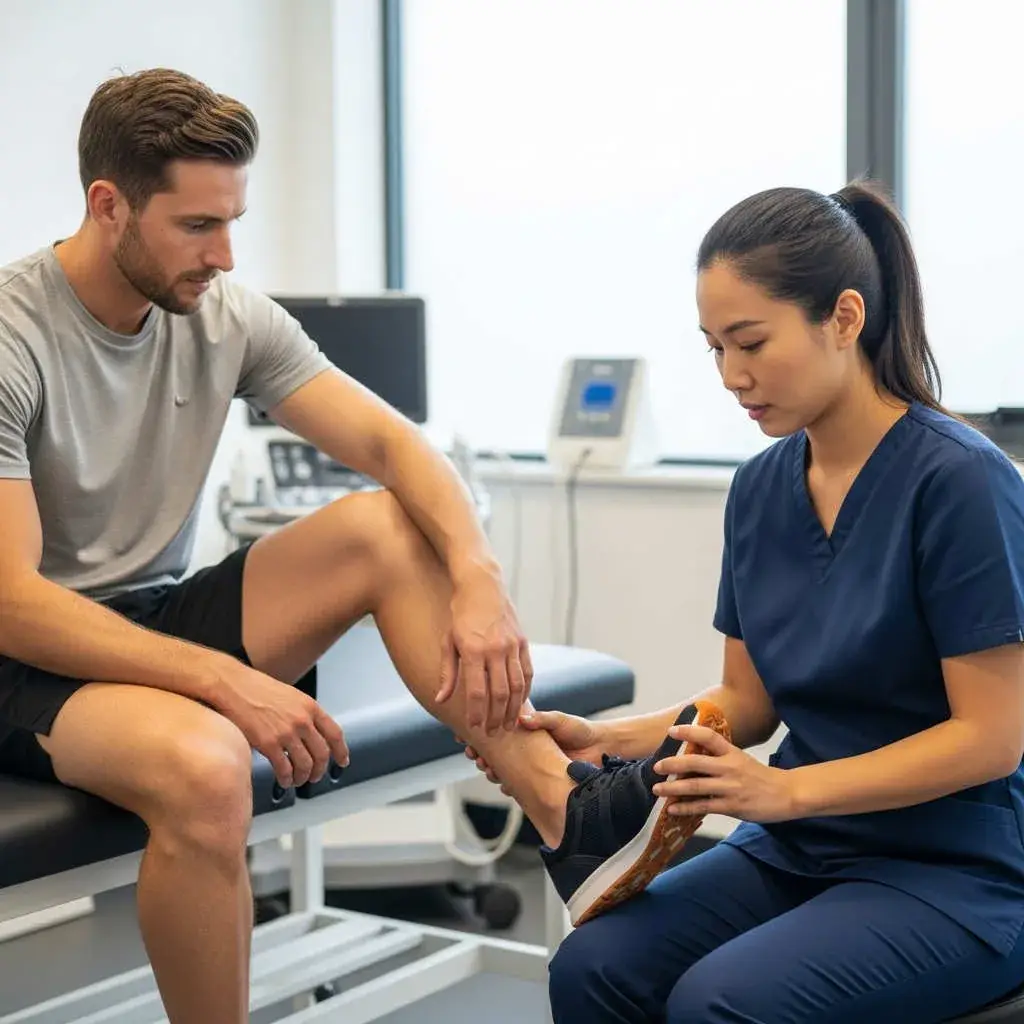
If underlying biomechanical issues were identified during your assessment, this is where solutions such as specific footwear advice come into play. Sometimes, supportive insoles or custom-made orthotics might be recommended as part of your comprehensive plan.
It’s important to be transparent here: custom orthotics can be incredibly beneficial for certain conditions by helping to correct alignment and reducing stress on injured tissues. However, they aren’t a universal fix for every type of foot pain.
They are an investment and often require an adaptation period. Their true value comes when prescribed appropriately as part of a holistic treatment strategy that also includes active rehabilitation, rather than being seen as a standalone, passive cure.
Phase 3: Improve (Gradual Return & Future-Proofing)
This is the phase you’ve been working towards – lacing up your trainers again. However, diving back in too quickly is a common pitfall.
A gradual return is essential: this almost always starts with a walk-run programme (for example, walking for 4 minutes, then running gently for 1 minute, and repeating this cycle). The key is to increase your running time and distance very slowly, meticulously listening to your body, especially monitoring for any reaction the day after a run.
I recall a keen marathon runner we worked with who, after months of frustrating Achilles pain from trying to push through, finally found success by diligently following a carefully progressed walk-run plan that we adjusted weekly based on his specific feedback and tolerance.
Crucially, this phase also focuses heavily on equipping you with strategies to prevent the pain from returning. This might involve continuing with specific strength and conditioning exercises, receiving guidance on how to sensibly manage your training load (how much, how often, how intensely you run), and ensuring your footwear remains appropriate for your activity levels and foot mechanics. This directly addresses the common desire to not only get better but to understand how to stay better.
Avoiding Common Return-to-Running Mistakes
What others might not say about common mistakes: Many runners, in their eagerness to get back, fall into the “too much, too soon” trap, which unfortunately often undoes their hard work and leads to setbacks.
Another frequent oversight is neglecting the vital strength and conditioning work once the immediate pain subsides, only for the problem to flare up again when mileage or intensity increases. Some also mistakenly rely on painkillers to mask discomfort, which can allow underlying damage to continue or worsen.
We believe in being upfront about these common errors to help you navigate your recovery more successfully and ensure your return to running is both effective and lasting.
“Dr. Google,” Quick Fixes, and Why They Often Fall Short (The Pitfalls of Self-Treatment)
When foot pain strikes, it’s completely understandable that your first instinct might be to search online for answers. You’re proactive and looking for information.
However, while “Dr. Google” offers a vast sea of information, it can often lead to more confusion than clarity.
Common self-care strategies like resting, icing, basic stretching, or trying off-the-shelf insoles might offer some temporary relief for very minor niggles. Anti-inflammatory pills might dull the pain for a while too.
But here’s the honest truth: these approaches rarely fix the underlying problem, especially if your pain is persistent or caused by a specific biomechanical issue. They are often just papering over the cracks.
The significant pitfall, which others might not highlight so directly, is that relying solely on generic online advice or self-diagnosis can lead to a frustrating cycle. You might misdiagnose your condition, try treatments that aren’t right for your specific issue (and could even make things worse), waste money on ineffective gadgets or unsuitable shoes, and, crucially, delay getting the right diagnosis and targeted treatment.
This delay can sometimes allow a relatively straightforward problem to become more stubborn and chronic.
The Specialist Difference: Effective Solutions
This is where specialist care offers a fundamentally different and more effective path. It begins with a thorough, accurate diagnosis – often involving a detailed Biomechanical Assessment – to get to the root cause of your pain, not just the symptoms.
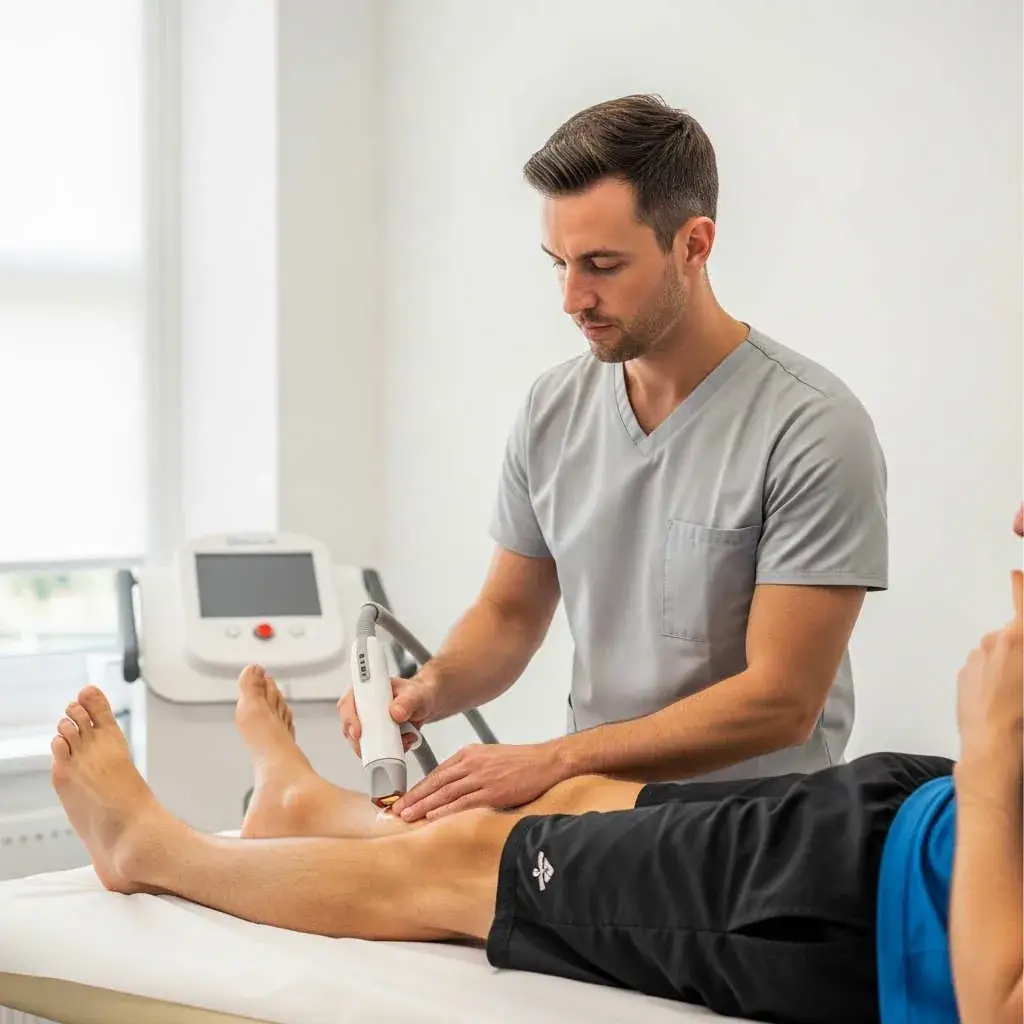
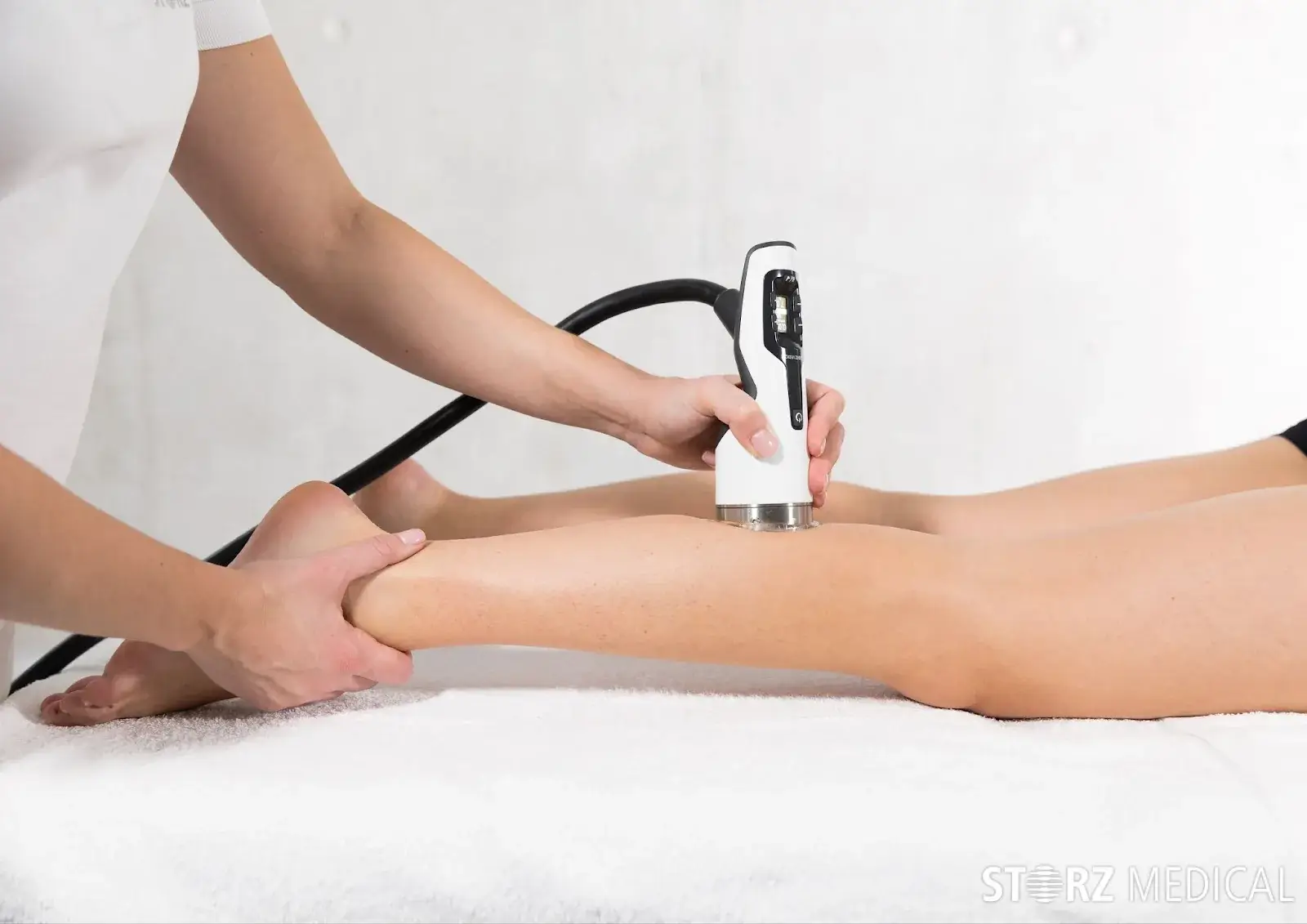
Based on this precise understanding, we can then deploy effective, evidence-based treatments. For instance, if you’re battling stubborn plantar fasciitis or Achilles tendinopathy, advanced treatments such as Shockwave Therapy or Class 4 Laser Therapy can be incredibly beneficial in promoting tissue healing and significantly reducing pain, particularly where basic self-care has failed.
It’s important to know that treatments like Shockwave, while very effective, can sometimes cause temporary discomfort during the session, and a course of multiple sessions is usually needed. Laser therapy is generally comfortable but also requires a series of treatments for optimal results.
If biomechanical factors are a key part of the problem, custom-made orthotics, designed specifically from a scan or cast of your feet and your individual movement patterns, can offer a level of support and correction that generic, shop-bought insoles simply can’t replicate. These are an investment, and there’s an adaptation period, but for the right person, they are invaluable.
These specialist interventions are about providing a genuine, lasting solution to get you back to running confidently and without pain.
When to Call in the Experts: Knowing Your Limits and the Power of Specialist Care
While this guide offers comprehensive advice, it’s absolutely vital to recognise when self-management is insufficient, or even potentially risky. Certain symptoms act as ‘Red Flags’, indicating that you should stop trying to manage it alone and seek immediate specialist assessment.
Here are some key Red Flags for foot pain that mean you should consult a professional urgently:
- An inability to put any weight on your foot, or excruciating pain when you try.
- Pain that is severe enough to wake you from sleep and isn’t relieved by changing position.
- Rapid and significant swelling and bruising, especially if it follows a specific incident or trauma.
- Any visible deformity or obvious change in the shape or alignment of your foot or ankle.
If you experience any of these, please do not delay seeking professional medical advice, often starting with your GP for urgent assessment or imaging referral.
Our specialist MSK podiatry approach at We Fix Feet offers a depth of expertise in lower limb biomechanics and running-related injuries that often goes beyond general advice or even some general physiotherapy services. A physiotherapist, for example, has a very broad remit covering the whole body, whereas our specialism is intensely focused on the foot and lower limb.
That comprehensive Biomechanical Assessment we’ve mentioned isn’t just a quick look; it’s an in-depth analysis of how you move to uncover the root cause of your pain. Based on this, we can build a ‘package of care’ tailored to you.
This might include advanced treatments like Shockwave Therapy or Laser therapy, a personalised rehabilitation programme, and custom orthotics if genuinely indicated – all designed to achieve lasting results.
This focused approach delivers value by aiming for an effective and permanent solution, rather than being the cheapest initial option which might lead to ongoing issues.
While this guide provides extensive information, it cannot replace a personalised assessment for persistent or severe pain. If your situation matches the red flags, or if your pain has lasted several weeks despite sensible self-care, then continuing to manage it alone is NOT the best approach, and professional guidance is your strongest next step.

Your Path to Confident Running
To successfully return to running after experiencing foot pain, remember these fundamental principles: getting an accurate diagnosis of the root cause is absolutely key; recovery is a phased and progressive journey (Treat, Move, Improve); you must learn to listen to your body with an informed understanding, not just push through pain; and implementing strategies to prevent recurrence is crucial for long-term success.
We want to reassure you that recovery is entirely possible with the right approach and support.
Here are three actionable steps you can consider taking today:
- Honestly assess your current symptoms. Do any of those ‘Red Flags’ we discussed sound familiar? If so, please seek professional advice promptly.
- If you’re uncertain about the cause of your injury, or if it’s not improving despite your best efforts with self-care, stop the guesswork. Consider a specialist assessment to get a clear diagnosis and a tailored plan.
- If you are in the process of returning to running, commit wholeheartedly to a structured, gradual approach. Don’t let impatience or a desire to catch up quickly sabotage your careful recovery.
Ready to Take the Next Step Towards Pain-Free Movement?
At We Fix Feet, our expert podiatrists are dedicated to understanding your unique situation and providing personalised care to help you treat your pain, improve your movement, and get back to living life to the full.
We’ve helped thousands of people just like you overcome frustrating foot and lower limb conditions. Specialist care and advanced treatments, while an upfront investment, aim to provide lasting solutions and can prevent the greater long-term costs and frustrations of chronic pain or repeated, ineffective interventions.
Your Journey to Recovery Starts Here:
The best way to understand how we can help is to have a conversation. Let’s explore your symptoms and discuss the most effective treatment options for you.
Prefer to talk first? Call us directly on 0115 9328832 to speak with a member of our friendly team.
Want to learn more about our approach first? Discover Our Commitment to You on our About Us page or explore Our Advanced Treatment Options.
Run Forward with Confidence
We truly understand your desire to get back on track quickly and, importantly, to achieve your personal best without pain holding you back. Armed with the right knowledge and a specialist approach tailored to your needs, you can overcome your foot pain and rediscover the joy of running.
At We Fix Feet, we believe in empowering you with honest information and expert care, because your freedom to move and live vibrantly is what drives us. We’re here to help you turn that current frustration into confident, pain-free strides forward.